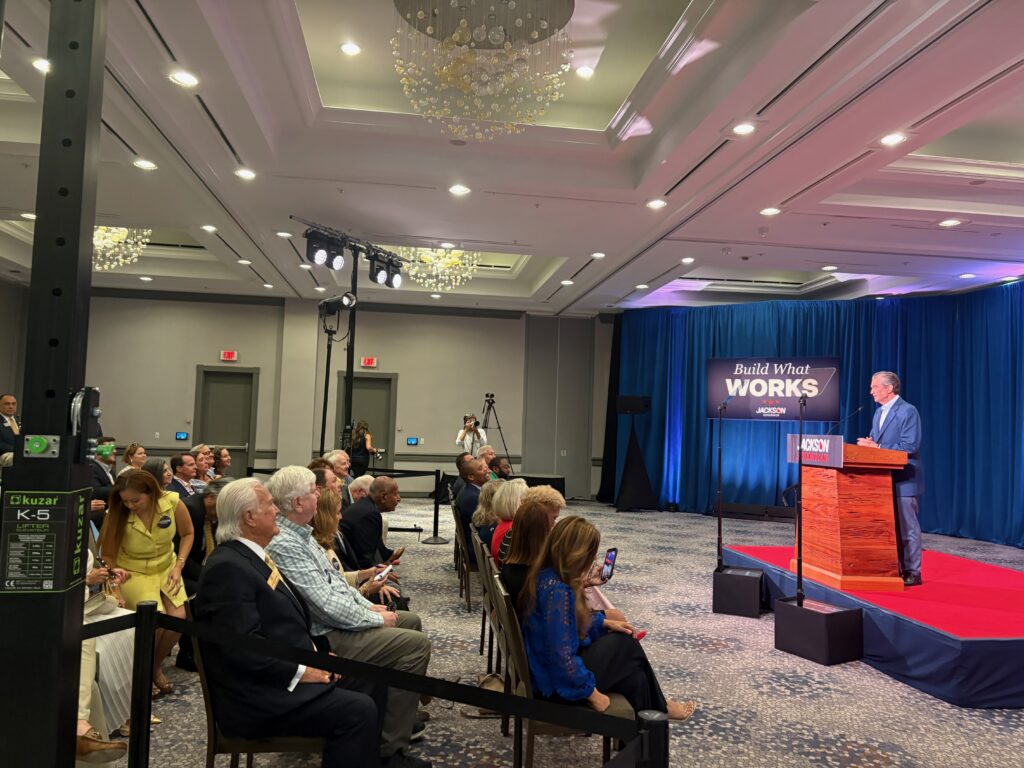
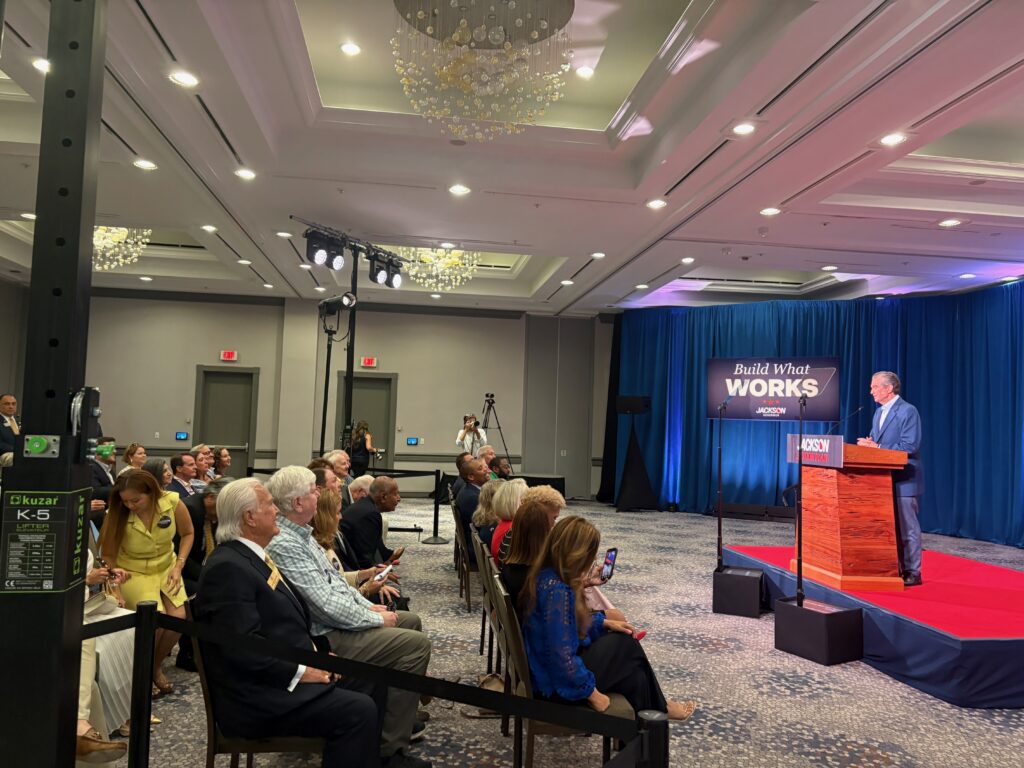
ATLANTA — In a bid to secure the position of Georgia’s governor, Republican Rick Jackson laid out an ambitious agenda on Tuesday, aiming to draw voters away from his Democratic opponent, Keisha Lance Bottoms.
During an exclusive gathering at the Westin Atlanta Perimeter, Jackson outlined five key promises, providing a broad view of his campaign without delving into specifics.
His presentation followed Bottoms’ recent initiative at a Lawrenceville grocery store, where she proposed a plan to tackle the rising cost of living by urging local governments to eliminate grocery taxes.
Jackson’s “action plan” offers a comprehensive approach to multiple issues, rather than focusing on a single solution.
He revisited the tax-cutting proposal introduced last month at an Atlanta barbershop: halving income taxes, removing taxes on tips, pausing the gasoline tax during price surges, and removing taxes on energy for residents and small businesses.
Jackson explained that these cuts would be financed by enhancing government efficiency, possibly through new technology, and trimming the budget.
Building on his previous announcement, Jackson suggested freezing property values to mitigate rising local property taxes. He proposed requiring local authorities to conduct public hearings and hold recorded votes before increasing property taxes.
Under current Georgia law, local governments are already required to announce and hold three public hearings before setting a property tax rate that doesn’t neutralize increased revenues from rising property values.
Jackson also addressed housing costs, pledging to hasten permitting and inspections at the local level. He assured that data centers would only be approved if they don’t raise local utility costs. For education, he proposed freezing tuition and fees at Georgia’s public colleges and technical schools.
In healthcare, Jackson plans to expand Medicaid intelligently, building on Gov. Brian Kemp’s framework.
Kemp’s Pathways to Coverage program requires participants to work, study, care for others, or volunteer.
Jackson proposed extending coverage to those earning too much for traditional Medicaid but too little for other options. He emphasized training and employment links for unemployed adults, while discouraging shifts from private insurance to Medicaid.
“I believe every Georgian should have access to healthcare coverage or insurance,” said Jackson, who is the founder of a healthcare staffing company. “So on day one, I will close the coverage gap with intelligent Medicaid expansion. We will cover those who need it the most and keep work requirements in place for those who are able. And we will not force the 500,000 people who have subsidized private plans onto a government plan.”
Jackson intends to lower medical costs through “meaningful price transparency,” though he didn’t specify methods.
He aims to tackle fraud, waste, and abuse in state healthcare using “modern technology” and leverage state purchasing power to reduce drug and healthcare expenses.
Jackson emphasized the importance of affordability, stating, “Nothing is more important than making Georgia more affordable. Many Georgia families are working harder than ever and still feel like they’re falling behind. Affordability is a crisis and government needs to treat it like one.”
Public safety was highlighted as a critical element of Jackson’s plan. “Nothing else in this plan works if a family does not feel safe in its home, a child does not feel safe in walking to school, or a small-business owner is afraid to open the door,” Jackson stated.
He promised to end child sex trafficking, uphold high standards for law enforcement, and ensure adequate resources. He criticized Bottoms for her management of public unrest as Atlanta’s mayor.
“Keisha Lance Bottoms’ record in Atlanta offers a warning about what happens when police morale and staffing are not treated as priorities,” Jackson remarked. “As governor, I will make public safety a daily responsibility, not a talking point after a crisis.”