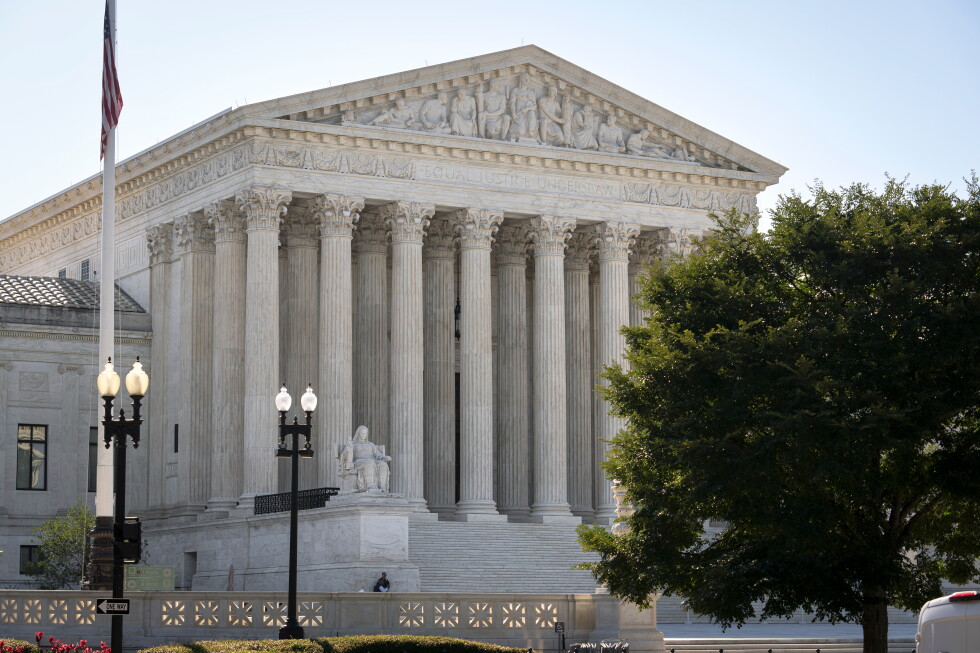
In a significant move impacting political campaign advertising, the Supreme Court has intervened in a dispute that could change the financial dynamics of the upcoming midterm elections. The court’s decision allows Republican campaign groups to access cheaper television ad rates, a development that could influence election strategies across the country.
The court’s unsigned order, issued on Friday, temporarily halts a previous lower-court ruling that sided with Democratic candidates who argued for restricting discounted broadcast ad rates to individual candidates. This decision arrives as part of a series of high-stakes election-related appeals as the midterms approach.
Supported by the Trump administration, the emergency appeal from Republican campaign organizations comes after a June Supreme Court ruling which lifted restrictions on party spending in coordination with candidates. This ruling is seen as advantageous for the GOP, as it benefits from a substantial financial lead, further amplified by access to reduced ad rates.
In contrast, many Democratic individual candidates have managed to outpace their Republican counterparts in terms of fundraising. Under federal law, candidates are entitled to discounted advertising rates during election periods. The Federal Communications Commission’s Media Bureau had ruled in March that certain ads coordinated by parties are also eligible for these lower rates.
However, this ruling was challenged by four Democratic figures, including Sen. Jon Ossoff of Georgia and former Sen. Sherrod Brown of Ohio. They succeeded in convincing a divided panel of the U.S. 4th Circuit Court of Appeals, which sided with them.
The Republican National Congressional Committee and National Republican Senatorial Committee then sought the Supreme Court’s intervention. They contended that broadcasters had been charging them higher rates following the appeals court’s decision, disrupting their financial strategies for the election campaign.
The Supreme Court’s majority found that the lower court’s decision was premature, differing from other judicial opinions nationwide. “Current and future recissions will require the party committees to pay more for advertising space, thereby hampering their efforts to reach the electorate in the critical weeks leading up to the midterms,” the court’s order indicated. Justice Ketanji Brown Jackson dissented, suggesting the court could have awaited the outcome of an internal FCC review.
The Supreme Court’s decision effectively pauses the appeals court’s ruling while the Republican committees prepare a more detailed appeal.