In a significant development for Italy’s defense sector, the projected cost for the GCAP fighter project has surged from €6 billion to €18.6 billion over the past five years, as revealed by the country’s defense minister to parliament. This increase has sparked criticism from the opposition, particularly from the Five Star party.
The Five Star party expressed their concerns in a statement, labeling the GCAP fighter program as “the most expensive program in the history of the Italian military,” surpassing the €18 billion spent on the F-35 project for 90 aircraft.
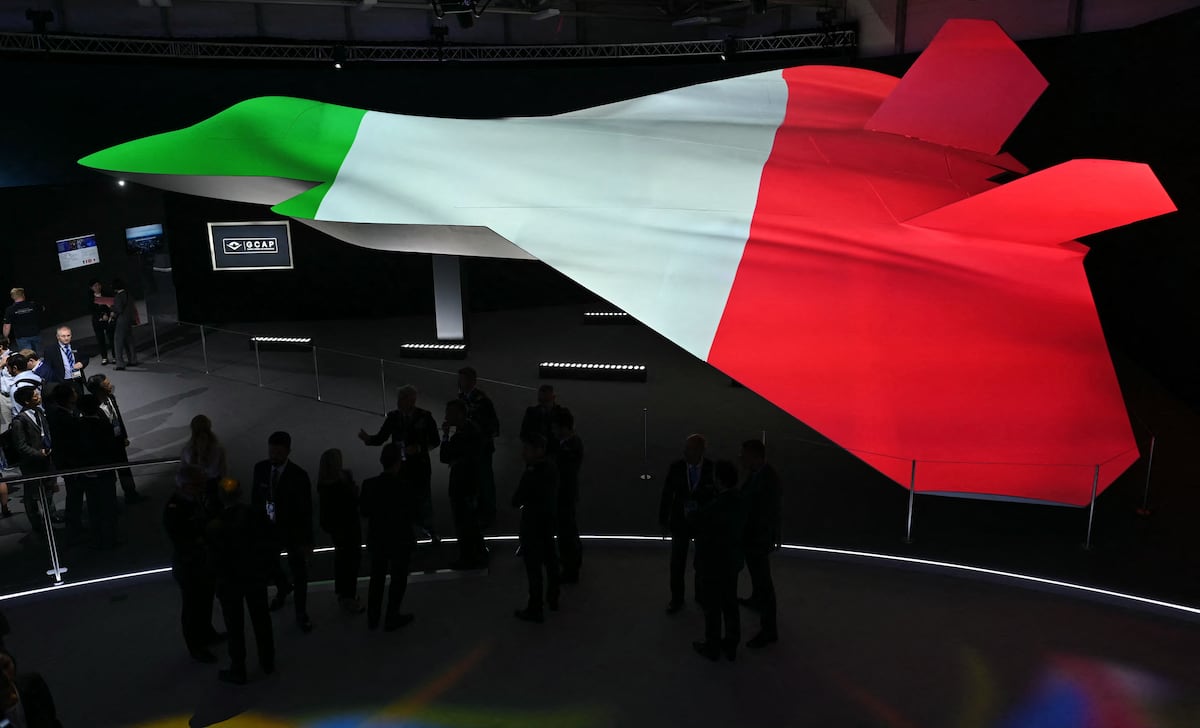
Italy, along with the United Kingdom and Japan, is part of the collaborative effort to develop the sixth-generation GCAP fighter, with plans to have the aircraft operational by 2035. The updated financial requirements have been documented and submitted to the Italian Senate’s defense commission, where discussions and a vote are expected soon.
The defense commission of Italy’s lower house of parliament will also review the document. Approval is anticipated, given the majority support from Meloni’s coalition government in both houses.
Initially, a document submitted in 2021 indicated that Italy’s contribution of €6 billion would cover Phase 1 and 2 of the program, focused on ‘Concept Assessment and Preliminary Design,’ followed by ‘Full Development.’ However, the revised document outlines a new estimate of €18.6 billion, considering the rising costs in technology maturation, testing, and design development.
According to the document, €2 billion has already been allocated to partially finance Phase 1, leaving a requirement of an additional €16.6 billion to complete both phases. The request includes €8.8 billion in funding, to be paid annually until 2037, while the remaining €7.8 billion will be arranged later.
The Five Star party has criticized the process, stating, “We don’t doubt the value of this program, but it is not acceptable that our parliamentary commissions are used as cash dispensers which issue billions like peanuts, without even supplying an in-depth and detailed explanation of this enormous increase in the expected expenditure.”
In a meeting held on January 16 in Tokyo, Italian Prime Minister Giorgia Meloni and Japanese Prime Minister Takaichi Sanae expressed their satisfaction with the progress of the GCAP and emphasized the importance of delivering the first aircraft by 2035.
For further details on the GCAP fighter design and its potential for weapons and drone capabilities, visit the related article here.