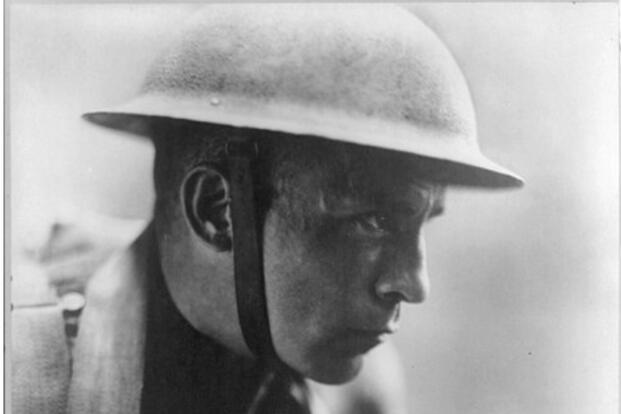
The tale of Belleau Wood is etched in the annals of Marine Corps history as the moment the “Devil Dogs” became legends. However, the contributions of U.S. Army soldiers, who fought courageously alongside the Marines, remain a lesser-known chapter in this story. While the Marines’ valor is celebrated, it’s essential to recognize the Army’s vital role in this pivotal battle.
The Army’s Critical Move
On June 1, 1918, Colonel Paul B. Malone, commander of the 23rd Infantry Regiment, received urgent orders as he raced toward the front lines. The German forces had breached the French defenses, threatening the stability of the American line. Malone’s troops, part of the 2nd Division’s 3rd Infantry Brigade, launched a nighttime march to fill the gap and present an unbroken front against the German advance.
By dawn on June 2, the gap was sealed, and the real battle was set to commence. The 23rd Infantry joined forces with the 1st Battalion of the 5th Marines and elements of the 6th Machine Gun Battalion in this crucial maneuver.
Joining Forces with the Marines
In the afternoon of June 6, the Marines spearheaded an attack on Belleau Wood, advancing through fields under heavy machine-gun fire. Meanwhile, the 23rd Infantry was tasked with supporting the Marines’ right flank, advancing toward the road connecting Bouresches to Vaux.
The German Maxim guns unleashed relentless fire, yet the 23rd Infantry pressed forward. Despite confusion and intense enemy resistance, Major Edmund C. Waddill demonstrated exceptional leadership, earning a Distinguished Service Cross for his efforts in reorganizing the troops and pushing the attack forward. Chaplain Julius J. Babst also displayed extraordinary bravery, earning a Distinguished Service Cross as he administered last rites to the fallen under artillery fire.
Three Weeks of Relentless Combat
For three weeks, the 23rd Infantry held their positions on the eastern edge of Belleau Wood, enduring daily artillery barrages. On June 14, they assumed additional positions, allowing the Marines to focus their efforts. The regiment’s resilience was further tested on June 23-24, when a devastating German gas attack left over 400 soldiers incapacitated.
The 23rd Infantry’s steadfast defense earned them the French Fourragere, honoring their courage alongside the Marines.
The 7th Infantry Regiment Steps In
As the Marines faced heavy losses, the 7th Infantry Regiment of the 3rd Division was called in to relieve them in mid-June. The soldiers encountered a hellish landscape filled with German machine-gun nests. Despite their relative inexperience, they faced the formidable challenges of Belleau Wood.
Over eight grueling days, the 7th Infantry launched multiple attacks, battling fierce German resistance and enduring significant casualties.
The Marines Return and Vaux is Captured
Following the 7th Infantry’s efforts, the Marines re-entered Belleau Wood, launching a renewed offensive. By June 26, the area was fully under Marine control. Meanwhile, the 9th Infantry Regiment was crucial in holding the southern flank and capturing the German-held village of Vaux, a tactical masterpiece that secured the entire sector.
The meticulous planning and execution of the attack on Vaux ensured a swift victory, as the German garrison was effectively neutralized.
The Overlooked Contributions
Despite their significant impact, the Army’s role in Belleau Wood was overshadowed by the Marines’ legendary narrative. Press restrictions only allowed mentions of “American troops,” while the Marines were identified as a distinctive branch, leading to a skewed public perception.
War correspondent Floyd Gibbons’ exclusive focus on the Marines amplified this narrative. General Pershing’s attempts to correct the oversight came too late, and the Marines’ legend was firmly established.
Nonetheless, the Army’s contributions should not be forgotten. The 23rd Infantry’s early actions, the 9th Infantry’s strategic capture of Vaux, and the 7th Infantry’s resilience in Belleau Wood all played crucial roles in this historic battle.