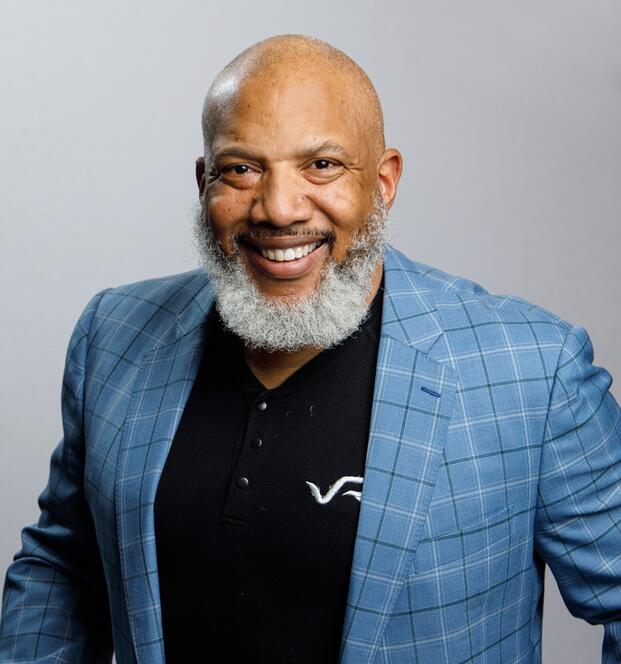
In the face of adversity, some individuals discover new paths that redefine their lives. John Register, a former Army veteran and elite athlete, is one such individual who transformed a personal tragedy into a powerful journey of resilience and motivation. After losing his left leg in a training accident before the 1996 Summer Olympics, Register chose not to dwell on his misfortune but instead focused on creating a future filled with purpose.
Turning Setbacks into Comebacks
John Register, a Gulf War veteran and motivational speaker, shared insights on overcoming life’s challenges in an interview with FOX21 Morning News in Colorado Springs, Colorado. Known for his time in the Army’s World Class Athlete Program, Register later earned a silver medal at the 2000 Paralympic Games in Sydney, Australia. He developed “Amputate to Elevate,” a four-phase system designed to help individuals achieve their goals by eliminating distractions.
Phase One: Reckoning with Reality
The initial phase, reckoning, involves addressing and accepting the loss. Register stated, “When you realize you do not get back what you desire, to have back what some type of trauma has impacted your life.” He emphasized the importance of acknowledging these changes to move forward effectively.
“You’ve got to look at what your goal is, look back and accept that there are things that you have to part ways with, and it’s hard to do, but it’s necessary in order to go forward,” Register expressed.
Phase Two: Revision of Goals
When faced with unexpected twists, the second phase calls for revising one’s goals. Speaking from the U.S. Olympic and Paralympic Museum in Colorado Springs, Register reflected on the 1980 Summer Games boycott, noting how athletes like Carl Lewis overcame setbacks to achieve greatness in subsequent events.
“So, if everybody remembers the 1980 boycott. This is the best part of this museum,” Register said, pointing to a vast list of names. “All these names on the wall are people that were not able to compete, even though they made the team. The revision is being able to cast a new vision.”

Phase Three: The Renewal Process
Renewal, the third stage, involves maintaining focus on one’s objectives to overcome significant challenges. Register remarked, “This sounds easy, but it’s very hard. When the doctor amputated my leg, I did not get my leg back. Once we make a commitment, we do not get back what was previous.”
He highlighted the necessity of patience and self-compassion during such transitions: “We might have phantom pains to it, but we don’t get it back, and this is hard. Why? Because we’re no longer the expert.”
Phase Four: Achieving Resonance
The final phase, resonance, is about synthesizing the earlier stages. Register’s approach is relevant for those striving to meet New Year’s resolutions as they tackle new challenges.
“It can seem exhausting when we’re trying to think (through) these new resolutions,” Register noted. He believes that simplifying goals can lead to more attainable results.
Beyond his athletic achievements, Register co-founded the Paralympic Military Sports Program, which empowers severely wounded and paralyzed veterans to engage in competitive sports.