Enhancing Communication: The Key to Future Air Force Missions
As modern military operations become increasingly complex, the U.S. Air Force is prioritizing advancements in secure communication to bolster the effectiveness of future missions, similar to the successful strikes conducted on Iranian nuclear sites last summer. This strategic focus was emphasized by a senior Air Force official during a recent aerospace conference.
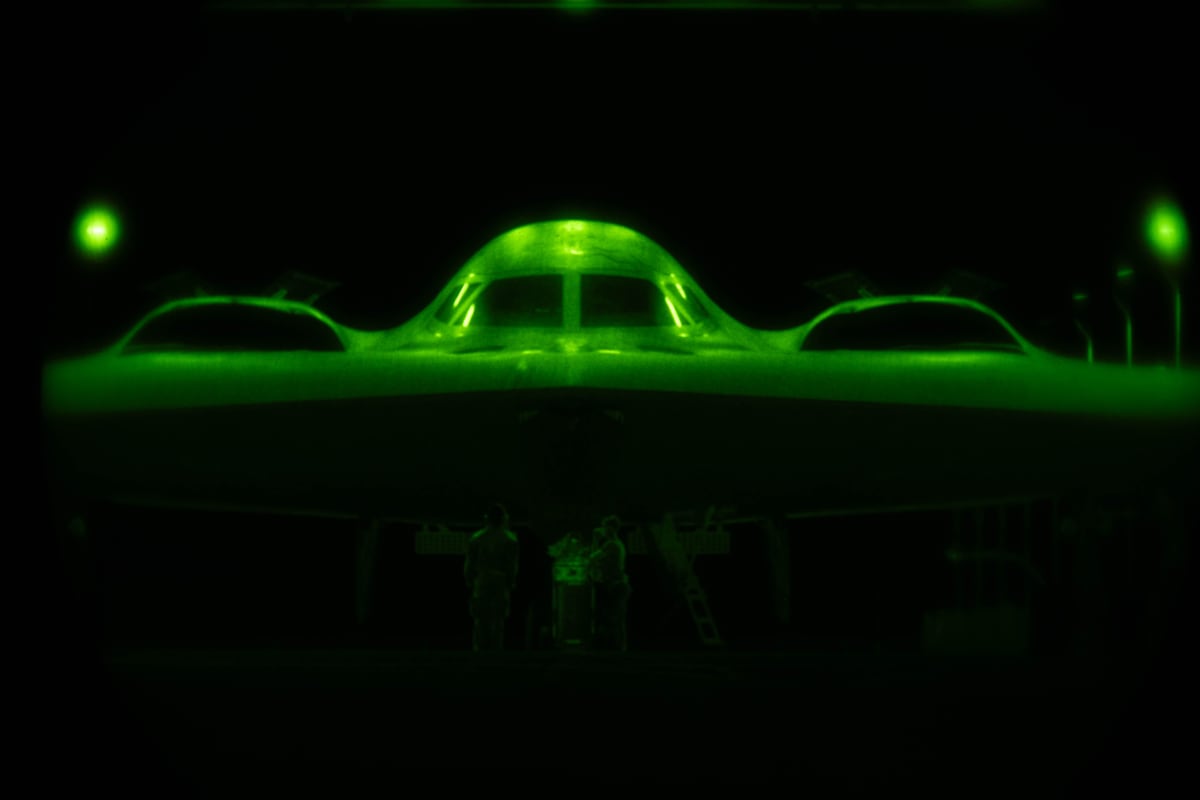
The June 22 operation, known as Operation Midnight Hammer, showcased the formidable capabilities of the B-2 Spirit bomber, utilizing Massive Ordnance Penetrator weapons to obliterate three deeply entrenched nuclear facilities. Lt. Gen. Jason Armagost, deputy commander of Air Force Global Strike Command, underscored the critical role of engineering, intelligence, and coordination in this mission’s success, speaking at the Mitchell Institute for Aerospace Studies conference in Arlington, Virginia.
To sustain such operational superiority, Armagost stressed the necessity for robust command-and-control networks and communication systems that can securely convey essential instructions and updates between bombers and other aircraft.
“If that [strike] package is not able to … communicate the status of their forces and the ‘go’ from the mission commander, then that is a foul on all of us,” Armagost stated during a panel discussion on Operation Midnight Hammer’s execution and insights gained.
Concurring with the need for enhanced communications, Maj. Claire Randolph, chief of weapons and tactics for U.S. Air Forces Central Command, highlighted the importance of intelligence sharing during combat. However, she cautioned against allowing direct communication lines from commanders to aircraft cockpits, which could undermine the authority of air crew commanders.
“Let’s imagine you have a wire direct from the CENTCOM commander to the cockpit of every B-2 or the cockpit of every F-16,” Randolph explained. “There’s a liability there to add … decision-making authority without all the awareness. We have to improve our communications capabilities, but we also have to be very careful to bound the authority that ends up touching the cockpit.”
Randolph warned that involving external parties in decision-making processes could pose risks if not carefully managed.
Looking ahead, the Air Force envisions the B-21 Raider, the successor to the B-2, as a pivotal asset in future strike missions. Developed by Northrop Grumman, the B-21 is touted as the first sixth-generation aircraft, largely due to its advanced data-sharing capabilities.
Lt. Gen. Armagost noted that integrating the Raider into the fleet would enhance operations like Midnight Hammer, making them more streamlined. “It’s definitely how we’re configuring going forward,” Armagost told Defense News regarding the B-21 and the Air Force’s focus on improving combat communications.