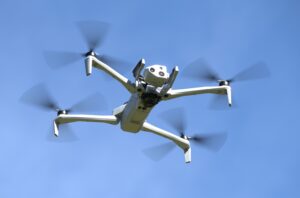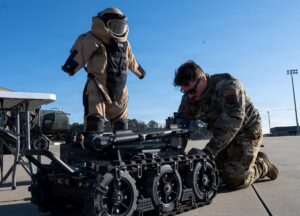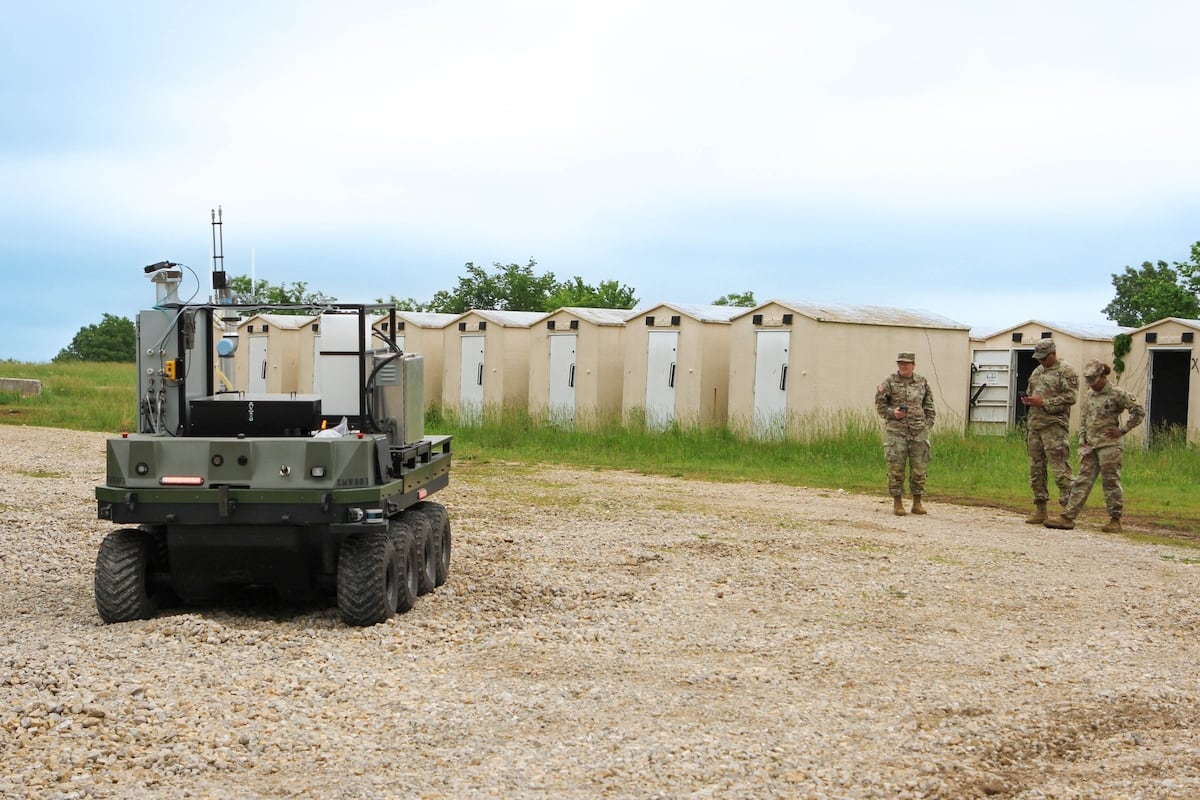
The U.S. Army is advancing its technology by integrating autonomous systems for decontamination tasks. These systems, which include airborne drones and ground robots, are designed to handle the cleanup of chemical and biological hazards. The initiative, known as the Autonomous Decontamination System (ADS), focuses on critical infrastructure and terrain decontamination.
The ADS aims to provide troops with enhanced protection and reduce the dependency on specialized chemical warfare units. According to an Army Request for Information (RFI), the system’s objective is to empower squad-sized elements with the capability of a platoon in decontamination tasks. The RFI states, “The goal of the ADS is to allow squad-sized elements to provide a platoon-sized decontamination capability for critical mission equipment.”
These operations are currently resource-intensive, demanding significant time, logistics, and personnel. The document highlights the ADS’s potential to “reduce manpower and optimize resources required for decontamination operations while mitigating the risk of exposure of warfighters to chemical and biological warfare agents through robotic means.”
The Joint Project Manager for Chemical, Biological, Radiological, and Nuclear Protection (JPM CBRN Protection) seeks mobile systems that include tethered and untethered robots, which are transportable by light or medium tactical vehicles. These decontamination robots are required to execute several tasks: pre-washing with water, mapping contamination, applying decontaminants precisely, and conducting post-wash and assessment using fielded detector technology.
Contractors are encouraged to detail the technical specifications of their systems, including navigational aids such as GPS and Real-Time Kinematic, as well as the level of autonomy, from fully autonomous to manual control. They should also provide information on decontamination components like nozzle type and flow rate.
Compatibility with various decontaminants, including High Test Hypochlorite (HTH) and M333 Joint General-Purpose Decontaminant for Hardened Military Equipment (JGPD-HME), is essential. The Army’s modernization efforts are in response to threats from weapons of mass destruction, involving actors like rogue nuclear states and terrorist groups experimenting with AI-based biological weapons.
In addition to the ADS project, the Army is enhancing the Stryker armored vehicle’s CBRN version. The Nuclear, Biological and Chemical Reconnaissance Vehicle Sensor Suite Upgrade (NBCRV SSU) incorporates onboard drones for scouting contaminants, improving maintainability and reliability. The Army announced in January 2025 that these upgrades will enhance remote maneuverability and include unmanned aerial vehicles and modular mission payloads.
Despite these advancements, the Army has recently made CBRN training optional, as per the updated Army Regulation 350-1. This regulation allows commanders to determine the necessity of such training for unit readiness.