In a move that veers from traditional diplomatic strategies, President Donald Trump has enlisted military leaders to play pivotal roles in high-stakes international negotiations. This strategic shift sees U.S. military officials actively participating in discussions about Iran’s nuclear ambitions and the ongoing conflict between Russia and Ukraine.
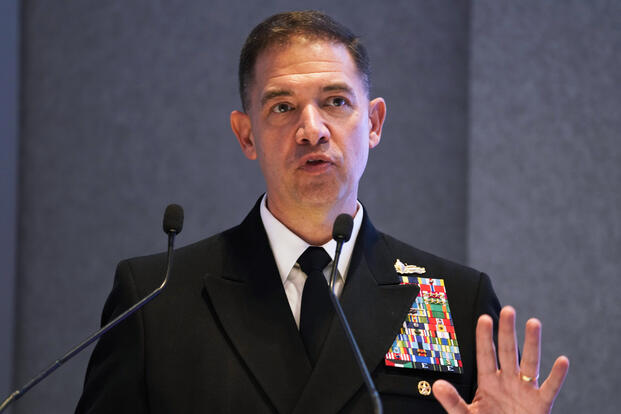
Adm. Brad Cooper, the head of U.S. Central Command, has been brought into the fold for negotiations concerning Iran’s nuclear program, marking his presence in indirect talks held in Oman. Notably, Cooper attended these discussions in full military regalia, underscoring the U.S.’s military readiness in the region. Meanwhile, Army Secretary Dan Driscoll has been appointed as a key figure in negotiations aimed at resolving the Russia-Ukraine conflict.
Special envoy Steve Witkoff, alongside Trump’s son-in-law Jared Kushner, continues to juggle these complex diplomatic engagements. The incorporation of military leaders into these talks highlights a departure from conventional U.S. foreign policy approaches, potentially signaling a more assertive stance.
Elisa Ewers, a Middle East scholar at the Center for a New American Security, expressed concern over the administration’s reliance on military figures for diplomacy, indicating a shift away from seasoned diplomats. She remarked, “It often takes an enormous amount of time, investment and hard work to get to the point where you can say diplomacy has succeeded,” emphasizing the need for diplomatic finesse over military might.
Diplomatic Signals
The discussions in Oman sought to de-escalate rising tensions between the U.S. and Iran, a region already fraught with unease. President Trump described these talks as “very good” and announced plans for further discussions. However, he also cautioned that “the consequences are very steep” should Iran fail to strike a deal.
Defense analyst Michael O’Hanlon from the Brookings Institution suggested that Cooper’s presence was intended as a show of strength, stating, “Including the CENTCOM commander is quite unusual and seems intended to send a message more than to add to the heft of the negotiating team for the talks themselves.”
Michael Singh, managing director at the Washington Institute for Near East Policy, noted that Cooper’s involvement might be attributed to his expertise, as Witkoff and Kushner are generalists in diplomatic affairs. Singh emphasized the complexity of the issues at hand, which require specialized knowledge and military insight.
Maintaining Dialogue
In November, Driscoll was unexpectedly chosen to facilitate talks aimed at ending the prolonged conflict in Ukraine. His military background and ability to maintain open lines of communication between negotiation sessions have been pivotal in his role as a liaison.
During recent sessions in Abu Dhabi, Driscoll worked alongside U.S. Gen. Alexus Grynkewich, commander of U.S. and NATO forces in Europe. Together, they facilitated the re-establishment of high-level military dialogues between the United States and Russia, which a U.S. military statement described as crucial for ongoing peace efforts.