NATO Artillery Units Demonstrate Enhanced Interoperability in Europe
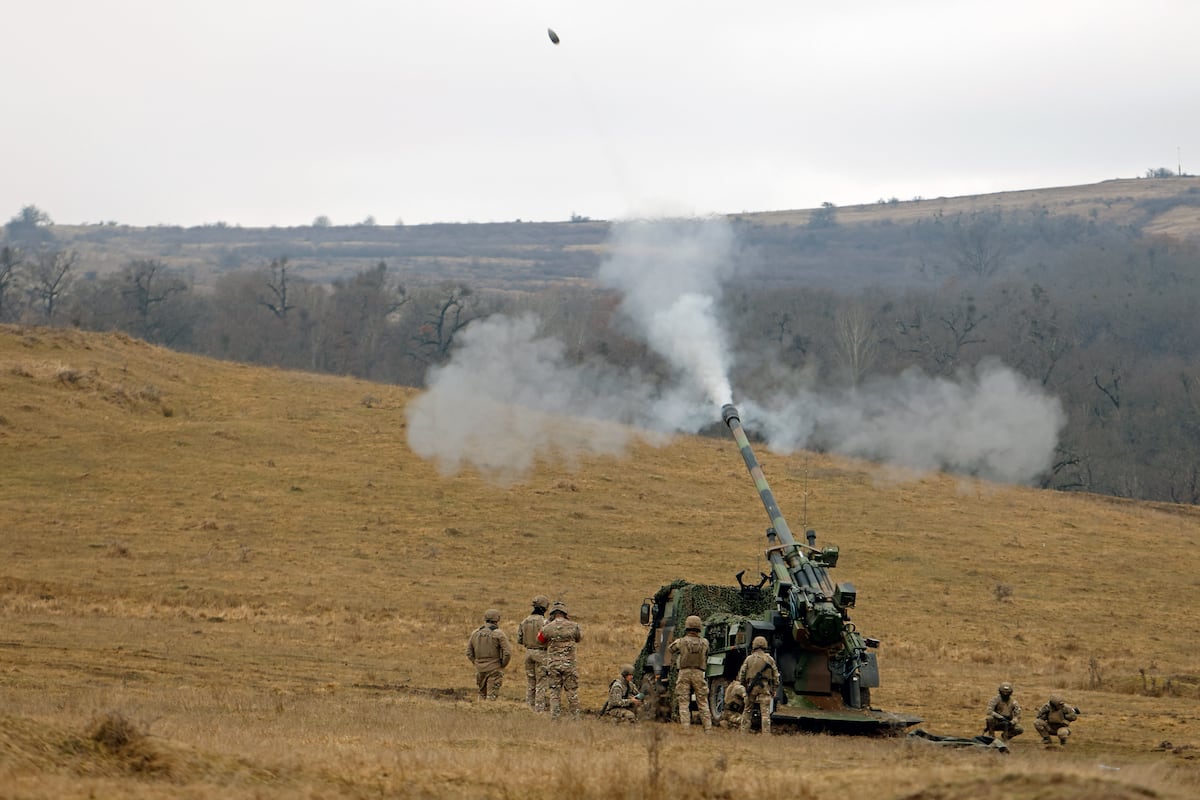
In a display of modern military capabilities, NATO artillery units engaged in a comprehensive exercise across European training grounds, focusing on their ability to coordinate strikes and counter aerial threats similar to those encountered in Ukraine. This exercise, known as Dynamic Front, spanned from January 26 to February 13 and took place in five countries across nine distinct training areas.
Dynamic Front, a U.S.-led initiative, involved 23 participating nations and aimed to validate the artillery interoperability of these forces. The primary goal was to assess how effectively different systems could integrate and share key targeting data, facilitating coordinated long-range strikes across borders.
During the exercise, participating units faced simulated scenarios replicating the scale and complexity of threats present in Ukraine. U.S. Army officials reported that crews were tasked with executing 1,500 strikes and intercepting between 600 and 1,200 aerial threats each day, all within a hypothetical European conflict setting.
Brig. Gen. Steven Carpenter, who leads the 56th Multi-Domain Command Europe, explained in a press briefing, as quoted by Star and Stripes, that the exercise aimed to create a deterrence effect with artillery strikes that are “so unrelenting” that they would dissuade any adversary from initiating an attack.
Notably, units participating in the event managed to establish the command systems needed for coordinating strikes in a fraction of the time required in previous exercises, achieving this in one-sixth of the time, according to Stars and Stripes.
A key component of this enhanced connectivity is the encrypted software suite known as ASCA, or Artillery Systems Cooperation Activities, which serves as NATO’s digital language for coordinating precise artillery strikes. This system not only connects different national artillery and command-and-control systems but also supplies real-time targeting data to troops positioned in various countries.
U.S. officers previously told Defense News that ongoing refinements to ASCA, based on feedback from exercises, continue to enhance its functionality. Over a dozen NATO countries have integrated this system into their command-and-control operations.