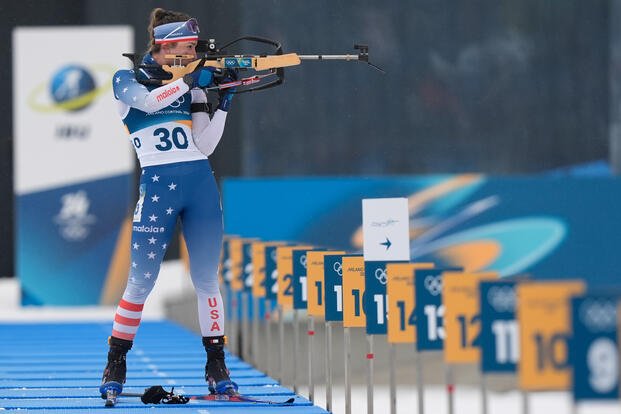
In the scenic landscapes of Anterselva, Italy, biathlon enthusiasts gather to witness the thrilling combination of cross-country skiing and rifle shooting. This unique sport, rooted in Scandinavian military training, sees many of its top athletes affiliated with military or law enforcement organizations, providing them with vital support and career opportunities beyond the Olympics.
Among the competitors at the Milan Cortina Winter Olympics, three individuals stand out from the U.S. biathlon team. Staff Sgt. Deedra Irwin, Spc. Sean Doherty, and Spc. Maxime Germain are all members of the Vermont National Guard. Irwin and Doherty further their commitment through the U.S. Army’s World Class Athlete program.
Camp Ethan Allen Training Site in northern Vermont serves as a pivotal training ground for Doherty, offering resources like the Army Mountain Warfare School and a specialized biathlon course. “As my career in the sport progressed, I realized the support and benefits of the National Guard would extend my career and provide resources and support independent of the national team,” Doherty shared with The Associated Press, emphasizing the synergy between military discipline and athletic dedication.
Connections Across Europe
The intersection of biathlon and military service is not unique to the United States. In Europe, gold medalists like Lou Jeanmonnot and Éric Perrot from France hold the rank of sergeant in the French Army. Meanwhile, Italy’s own Olympic champion, Lisa Vittozzi, is part of the Italian Army’s Centro Sportivo Esercito. Such affiliations offer athletes financial stability and career paths after sports.
In Germany, career opportunities in law enforcement or the military await biathletes post-competition. German biathlon head coach Tobias Reiter highlights that athletes train rigorously, balancing sports with military education. Philipp Nawrath, a German biathlete, serves as a police sergeant, while retired Olympians like Erik Lesser and Arnd Peiffer have transitioned to secure roles after following similar paths.
“I think it’s a great support,” Peiffer remarked about the program. It provides young athletes with the means to pursue sports without financial burden, ensuring job security even in the face of potential setbacks like injury.
Nordic Nations: A Civilian Approach
Despite biathlon’s military roots, countries like Norway and Sweden have largely civilian athletes. The sport’s early history as military patrol in the 1924 Chamonix Winter Olympics contrasts with today’s practices. Norwegian coach Siegfried Mazet notes the absence of military preparation programs for retiring athletes. Instead, former competitors often transition to media roles, as seen with Tiril Eckhoff and Johannes Thingnes Boe.
In Finland, while some biathletes may find roles in the military, it remains uncommon, according to Finnish head coach Erik Torneus-Kulstad. This reflects a broader shift away from traditional military ties in Nordic biathlon culture, focusing instead on civilian careers and opportunities.
© Copyright 2026 Associated Press. All rights reserved. This material may not be published, broadcast, rewritten or redistributed.