Ensuring the U.S. Army is combat-ready extends beyond having a stockpile of equipment and a clear command structure. It involves addressing logistical challenges, such as repairing crucial equipment in remote conflict zones where resources are limited.
“A lot of these guys are going to be on their own or cut off from major resources, unless we can provide remote support,” said Ian McNesby, chief of operations at U.S. Army Medical Logistics Command in Tracy, California.
McNesby, in a statement to Military.com, highlighted the difficulty in connecting soldiers with the right expert promptly to resolve equipment issues. He noted the scarcity of experienced technicians, with many nearing retirement, adding, “It takes time to find a subject-matter expert. You can’t just grow that overnight.”
The introduction of artificial intelligence and tele-maintenance is transforming the Army’s approach to equipment repairs, particularly in remote locations. These technologies are proving vital in saving time and resources, especially when immediate action is needed.
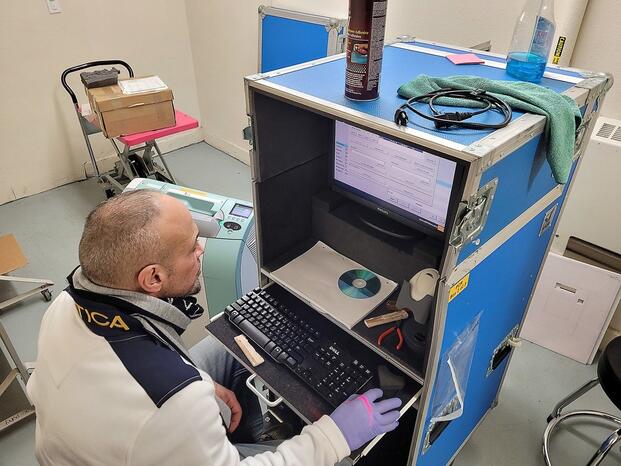
“We’ve always done some form of tele-maintenance, but in the past, we didn’t have visual capability,” McNesby said.
Utilizing video teleconferencing tools like Microsoft Teams, soldiers stationed far from support can receive real-time guidance from experts globally. McNesby explained the challenges of working in isolated areas such as the Pacific islands, where waiting for a replacement part or technician is not feasible.
The military is also investigating AI’s potential to digitize equipment manuals and create searchable databases for quick access to repair guides and parts lists. Isaac Newman, director of the U.S. Army Medical Maintenance Operations Divisions, remarked, “Modernizing sustainment is a key part of the Army’s mission.” While AI isn’t yet fully integrated into daily operations, the Army is actively exploring its future applications.
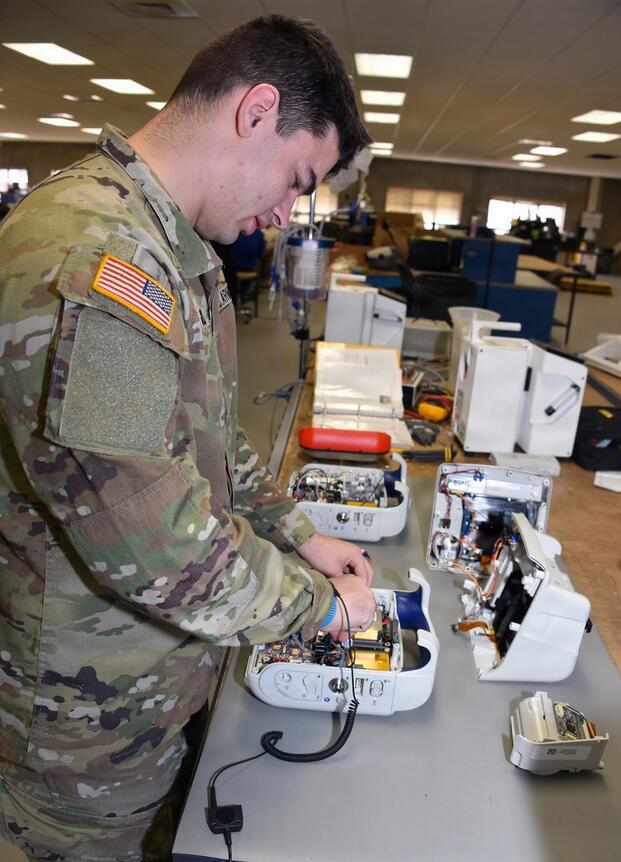
Currently, AI is being leveraged for administrative purposes by MMOD personnel, but its potential is vast. “As the program matures, we see tremendous opportunity to contribute our specialized medical equipment data into [AI],” Newman added, emphasizing the benefits for soldiers relying on this equipment.
The Army’s Medical Maintenance Management Directorate (M3D) is also advancing AI integration, with training centers in California, Pennsylvania, and Utah, aligning with the strategic goals of the Army’s Communications-Electronics Command. M3D Director Jorge Magana stated, “Our modernization efforts are in lockstep with CECOM’s strategic vision. By empowering our teams to embrace technologies like AI and remote support, we are building a more resilient sustainment enterprise that directly contributes to CECOM’s goals and delivers readiness for the entire Army.”