Norwegian Soldiers Use Snow Caves to Evade Drone Detection
In the chilling landscapes of Norway, elite Arctic soldiers are turning to age-old techniques to stay out of sight from modern drones. The quinzhee, a snow cave dug meticulously by hand, is proving to be an effective method for evading sophisticated sensors.
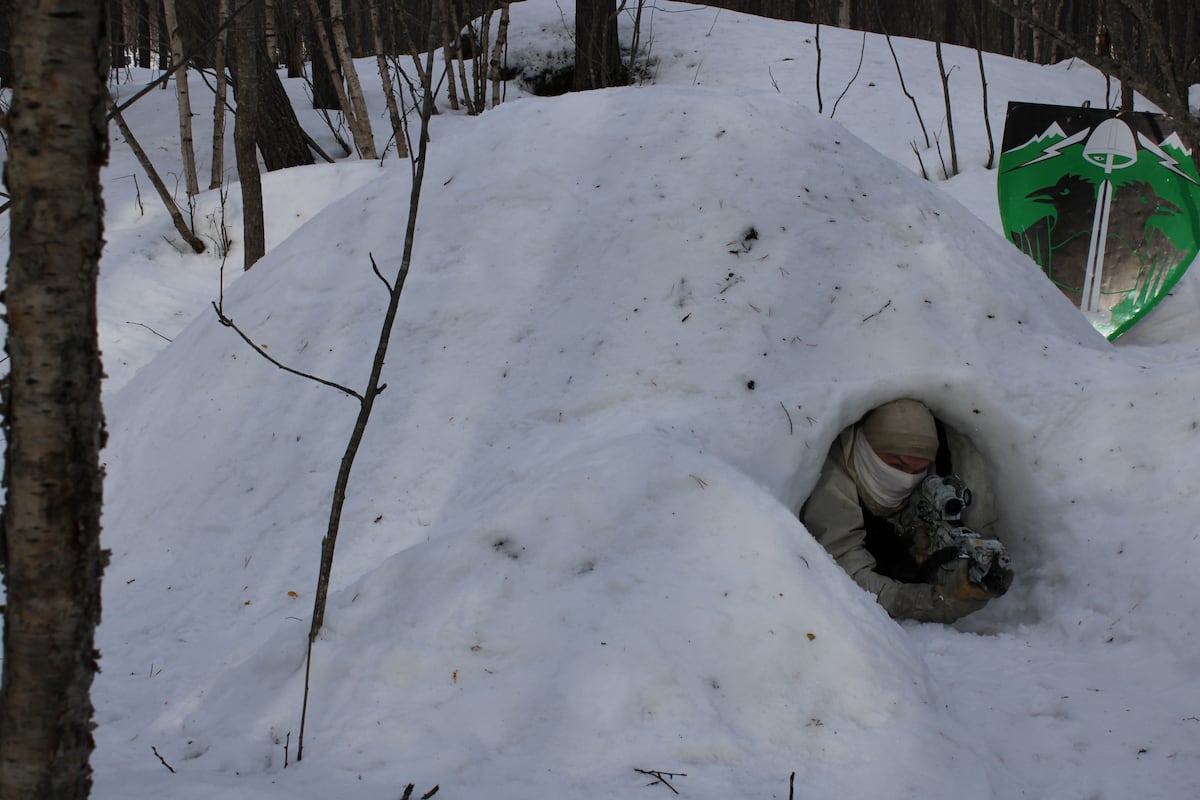
Positioned about 400 kilometers from the Russian border, members of Norway’s Long Range Reconnaissance Squadron employ these snow shelters to remain undetected. One officer, known as Poster Boy, is currently utilizing such a cave, with only his light-grey firearm visible from the outside.
These soldiers are part of a specialized task force designed to conduct surveillance missions deep behind enemy lines. Their snow caves, measuring 1.5 meters high and 2 meters wide, are crafted by compacting snow until it hardens, a skill the force has mastered over time.
“It’s a constant evolution of what works and what doesn’t for us – what worked four years ago might not work today due to all the technology developments of equipment designed to catch us, some years ago a tent and camouflage could’ve been sufficient but not anymore,” stated the officer, who required anonymity due to the sensitive nature of his operations.
Alongside Norwegian troops, elite units from other nations, including the U.K. Royal Marines and the Canadian Special Operations Forces Command, are also training in the region. The Royal Marines highlighted the need for frequent relocation, often moving every 15 minutes, to evade detection in rapid modern warfare.
In addition to avoiding enemy surveillance, Norwegian reconnaissance soldiers deploy their own drones to gather intelligence on adversaries. They are currently testing different winterized surveillance drones, such as the American-made Skydio and first-person-view models, to facilitate operations over greater distances.
Poster Boy emphasized the growing importance of these systems in a potential conflict with Russia, where the battlefield would span vast icy terrains.
Maj. Gen. Lars Lervik, the Norwegian Army chief, remarked on the pivotal role of drones in Cold Response 2026, NATO’s largest Arctic exercise held in Norway. This operation, running from March 9-19, features both surveillance and attack drones, as well as unmanned ground robots.
The quest for invisibility and silence is a challenging one, especially in light of the ongoing war in Ukraine, which has shown how susceptible troops and equipment are to detection.
Efforts to mitigate detection risks include focusing on signature reduction. The Norwegian Defense Materiel Agency recently announced successful trials of the Swedish-made Mobile Camouflage System in Denmark. Developed by Saab, this technology limits visual, thermal, and radar signatures, even in Arctic conditions.
Despite advancements in technology, the Norwegian Arctic unit continues to rely on traditional methods like natural camouflage. “Using snow is our absolute best concealment – we move in darkness, foggy conditions, snow falls, where our tracks can be rapidly filled and hard to follow, and in good weather we stay static and concealed,” explained the officer.