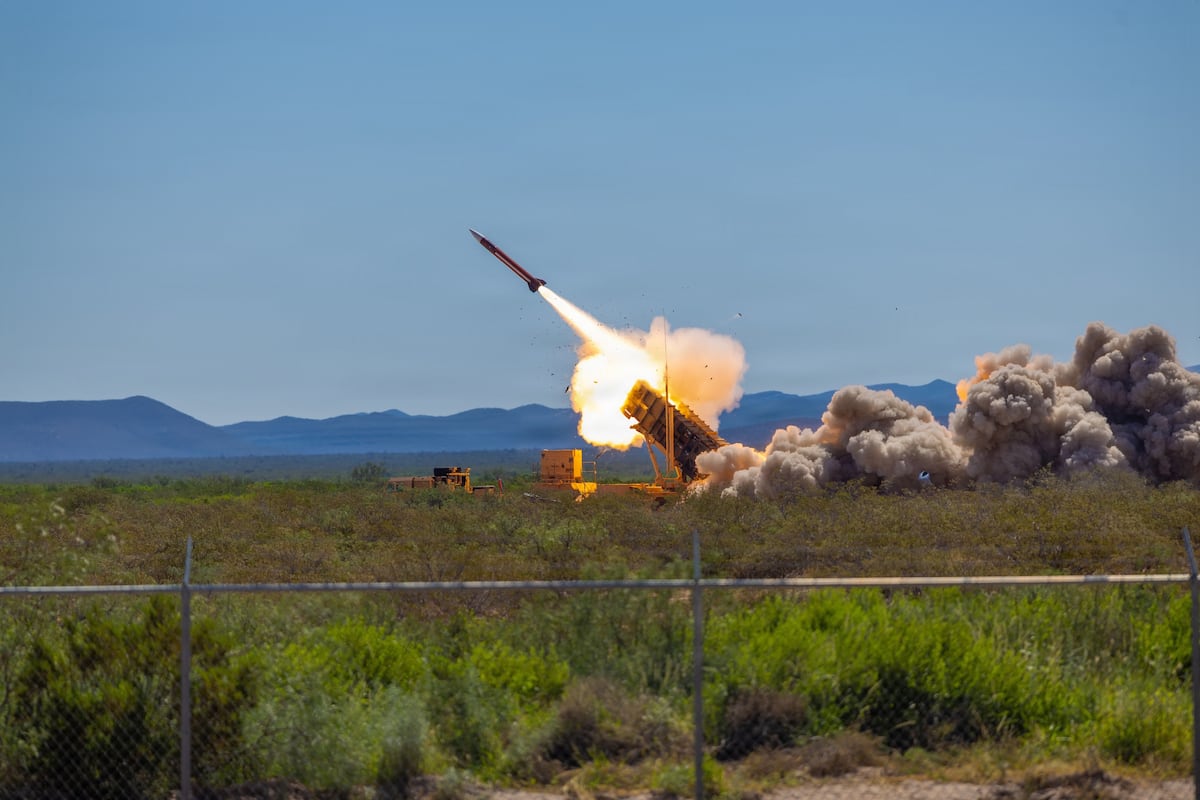
In an era marked by heightened tensions in the Middle East, the United States is increasingly reliant on advanced air defense technologies to counter missile and drone threats. Among these technologies, the Patriot missile system stands out as a critical asset in protecting military bases and infrastructure.
The Patriot missile system, known for its ability to intercept incoming threats using sophisticated radar and interceptor missiles, plays a pivotal role in the U.S. military’s defense strategy. The system employs the Patriot Advanced Capability-3, or PAC-3, interceptor, which has become indispensable for defending against aerial attacks, albeit at a substantial financial cost.
Detection
The system’s radar is constantly monitoring the skies, searching for any anomalies. The radar is adept at tracking various aerial objects, from aircraft to drones, across a vast expanse. Upon detecting an object, the system swiftly assesses its speed, altitude, and flight path to determine if it poses a threat.
Once identified as a potential danger, the system calculates whether the object is on a collision course with protected areas, prompting a decision on whether to engage.
Launch
When engagement is deemed necessary, the Patriot system launches an interceptor missile. The PAC-3 missile rapidly ascends, guided by data from the radar, to intersect with the target. Throughout its flight, the missile receives continuous updates, allowing it to adjust its trajectory as needed.
Interception
In the final approach, the PAC-3 missile employs a hit-to-kill strategy, colliding with the target at high speed. This method is crucial for ballistic missile defense, emphasizing precision to neutralize the threat effectively.
A Layered Defense
The Patriot system is part of a broader, multi-layered defense strategy. The Terminal High Altitude Area Defense (THAAD) system, also produced by Lockheed Martin, complements the Patriot by intercepting ballistic missiles at higher altitudes and over larger areas. Like the Patriot, THAAD uses a hit-to-kill approach and relies on advanced radar and interceptor technology.
The Cost
Despite its effectiveness, the financial implications of deploying the PAC-3 interceptors are significant, with each missile costing millions of dollars. This expense is particularly pronounced when intercepting more economical threats such as drones. Even as Lockheed Martin gears up to increase production under a new agreement with the Pentagon, the current stock of PAC-3 interceptors is limited, raising concerns about supply sustainability.
Experts caution that as these interceptors are utilized in ongoing conflicts, the demand may surpass the available supply, posing a challenge for maintaining effective defense capabilities in the region.
“`