The Pentagon’s Strategic Move to Enhance Missile Defense Capabilities
In a significant development, the Pentagon has finalized an agreement with BAE Systems and Lockheed Martin to significantly boost production of infrared seekers for the Terminal High Altitude Area Defense (THAAD) interceptor. This move is part of a broader strategy to strengthen the United States’ missile defense system, officials announced on Wednesday.
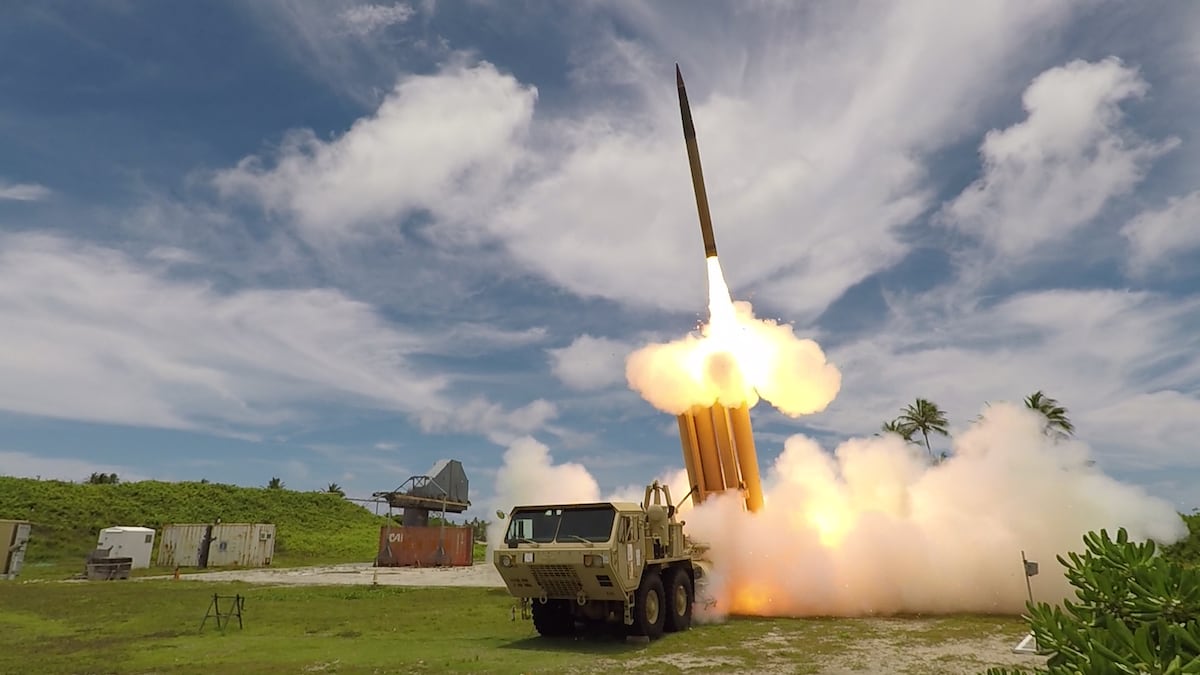
This agreement with BAE Systems is tied to a previous contract established in January between the Pentagon and Lockheed Martin, aiming to increase the annual output of THAAD interceptors from 96 to 400 units. The enhanced production capacity is expected to bolster the defense capabilities against potential threats.
Tom Arseneault, president and CEO of BAE Systems, stated in a release, “This new multiyear agreement provides a long-term demand signal that gives us the confidence to further invest in expanding our capacity. We remain focused on rapidly delivering superior technology at scale to help our warfighters maintain a decisive advantage.”
The technology behind BAE’s THAAD seeker involves sophisticated sensors that can detect and lock onto ballistic missiles traveling at speeds of up to 17,000 miles per hour. Once a threat is identified, the THAAD interceptor employs a non-explosive, hit-to-kill mechanism to neutralize it, both within and outside the atmosphere.
Similar to Lockheed Martin’s arrangement, BAE’s contract for infrared seekers spans seven years. Concurrently, Lockheed announced a separate seven-year agreement to increase production of its PAC-3 interceptors from 600 to 2,000 annually.
The timing of these agreements is critical as the U.S. military faces scrutiny over its high-cost interceptors being used against relatively inexpensive munitions, particularly those used by Iran in recent operations. Iran’s production of Shahed drones, reportedly at 10,000 per month, highlights a significant cost disparity, with each drone costing around $35,000 compared to a PAC-3’s estimated $4 million price tag.
Despite the financial considerations, the Pentagon’s decision to ramp up THAAD production underscores the importance of these systems in national defense strategy. Michael Duffey, undersecretary of defense for Acquisition and Sustainment, remarked, “Securing our supply chain is just as critical as our partnership with the prime contractors. This agreement with BAE Systems sends a clear, stable, long-term demand signal. We are providing the certainty our partners need to invest, expand and hire. This is how we place the industrial base on a wartime footing.”
The production of BAE Systems’ THAAD seekers will be completed at its facilities located in Nashua, New Hampshire, and Endicott, New York.