U.S. Struggles to Counter Iran’s Strategy in Hormuz Strait Despite Air Superiority
Amid ongoing conflict, the strategic Strait of Hormuz remains a critical point of contention between the United States and Iran. Iranian Foreign Minister Abbas Aragchi recently asserted on state television, “Iran’s power is the Hormuz Strait.” While the U.S. has achieved notable military successes, including the striking of over 10,000 Iranian targets, the strait continues to be effectively closed due to Iran’s persistent drone and missile threats.
Iran aims to pressure the United States economically and politically, hoping to make the continuation of the conflict too costly for Washington. This strategy exploits a gap in U.S. military doctrine, specifically the difference between air superiority and air denial. By maintaining a threatening presence in the air littoral, Iran has managed to keep the strait closed despite U.S. military efforts.
The U.S. has achieved air superiority over certain regions of Iran, which allows for large-scale military operations. As Gen. Dan Caine, chairman of the Joint Chiefs of Staff, noted on Tuesday, “Given the increase in air superiority, we’ve successfully started to conduct the first overland B-52 missions.” However, the closure of the strait indicates a shortfall in achieving comprehensive air superiority.
According to Air Force Doctrine Publication 3-0, air superiority should prevent interference with operations across various military domains, including naval escorts through the Strait of Hormuz. However, Iran’s strategy of air denial has challenged this capability by making the air domain too perilous for routine operations.
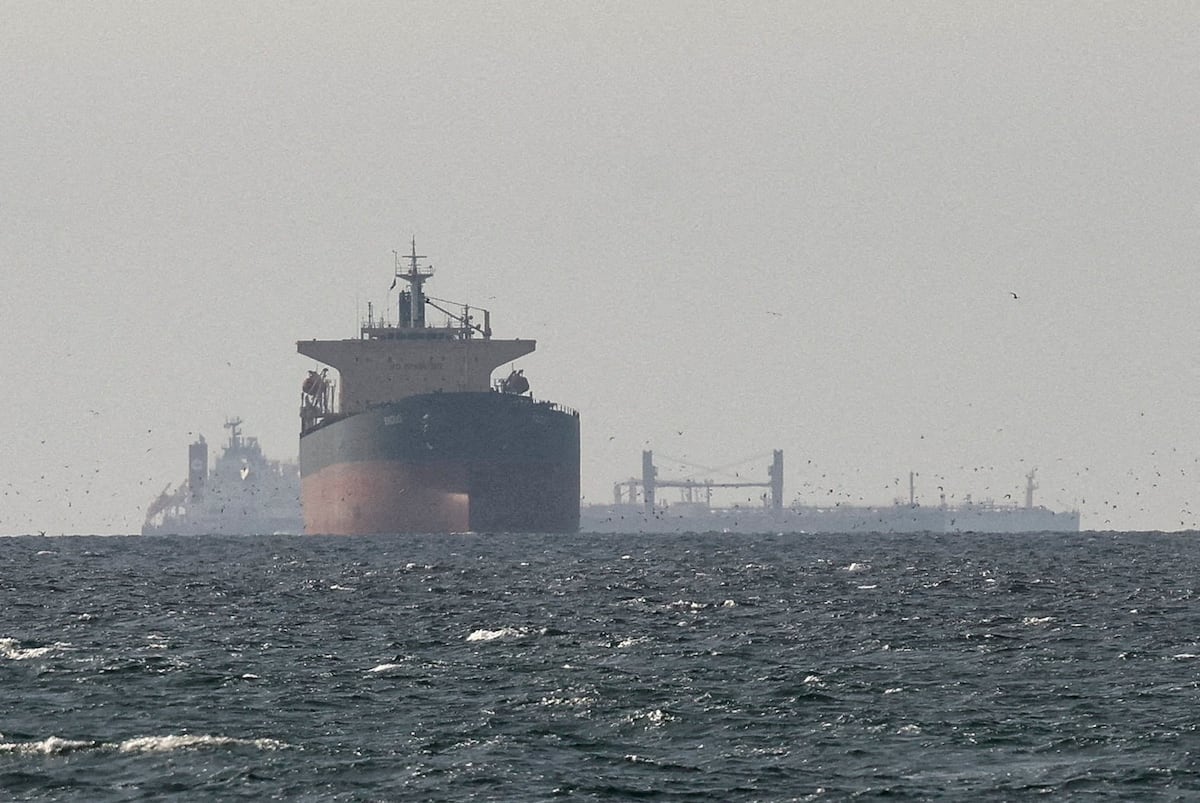
Iran’s use of drones and missiles, particularly around the Strait of Hormuz, exemplifies their air denial strategy. In recent weeks, Iran has targeted over 20 commercial vessels, resulting in the deaths of at least seven sailors and significantly disrupting shipping lanes. Only a few ships have managed to pass through, often by paying substantial fees to Iran. The U.S. Navy has reportedly refrained from providing military escorts due to the ongoing threats.
This strategy has led to economic repercussions, including a one-dollar increase in gas prices and volatility in U.S. stock markets. The pressure on the U.S. administration to de-escalate the conflict is mounting.
Iran’s approach draws from tactics previously used in the Red Sea, where similar methods imposed substantial costs on U.S. forces. The U.S. military has struggled to adapt to Iran’s low-cost, dispersed systems that challenge the more traditional, high-cost platforms typically employed by the Pentagon.
To address these challenges, experts suggest the need for investment in scalable, low-cost systems capable of maintaining control over the air littoral. The current focus on high-end aircraft has left a gap in capabilities, particularly in areas like the Strait of Hormuz, where continuous and adaptive air defense is crucial.
The situation underscores the necessity for the U.S. to reevaluate its strategic priorities, emphasizing the development of systems that can effectively counter distributed threats. The ongoing conflict illustrates the consequences of past procurement decisions and highlights the urgency of adapting to current military realities.
Maximilian K. Bremer is a nonresident fellow with the Reimagining US Grand Strategy Program at the Stimson Center and head of Mission Engineering and Strategy for Atropos Group.
Kelly A. Grieco is a senior fellow with the Reimagining US Grand Strategy Program at the Stimson Center and adjunct professor in the Center for Security Studies at Georgetown University.