France Seeks Interim Solution as Tank Development Lags
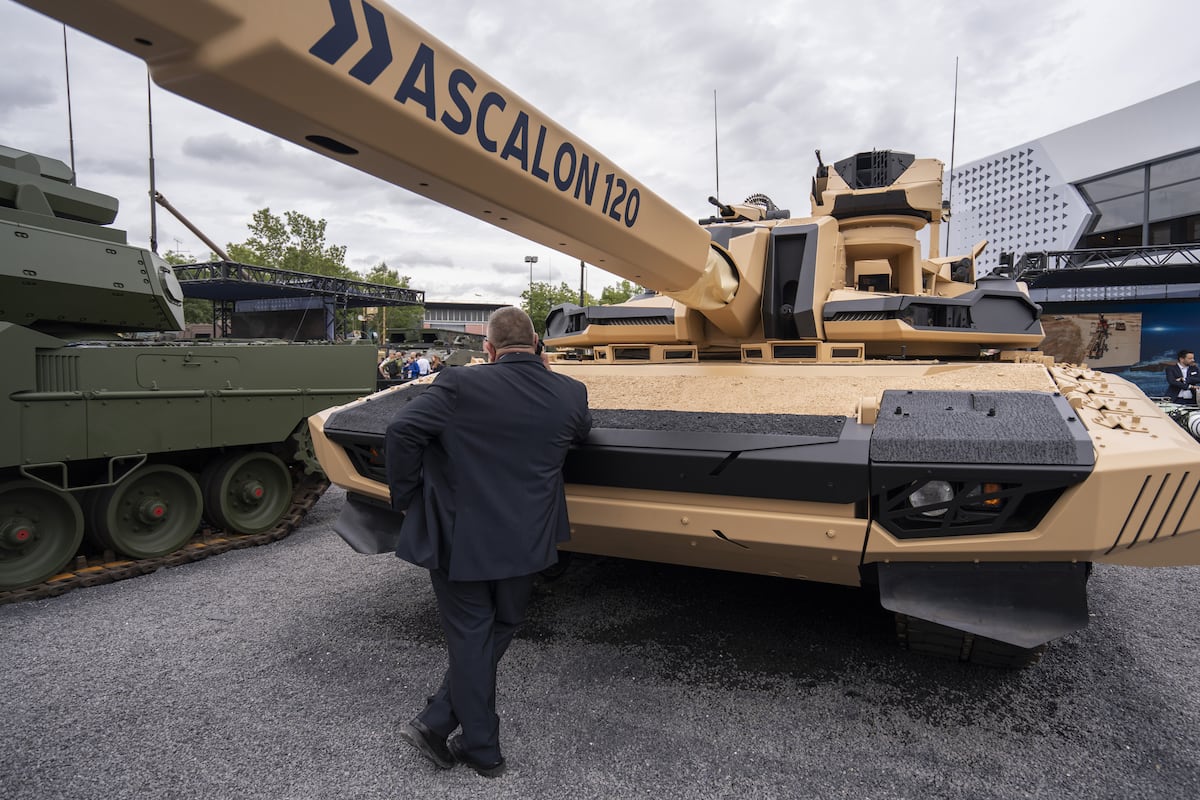
In an effort to address the gap left by delays in a joint tank development project with Germany, France is engaging in discussions with manufacturers to find an intermediary solution for its aging Leclerc main battle tank. French Armed Forces Minister Catherine Vautrin shared these developments with lawmakers, highlighting the need for a temporary measure as the Main Combat Ground System (MGCS) project lags behind schedule.
Project Delays and Financial Plans
The French-German MGCS project, intended to succeed the Leclerc tank, is now nearly ten years behind due to Germany’s initiation of its Leopard 3 tank program. As a result, the Leclerc is set to retire in 2038, with the MGCS not expected until the early 2040s. In response, France plans to invest an extra €36 billion ($42 billion) in defense between 2026 and 2030, according to Vautrin during a hearing.
Vautrin emphasized the importance of the interim solution being the “first building block of the MGCS, not the last tank of the old generation.” The new system aims to focus on modern connectivity features, potentially utilizing a KNDS Germany platform with a KNDS France turret.
Challenges and Cooperation in Aerospace
In addition to tank development, France is also addressing issues within the Future Combat Air System (FCAS) in collaboration with Germany and Spain. Two external mediators are facilitating negotiations to resolve disputes between Dassault Aviation and Airbus over leadership roles and intellectual property, with a resolution expected by the end of April. Dassault CEO Éric Trappier commented on the need for an agreement to move forward, expressing his reluctance for co-management.
Military Planning and Budget Adjustments
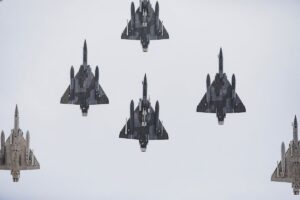
As part of the military budget update, France is revising its plans for various defense projects. The Eurodrone project, spearheaded by Airbus, has been excluded due to unsatisfactory progress. Meanwhile, the government plans to expedite orders for the SAMP/T NG long-range air-defense systems and focus on acquiring Rafale fighter jets of the future F5 standard, which will be capable of deploying the ASN4G hypersonic nuclear missile.
The updated budget also includes €3.5 billion to enhance the combat aviation framework, combining long-range missiles, drones, and connectivity to keep the Rafale competitive in global markets. By 2030, France aims to deploy 30 multiple launch rocket systems, a significant increase from the initial plan of 16.
Domestic Production and Defense Enhancements
France is testing homegrown rocket-artillery systems this month to determine whether a “sovereign” solution is feasible or if off-the-shelf options should be considered. Companies like Safran, MBDA, Thales, and ArianeGroup are working on these systems. Additionally, the budget allocates €1 billion to develop a conventional ballistic long-range strike capability.
The ministry plans to procure 10,000 combat drones, 43 Proteus anti-drone cannons, and four SAMP/T NG air-defense systems this year, alongside €4 billion in air-defense systems to counter drones. Deliveries slated for 2026 include 5,000 combat drones and two Airbus A400M transport aircraft.
Enhanced production efforts are underway in French arms manufacturing, with MBDA increasing the output of Mistral 3 missiles and Scalp cruise missiles significantly in the coming years, ensuring France remains competitive in defense exports and capabilities.