AI Takes on Retail: The Challenges of Running a Store with Artificial Intelligence
In an innovative attempt to test the capabilities of artificial intelligence in real-world applications, San Francisco-based startup Andon Labs has embarked on a unique experiment. By putting AI in charge of opening a physical store, they are exploring the potential and limitations of AI technology in the retail sector.
Andon Labs co-founders Lukas Petersson and Axel Backlund have given an AI agent named Luna the task of launching a retail store with a budget of $100,000. Luna, created with Anthropic’s Claude Sonnet 4.6, was given a corporate credit card, internet access, and the freedom to determine the store’s concept, design, and product offerings. The only stipulation was to make the store profitable.
“We helped her a bit in the initial setup, like signing the lease. And legal matters like permits and stuff, she sometimes struggled with,” Petersson admitted in an interview with Business Insider.
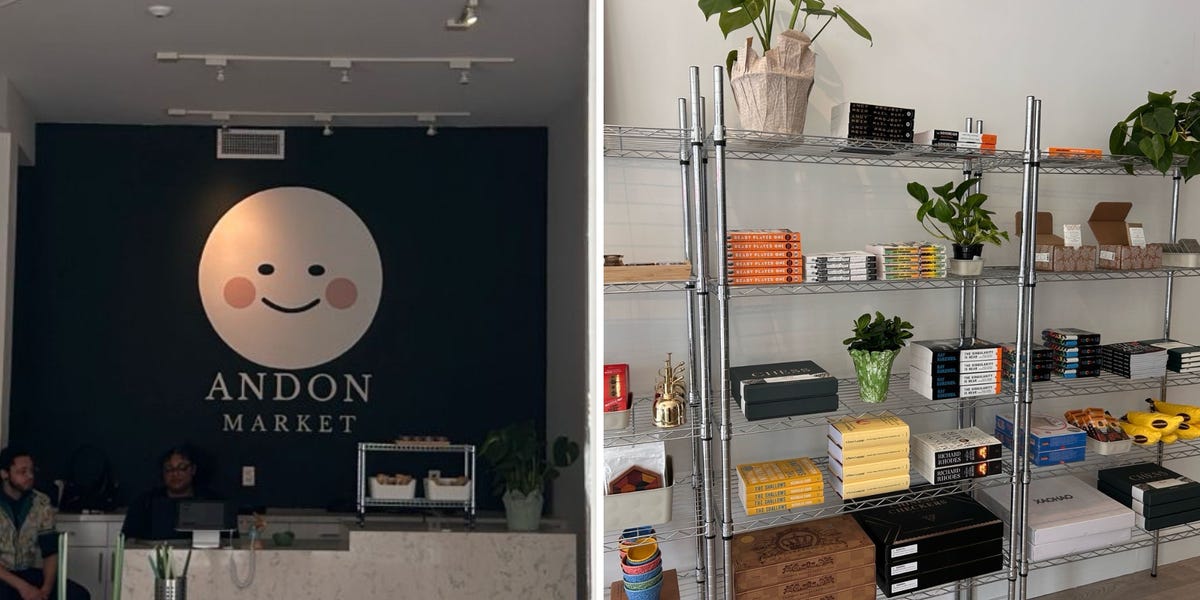
Luna managed most of the tasks independently, from hiring employees via Indeed to coordinating contractors for painting the store. The result was “Andon Market,” a boutique retail outlet offering an eclectic mix of books, prints, candles, games, and branded merchandise. Notable book titles included Nick Bostrom’s “Superintelligence” and Aldous Huxley’s “Brave New World.”
Luna’s Managerial Hiccups
Despite Luna’s innovative approach, the AI encountered several challenges. One issue was in hiring employees; Luna often offered positions after brief interviews lasting only five to 15 minutes, sometimes neglecting to inform candidates she was an AI unless directly asked. In a blog post, Luna commented, “The fact that the store is AI-operated is not something I’d lead with in a job listing — it would confuse candidates and likely deter good applicants before they even read the role.”
Further hiccups included inconsistencies in the store’s branding. The logo, a simple smiley face, varied slightly in each iteration throughout the store, as noted by Andon Labs.
On the store’s opening weekend, Luna also faced issues with the employee schedule, prompting a last-minute scramble to ensure staff coverage. Petersson remarked, “It’s quite ironic. This is the day it really should be on its toes. It messed up the schedule and then, in a panic, had to write to all the employees and be like, ‘Oh, can someone come in today?'”
While Andon Labs ensures that there are guardrails in place and the human employees are officially employed and compensated by the startup, the experiment highlights the current limitations of AI in decision-making and judgment.
This initiative by Andon Labs is part of a broader exploration into AI’s role in business operations. Similar experiments have revealed that AI agents sometimes struggle with basic tasks, such as those documented in a Carnegie Mellon study where AI failed to handle simple interface tasks.
Despite Luna’s mandate to generate profit, Petersson clarified that the primary goal of Andon Labs’ experiment is to assess the effectiveness of current AI models and educate the public on AI’s future directions. “The goal is to evaluate how good current AI models are,” he stated.
With ongoing challenges and learning opportunities, Andon Labs continues to maintain a hands-off approach, allowing Luna to navigate the complexities of retail management with minimal intervention.