The NFL draft is more than just a sports event; it’s a massive operation that transforms host cities, boosting local economies while requiring extensive planning for public safety. As the NFL draft prepares to land in Pittsburgh in 2026, the lessons from Detroit’s 2024 experience serve as a valuable blueprint for what’s to come.
Detroit’s 2024 NFL draft was a resounding success, pulling in over 775,000 attendees and generating an economic impact of $214 million, with $161 million stemming from visitor spending alone. Visitor spending refers to the direct expenditures by those traveling to the city for the event, while the broader economic impact encompasses the ripple effect of these expenditures on the local economy, such as increased demand for restaurant supplies, hotel staffing, and vendor purchases.
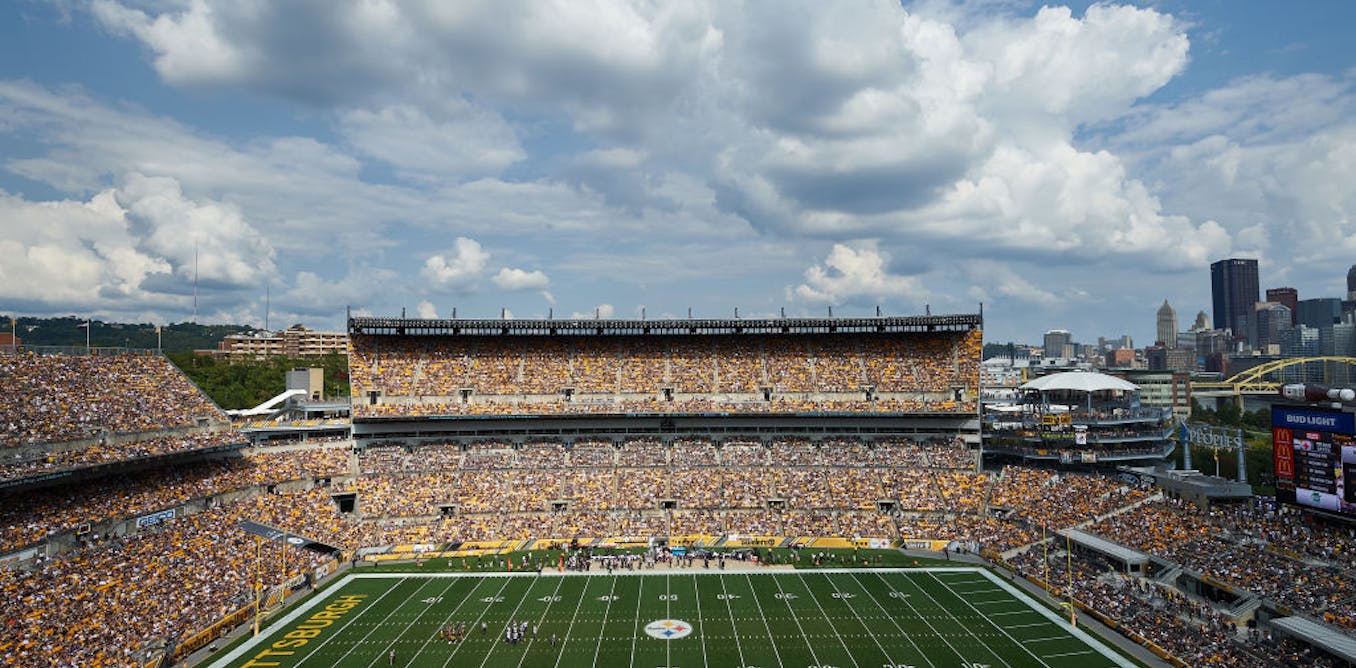
Looking ahead, Pittsburgh is set to host the 2026 NFL draft from April 23-25. The city anticipates welcoming 500,000 visitors, bringing along an economic boost of approximately $200 million, according to Steelers executive Dan Rooney III.

Icon Sportswire via Getty Images
While the economic impact of such events garners much attention, the preparations required to host them safely are equally significant. Hosting the NFL draft is akin to organizing a marathon or a major concert, necessitating exhaustive emergency response and public safety strategies. Research indicates that large gatherings can increase demands on emergency services, stressing local systems and requiring thorough coordination across various agencies long before the event.
A Gathering of Enormous Scale
Pennsylvania officials are already deep into preparations for the 2026 draft, involving months of planning with emergency management, law enforcement, and transportation agencies. This includes event space walkthroughs, traffic arrangements, risk assessments, and drills to test communication methods during emergencies. For instance, Pennsylvania State Police conducted a helicopter landing at Point State Park as part of their training exercises.
Ensuring the safety of large crowds involves more than just a visible security presence. It requires a robust system to manage routine medical issues while maintaining the capacity to address serious emergencies. Effective coordination is key, and much of this work happens away from the public eye.
Insights from Sports Medicine
Emergency action planning in sports medicine offers a model for reliable preparedness. This involves clear role definitions, communication protocols, and ensuring access to necessary equipment and transport. A coordinated response is essential, especially in a city like Pittsburgh during the draft, where questions about medical care delivery, transportation to hospitals, and emergency communication become critical.
Detroit’s draft spanned approximately 2 million square feet, illustrating the complexity of managing such an event. It requires transforming the city into a temporary urban system, with controlled access points, medical team positioning, and protected emergency routes.

Icon Sportswire via Getty Images
Road closures and traffic congestion are part of this emergency response framework. They influence how quickly medical services can reach those in need, making traffic planning a matter of clinical risk management rather than just convenience.
The Financial Commitment Behind the Scenes
Hosting such a large event involves considerable public investment. The Pittsburgh City Council has allocated $1 million for the 2026 draft, while state and local agencies are involved in extensive security, transportation, and emergency planning.
In Green Bay, Wisconsin lawmakers sought $1.25 million to cover event-related costs for the 2025 draft, with Gov. Tony Evers announcing an additional $1.8 million to support public safety expenses post-event.
These financial commitments underscore the substantial resources required to manage such events safely. The economic benefits are real, but they are made possible through significant public investment in safety and infrastructure.

Aaron J. Thornton via Getty Images Entertainment
However, the full cost of hosting is often only partially visible, as some expenses are not disclosed for security reasons. In Pittsburgh, state, county, and city officials have collectively allocated at least $14 million to VisitPittsburgh, the nonprofit tourism agency tasked with planning the draft. The agency must match $5 million of this funding.
The headline economic figures highlight the event’s upside but do not account for the public safety and emergency response expenditures required to facilitate the draft. The true story lies in the systems and infrastructure that ensure the event’s success, illustrating that economic gains rely heavily on behind-the-scenes efforts.