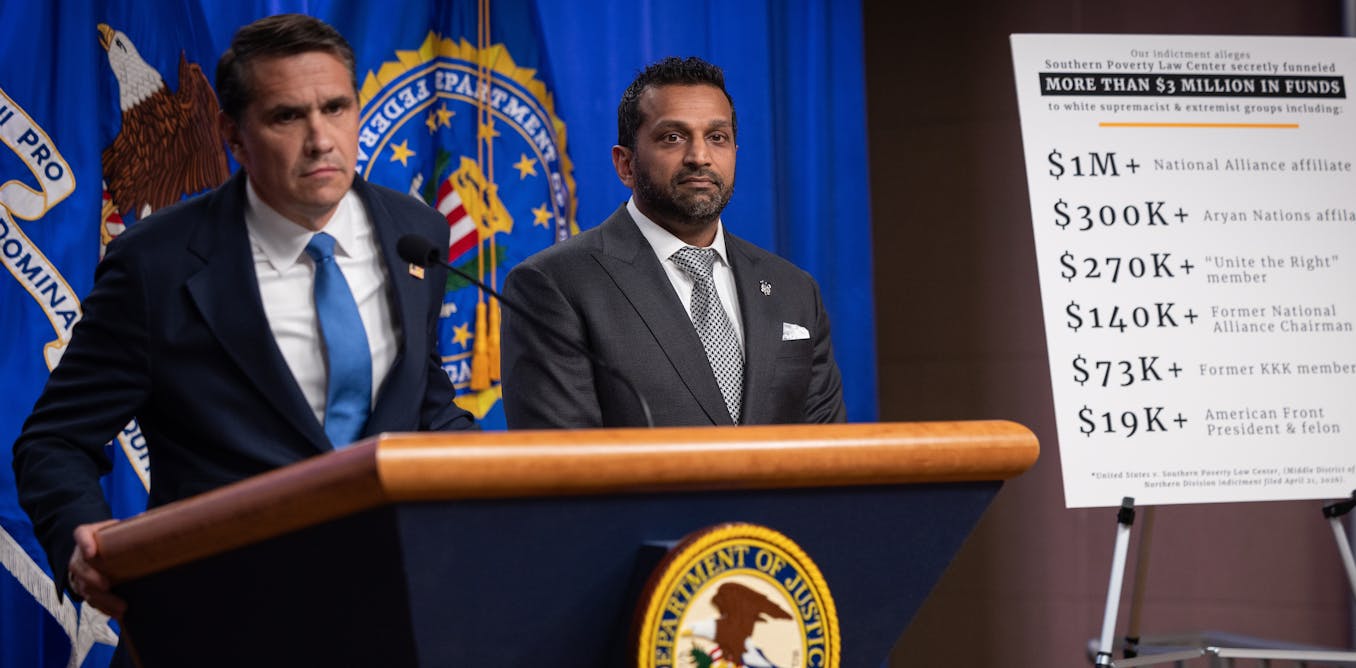
In a surprising legal development, the Southern Poverty Law Center (SPLC) was indicted on federal fraud charges on April 21, 2026. The allegations from the Justice Department state that the SPLC improperly raised millions to pay leaders of extremist groups like the Ku Klux Klan for insider information.
Based in Montgomery, Alabama, and established in 1971, the SPLC is accused of defrauding donors by misrepresenting how donations would be used. The SPLC has vowed to “vigorously defend ourselves, our staff, and our work” against what it calls false allegations.
The Conversation U.S. sought insights from Beth Gazley, an Indiana University expert on nonprofits, to understand the broader implications and context of this indictment.
Fraud in Nonprofits: How Common Is It?
Nonprofits, like any other institutions, are expected to adhere to the law. Although accusations of fraud among nonprofits occur, they remain relatively rare. A study covering 2008-2011 identified 219 fraud cases within approximately 1.5 million registered U.S. nonprofits, with only 20 cases involving donor fraud.
The American Society of Fraud Examiners has reported similar low instances of nonprofit fraud, with notable exceptions like the “Feeding Our Future” scandal during the pandemic, where a Minnesota nonprofit fraudulently acquired $250 million from federal funds.
Federal actions against nonprofits without government funding are rare since state attorneys general typically handle such cases. The SPLC, which doesn’t accept government grants, finds itself in an unusual legal scenario.
The SPLC reportedly paid over $3 million to informants in extremist groups. Though federal prosecutors suggest crimes were supported by these funds, no specific incidents have been cited.
Understanding Donor Accountability
Donor agreements with charities sometimes specify how funds should be used, such as naming a building after a donor. If terms are unmet, donors may seek recourse through contract law. However, most donations are unrestricted, supporting the nonprofit’s overall mission and at the discretion of its board.
The SPLC’s legal troubles center on payments to informants within hate groups, allegedly violating its mission to “dismantle white supremacy.” Bryan Fair, interim CEO, defended these actions as furthering the organization’s goals through undercover operations.
Undercover Operations: A Common Practice?
The SPLC shared information from informants with law enforcement, including the FBI, until the FBI severed ties in 2025, citing First Amendment concerns. While controversial, nonprofit surveillance is not illegal unless it breaches other laws, such as privacy.
Organizations like Project Veritas and the Center for Medical Progress also conduct undercover activities using donor funds.
The Larger Implications
The SPLC’s indictment is part of broader efforts by the Trump administration to challenge nonprofits supporting progressive causes. Attempts to label such organizations as “domestic terror groups” have not succeeded.
Proving the SPLC’s deliberate deception in court requires showing the nonprofit knowingly funded criminal activities. This parallels past cases, like Georgia’s action against environmental activists, which focused on individuals rather than organizations.
Ultimately, the activities of SPLC informants may be protected under free speech rights unless they can be shown to directly support illegal actions.