The Sudden Demise of Spirit Airlines: Impact on Travelers and Employees
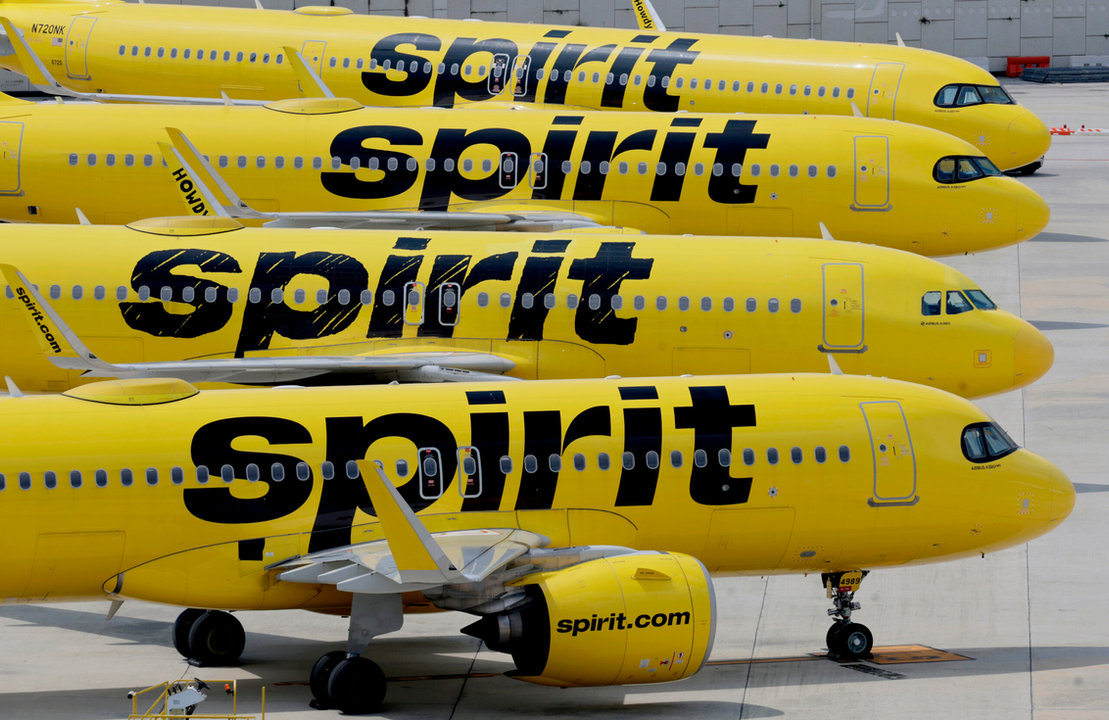
Spirit Airlines, known for its budget-friendly airfares and distinctive bright yellow planes, has ended its 34-year journey, leaving both its passengers and employees in search of alternatives. The airline’s closure marks a significant turn in the travel sector, as Spirit was a pioneer in providing economical travel options to millions of Americans.
This week, Spirit Airlines declared an “orderly wind-down” of its operations. This immediate action terminated all flights and customer service operations, placing approximately 17,000 jobs at risk. The airline’s exit signifies the loss of a major player that had redefined air travel costs in the United States.
One of the critical factors leading to Spirit’s downfall was a steep increase in jet fuel prices, spurred by political tensions such as the U.S. administration’s actions against Iran and disruptions in the Strait of Hormuz—a vital channel for global oil supplies. This surge in costs burdened the airline with an extra $100 million in fuel expenses between March and April alone, according to CFO Fred Cromer.
The Trump administration considered a $500 million rescue package for Spirit, with a “final proposal” for a taxpayer-funded buyout presented by President Donald Trump. Unfortunately, this deal unraveled due to objections from creditors and some Republican lawmakers. Cromer announced in a court declaration that the proposed financing “was no longer an available option.”
Tad DeHaven from the Cato Institute attributed part of the airline’s struggles to the policy decisions made during the Trump years, particularly the approach towards Iran, calling it “bad foreign policy.” These decisions escalated fuel costs, exacerbating the financial distress Spirit was already facing.
All Spirit aircraft were grounded by 3 a.m. Saturday to avoid in-flight disruptions. The final journey ended at Dallas Fort Worth International Airport from Detroit Metropolitan Airport. Many passengers found themselves stranded nationwide. At Atlanta’s airport, some flights were still falsely listed as “on time” that Saturday morning.
Taylor Nantang, hoping for a quick vacation, was shocked by the abrupt news at the airport, exclaiming, “So the whole airline at every airport is out of business? Oh my, that’s crazy.” Similarly, Joshua Sigler, who bought a ticket a day before his planned departure, received no prior notice from the airline. His experience summed up, “They get you there. It was cheap.”
Employees were equally unprepared for Spirit’s shutdown. Freddy Peterson, a flight attendant who had just completed a flight, was awakened by rumors of the closure. Confirming the news, Delta Air Lines facilitated his return to Atlanta. Reflecting on Spirit, Peterson noted how the airline had positively impacted his life but criticized management’s handling of events, notably the last-minute cancellation of an employee town hall without explanation.
In the wake of the shutdown, Spirit’s Secretary Duffy clarified that a reserve fund was in place for customer refunds for tickets purchased directly, advising those who booked through third-party vendors to seek refunds from those sources. Airlines including United, Delta, JetBlue, and Southwest offered limited-time $200 one-way fares to Spirit ticket holders showing proof of purchase. They also extended support to stranded Spirit employees, proposing preferential hiring processes.
Spirit’s closure is anticipated to hit budget-conscious travelers deeply, especially in regions such as Las Vegas and cities in Florida like Fort Lauderdale and Orlando, where the airline had a robust presence. Labor unions had warned that its exit could shrink competition and elevate airfare costs. Prior to halting operations, Spirit’s market presence had already declined, with February’s domestic passenger count dropping significantly compared to the previous year, as per Cirium, an aviation analytics firm.
As Spirit winds down, it plans to sell its aircraft, engines, and other assets, retaining a minimal workforce initially to manage this process. CEO Fred Cromer stated, “We are proud of the impact of our ultra-low-cost model on the industry over the last 34 years and had hoped to serve our guests for many years to come.” The full shutdown winds back an era in affordable travel, casting doubt on future low-cost options for air travelers.