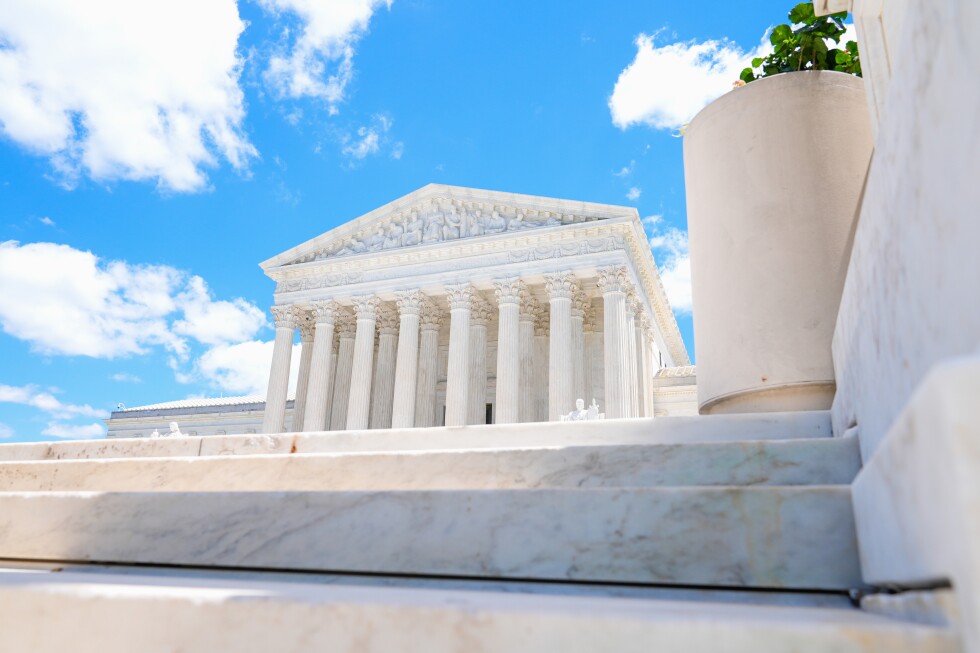
The Supreme Court has recently directed lower courts to revisit a decision affecting Native American tribes, following its recent revision of the Voting Rights Act. This move comes after a significant ruling that has altered the landscape for enforcement of this key civil rights legislation.
In a case originating from North Dakota, two Native American tribes had challenged a ruling by the 8th U.S. Circuit Court of Appeals. This court decided that only the federal government has the authority to enforce the Voting Rights Act, a stance that deviates from longstanding interpretations allowing voter and advocacy group lawsuits under Section 2 of the Act.
The Supreme Court had previously intervened in July, preventing the enforcement of the appeals court’s ruling and temporarily maintaining tribal-preferred electoral maps. However, the implications of the appeals court decision have extended beyond this case, with states like Mississippi referencing it in similar legal battles over legislative maps.
Justice Ketanji Brown Jackson expressed disagreement with the Supreme Court’s recent actions, advocating for the reversal of both the North Dakota decision and a related case in Mississippi. Despite this dissent, the conservative majority of the court has already shown a tendency to limit the scope of the Voting Rights Act in previous decisions.
In an earlier ruling, the court invalidated a majority Black congressional district in Louisiana, arguing that the district was overly reliant on racial considerations. This decision has further raised the threshold for proving discrimination in voting maps, requiring evidence of intentional design to discriminate.