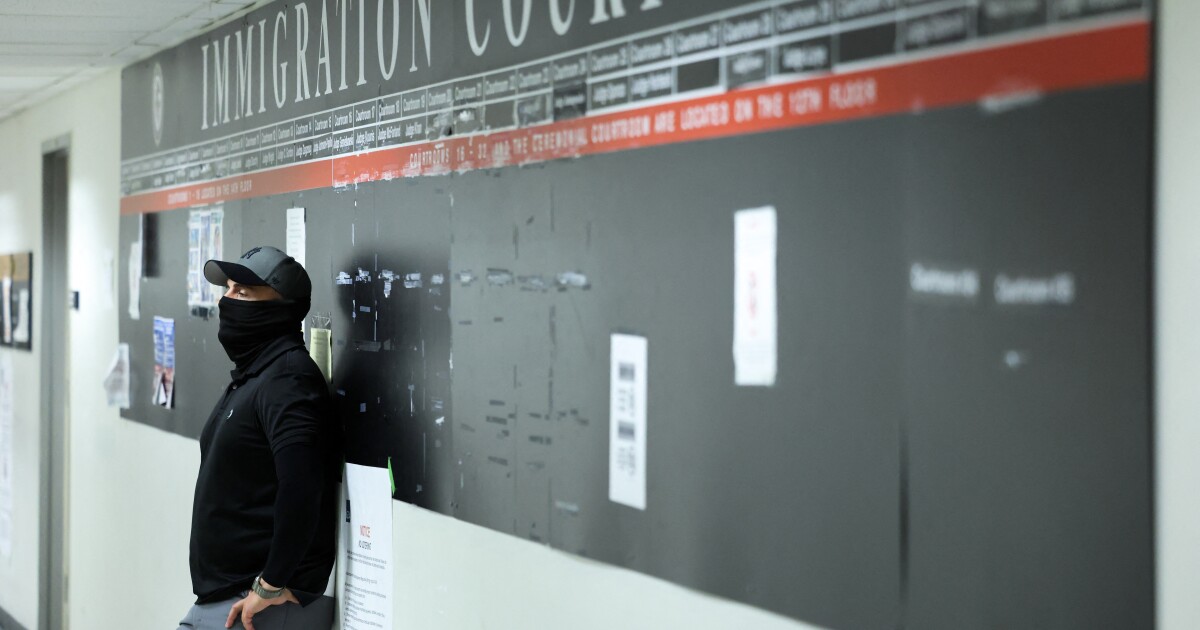
Immigration Courts Speed Up Deportation Hearings
Immigration courts within the Justice Department are adopting a new approach to accelerate immigrants’ hearings and increase the issuance of deportation orders. This unprecedented tactic involves scheduling massive master calendar hearings, known as “mega masters,” where 100 or more individuals appear at once. The aim is to expedite the deportation process, particularly targeting individuals without legal representation.
No Notice, Overwhelmed Courthouses
Individuals who fail to attend their scheduled hearings can receive removal orders, enabling immigration officers to detain and deport them. This practice has become more common under the current administration, leading to fewer individuals showing up in court due to the fear of being detained. Concerns have been raised by immigration attorneys that immigrants, especially those without legal counsel, may not receive adequate notice of rescheduled hearing dates, potentially resulting in deportation orders.
Moreover, these large-scale hearings, comprising individuals whose original hearings were set for 2027, 2028, or 2029, could overwhelm court staff, judges, and courtroom capacities. While some cases may benefit from earlier scheduling, the majority of immigrants in court lack legal representation and are unlikely to experience these advantages.
DOJ Begins to Staff Up to Take on Cases
This recent strategy of hosting mega masters aligns with the Department of Justice’s efforts to expedite immigration cases, alongside prioritizing specific nationalities and juvenile immigrant cases. The agency has recently added 77 new judges and five temporary military lawyers serving as judges, marking the largest recruitment of immigration judges in a fiscal year.
Acting Attorney General Todd Blanche emphasized the administration’s commitment to establishing an immigration judge corps dedicated to upholding the rule of law within the immigration system. Despite facing significant judge turnover in the past year, the agency continues to bolster its judicial ranks to address the backlog of immigration cases.