Voter Confidence in Georgia Faces Renewed Scrutiny
ATLANTA — The decision by Georgia legislators to keep the state’s controversial voting machines until 2028 has reignited the debate over election integrity in the state.
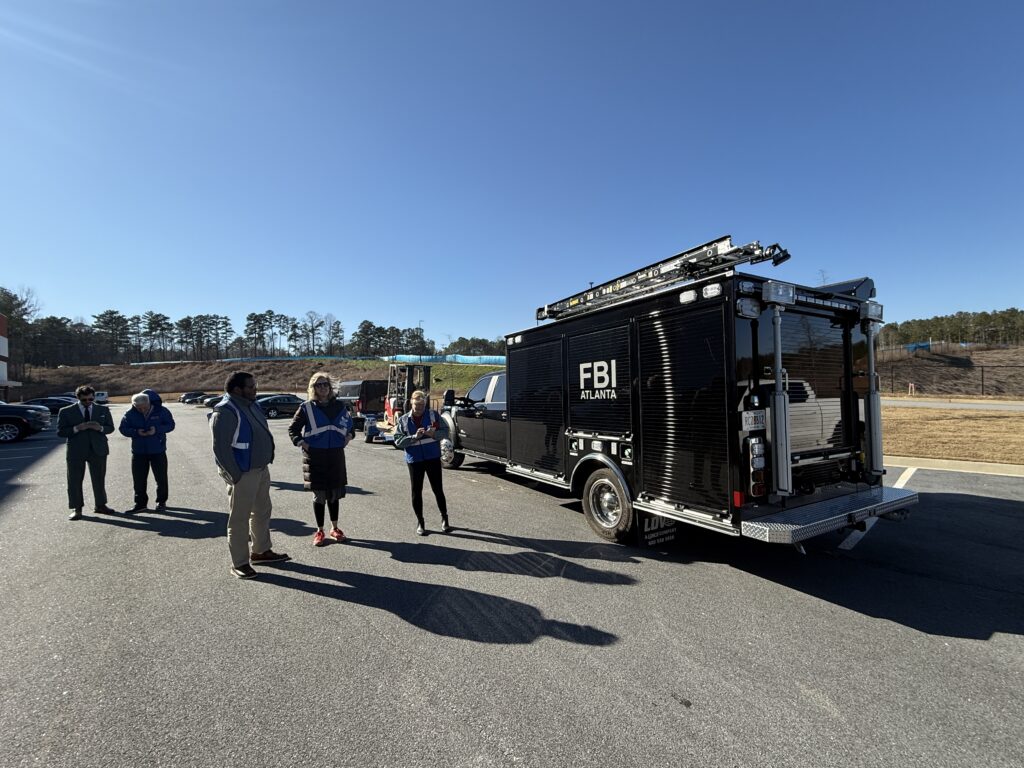
Following the legislative move to extend the machines’ use, which employ QR codes for vote tallying, the U.S. Department of Justice announced plans to deploy 260 FBI analysts to Atlanta. This is part of an investigation into the 2020 elections, succeeding an FBI raid in January at Fulton County’s election warehouse where over half a million ballots were seized.
In parallel, the Federal Emergency Management Agency has warned that states not transitioning to hand-marked paper ballots could face cuts in anti-terrorism funding.
Despite these developments, the Trump administration encountered a legal obstacle when a federal judge in Atlanta denied its request for personal details of Fulton election workers. U.S. District Judge William M. Ray II ruled that the statute of limitations for any 2020 crimes had expired, thus rejecting the Justice Department’s grand jury subpoena.

Judge Ray emphasized that sharing sensitive data could deter future election participation, impacting Fulton County significantly. He described the subpoena as an “arbitrary fishing expedition.”
Fulton Commissioner Dana Barrett welcomed the ruling, suggesting it should dispel lingering conspiracy theories about the 2020 election’s legitimacy. Barrett criticized ongoing efforts to undermine confidence in Fulton County’s elections, arguing they are politically motivated.
The election board, predominantly Republican, has approved new rules addressing election mistrust. One prohibits the use of optical character recognition for vote counting, a feature not used by Georgia’s current systems. Another mandates that Secretary of State Brad Raffensperger allow board members to observe the aggregation of votes on election night.
Despite the Georgia Attorney General’s warning that the board lacks authority over Raffensperger, the rule was passed. Additionally, a public consultation on disqualifying existing voting machines over privacy concerns has begun, driven by worries over the machines’ display sizes.
While Republican board members suggest a push towards hand-marked ballots, local election officials express concerns about the logistical challenges of changing systems before upcoming elections.
Republicans previously legislated a ban on QR codes for voting, set to take effect in 2028, but failed to fund an alternative. This led to the postponement of the ban.
Democratic lawmakers, including Rep. Carolyn Hugley, have criticized the focus on QR codes, linking it to unsubstantiated claims about the 2020 election outcome.
Secretary of State Raffensperger continues to defend the accuracy of the voting machines. His office recently reviewed the results of a runoff election, finding minimal discrepancies in hand-marked ballots and none in digital voting.
Despite audits confirming the machines’ accuracy, skepticism remains among some Republican lawmakers and voters. A PBS News/NPR/Marist poll from March revealed a decline in national trust in fair elections, with only two-thirds of Americans confident in their integrity.
However, a survey in April showed that a significant majority of Georgia GOP voters are confident their votes will be counted fairly in 2026.
The Democracy Defense Project, seeking to counteract false election narratives, has noted strong bipartisan belief in fair elections in Georgia, despite ongoing voter skepticism fueled by recent events.