The U.S. Army’s Strategic Overhaul: Navigating Budget Constraints and Modernization Needs
As the U.S. Army embarks on a significant reorganization effort, financial limitations and growing demands both domestically and internationally pose substantial challenges. This transformation, marked by one of the most extensive restructurings in decades, coincides with a pursuit of increased efficiency under a constrained fiscal environment.
In its fiscal 2026 budget proposal, the Army has requested $192 billion for its base budget. Additionally, the Army anticipates securing $5.4 billion through a separate $113 billion spending bill currently under congressional debate. This would bring the total budget to $197.4 billion, reflecting a nearly 7% increase from the previous year’s $184.6 billion budget.
Key to this transformation is the Army’s decision to streamline its operations. Plans include consolidating major commands, restructuring forces, and canceling certain programs to make room for initiatives aimed at enhancing overall combat effectiveness.
An Army official highlighted the need to “divest” from outdated or ineffective equipment to “invest” in strengthening combat formations. Consequently, the Army seeks to divest $4.9 billion worth of older equipment, including Paladin Integrated Management howitzers, legacy anti-tank missiles, Gray Eagle Unmanned Aircraft Systems, and Humvees.
Additionally, the Army’s budget proposal outlines a reduction in funding for the M10 Booker, the Joint Light Tactical Vehicle, the Improved Turbine Engine Program, and Future Tactical UAS programs.
Organizational changes are also on the horizon, with plans to consolidate Army Futures Command with Training and Doctrine Command and merge Army Forces Command, U.S. Army North, and U.S. Army South into the newly proposed Western Hemisphere Command.
In terms of investments, the Army is focusing on countermeasures against enemy drones by requesting $729 million to expedite the procurement of Maneuver Short Range Air Defense vehicles and integrating counter-UAS capabilities into maneuver platoons. Additionally, the Army aims to enhance its air and missile defense systems by requesting $1.3 billion for the Lower-Tier Air and Missile Defense Sensor.
Further, the Army is accelerating its Future Long-Range Assault Aircraft program with a $1.2 billion investment, and plans to allocate $723.5 million to develop M1E3 Abrams tank variants.
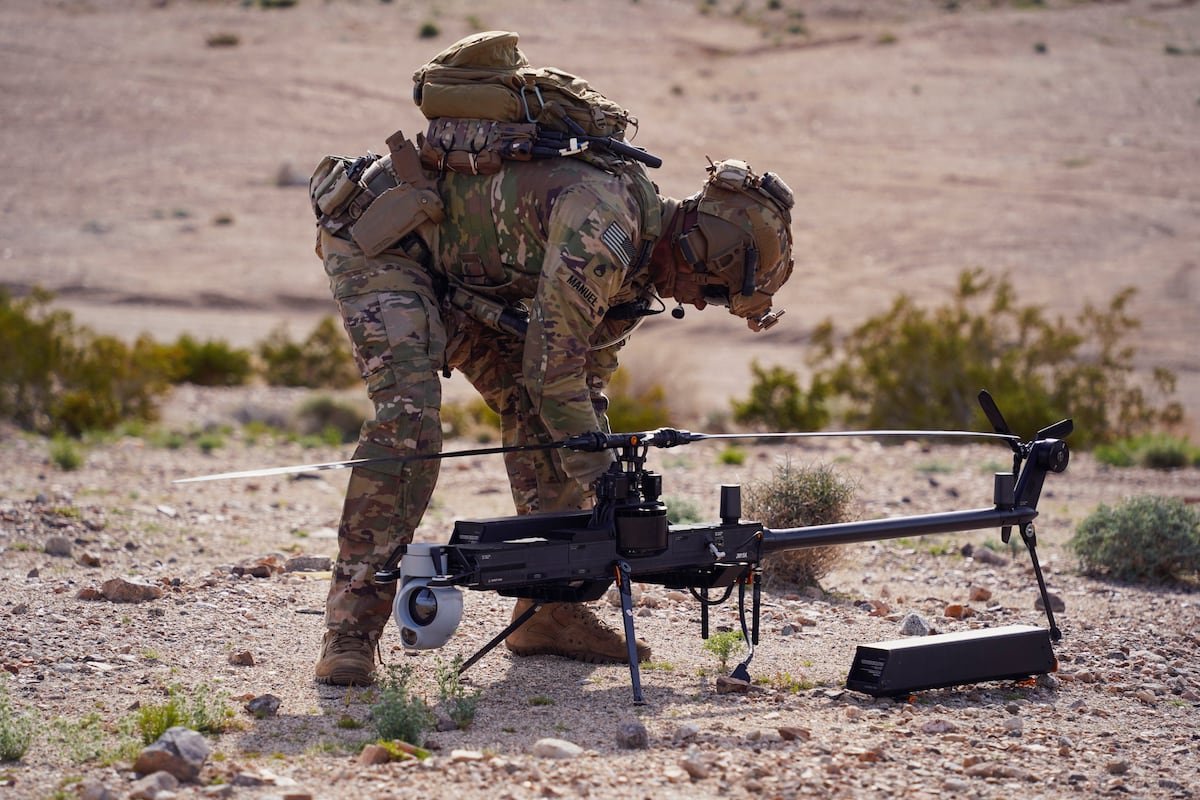
To enhance unmanned capabilities, the Army intends to procure commercial drones for 10 Brigade Combat Teams using a new funding mechanism introduced in the fiscal 2026 request. The proposal includes $1.7 billion in agile funding for UAS, counter-UAS, and Electronic Warfare initiatives.
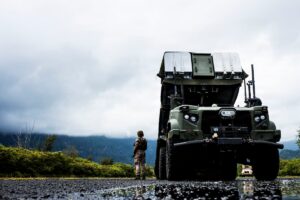
Moreover, the Army plans to convert five Infantry Brigade Combat Teams into Mobile BCTs, procure Infantry Squad Vehicles, and establish new High Mobility Artillery Rocket System Battalions using $616 million.
The budget request also allocates $2.9 billion to develop a Next-Generation Command and Control capability, aiming to replace outdated systems with a more cohesive network.
Finally, the Army seeks to modernize its organic industrial base with a $1.1 billion investment for enhancing facilities, including $476 million for Lake City Army Ammunition Plant in Missouri and $385 million for Holston Army Ammunition Plant in Tennessee.