In Eastern Europe, the race to modernize military capabilities is gaining momentum, with Romania and Poland taking significant strides in updating their infantry fighting vehicle fleets. Each nation is pursuing a distinct approach in their quest to replace outdated military hardware, reflecting different preferences for foreign collaborations and domestic production.
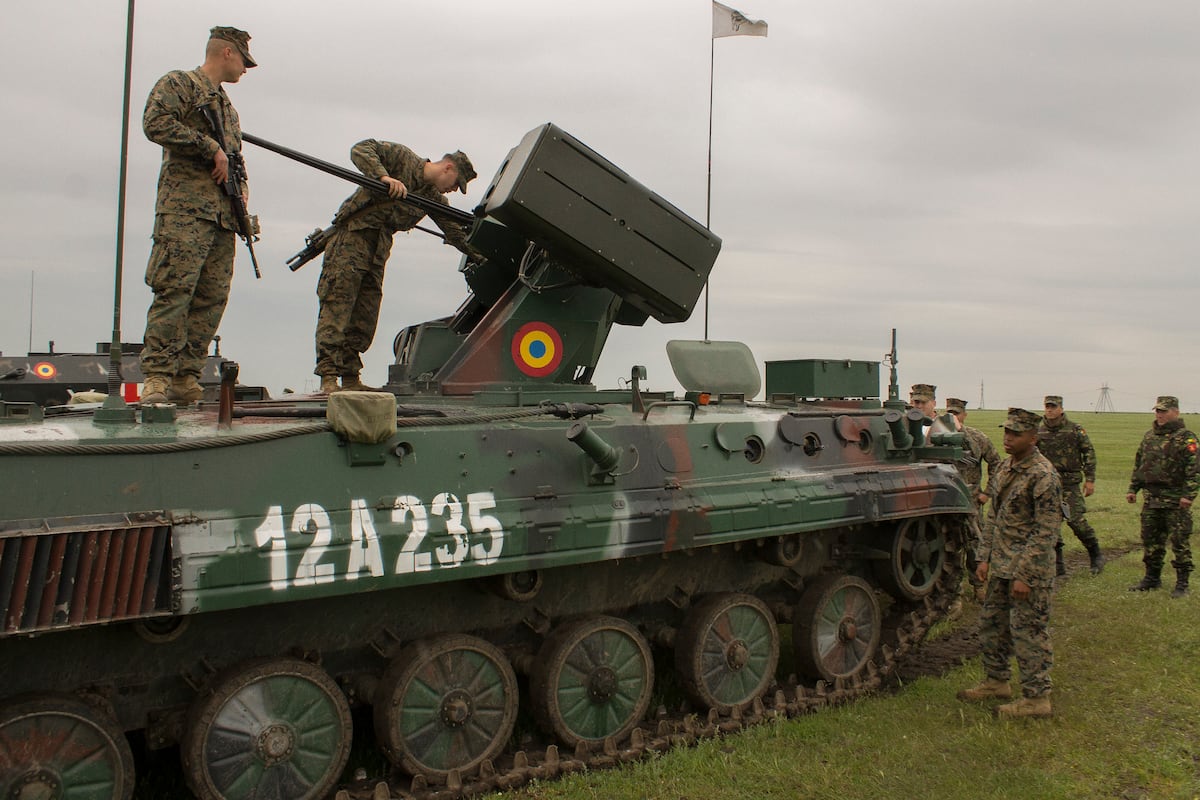
Romania has embarked on a mission to replace its aging Soviet-era MLI-84 vehicles. The Romanian government announced on July 10 its plan to acquire 246 new infantry fighting vehicles over an eight-year period, with the potential for an additional 52 vehicles in the future. This ambitious project, set to cost approximately €2.55 billion ($2.96 billion), also includes simulators and a comprehensive logistics package.
Romania’s Ministry of National Defence is tasked with selecting a supplier for this program, with candidates including Germany’s Rheinmetall, Sweden’s BAE Systems Hägglunds, South Korea’s Hanwha, and General Dynamics European Land Systems. A dedicated committee comprising Defence Ministry officials and representatives from Romtehnica, a state-owned defense company, will determine the winner.
The initial production of 26 vehicles will be handled by the chosen supplier, after which Romanian defense industry players will assume responsibility for manufacturing the remaining 220 units. “The essential security interest for the Romanian state is to protect the supply chain through a technology transfer of the assembly, integration, testing and maintenance capabilities for the aforementioned technology and products to Romania,” stated the Ministry of National Defence.
Maximizing the role of the national defense sector is a priority in Romania’s procurement strategy. A Ministry spokesperson emphasized the nation’s goal to enhance the involvement of local defense companies in maintaining and supporting weapon systems.
Alexandru Georgescu, a Bucharest-based security analyst, noted that foreign investments from companies like Rheinmetall and Hanwha have increased Romania’s interest in domestic production. However, the success of this initiative hinges on a smooth bidding process, as any disputes could result in delays.
Poland’s Ambitious Plans for Heavy Vehicles
Poland is equally committed to modernizing its military fleet. In March, Poland’s Ministry of National Defence signed a contract valued at PLN 6.57 billion ($1.8 billion) with the Polish state-run defense group PGZ to procure 111 Borsuk (Badger) tracked infantry fighting vehicles. The deal also includes an option for nearly 1,300 additional Borsuks in the years ahead.
The Borsuk is set to take over from the Soviet-designed BWP-1 as the main tracked vehicle for Poland’s Army. The delivery schedule for the first 111 units spans from 2025 to 2029. Additionally, the Ministry is planning to order up to 700 heavier models with enhanced protection features.
Poland aims to collaborate with European allies to create consortia for joint weapon purchases. According to Polish Deputy Prime Minister and Defence Minister Władysław Kosiniak-Kamysz, the Borsuk might be part of these collaborative acquisitions, given the interest from other Eastern European countries in upgrading their fleets.
While many of the companies actively promoting their vehicles in Romania are also eyeing the Polish market, PGZ is still evaluating its options. A decision on whether to independently develop a heavy IFV or license a foreign design is pending.