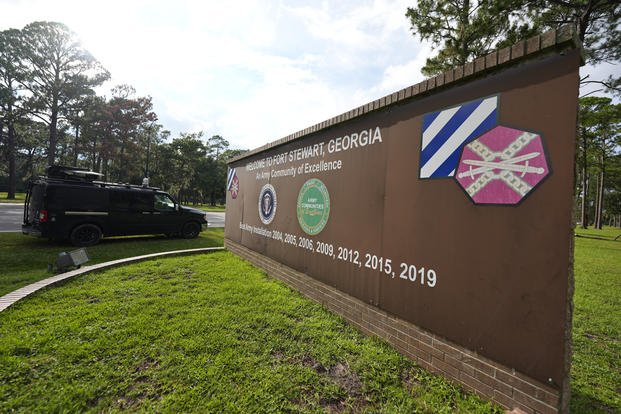
In the wake of a shooting incident that left five soldiers wounded, Fort Stewart in Georgia is under scrutiny for an enduring military policy that restricts the carrying of personal firearms by service members on base. This policy, intended to enhance safety, is now being questioned for its effectiveness in preventing such incidents.
According to Brigadier Gen. John Lubas, soldiers who witnessed the shooting acted swiftly, subduing the gunman before law enforcement intervened. Despite their prompt response, the soldiers were unarmed due to regulations dating back decades, which limit firearm possession on military installations primarily to military police. The alleged shooter, logistics Sgt. Quornelius Radford, reportedly used a personal weapon.
The incident has sparked debate online, with video footage showing uniformed service members fleeing to safety during the lockdown, which lasted about an hour. This has led to questions about whether the rules that bar most soldiers from carrying weapons on bases are sufficient in preventing such violent occurrences. The shooting adds to a troubling series of violent events at U.S. military bases, some of which have resulted in numerous casualties.
Department of Defense Policy
The Department of Defense maintains a policy that generally prohibits military personnel from carrying personal firearms on base unless authorized by a senior commander. Firearms must be checked out from secure storage for specific activities like hunting or range shooting and returned immediately afterward. This leaves military police as the primary armed personnel on bases, apart from specific training scenarios where service weapons are used without live ammunition.
This federal policy is uniformly applied, even in states like Georgia, known for having relaxed gun laws. Local commanders have limited discretion in adjusting these regulations.
Security and National Defense
Robert Capovilla, a founding partner of a major military law firm, emphasizes the importance of these firearm policies, citing national security concerns. “A lot of these installations are involved in top-secret operations, dealing with top-secret information, and because of that you need a heightened security,” Capovilla explained. “You simply don’t want folks walking around a federal installation with personal weapons.”
Capovilla, with extensive experience visiting military installations, pointed out the constant presence of armed military police on these bases. He expressed doubt that the shooting would have been averted if service members had been armed.
Challenges of Gun Regulations
Former military prosecutor Eric Carpenter notes that while military installations have stringent gun control, there are still challenges. He pointed to the broader debate on gun rights, stating, “You don’t forfeit all of your rights when you enter the military. Outside of a military situation, the service member has just as much Second Amendment right as anyone else.”
Carpenter highlighted the ease with which a service member living off-base could bring a weapon onto the installation, as off-base gun ownership is beyond a senior commander’s control. Additionally, there are limited legal measures to confiscate firearms from service members showing signs of mental distress, which has become a significant concern in discussions about preventing mass shootings.
“All those rules aren’t going to prevent someone from doing what the guy did today,” Carpenter observed, underscoring the limitations of the current policy framework.
___
Riddle is a corps member for The Associated Press/Report for America Statehouse News Initiative. Report for America is a nonprofit national service program that places journalists in local newsrooms to report on undercovered issues.
© Copyright 2025 Associated Press. All rights reserved. This material may not be published, broadcast, rewritten or redistributed.