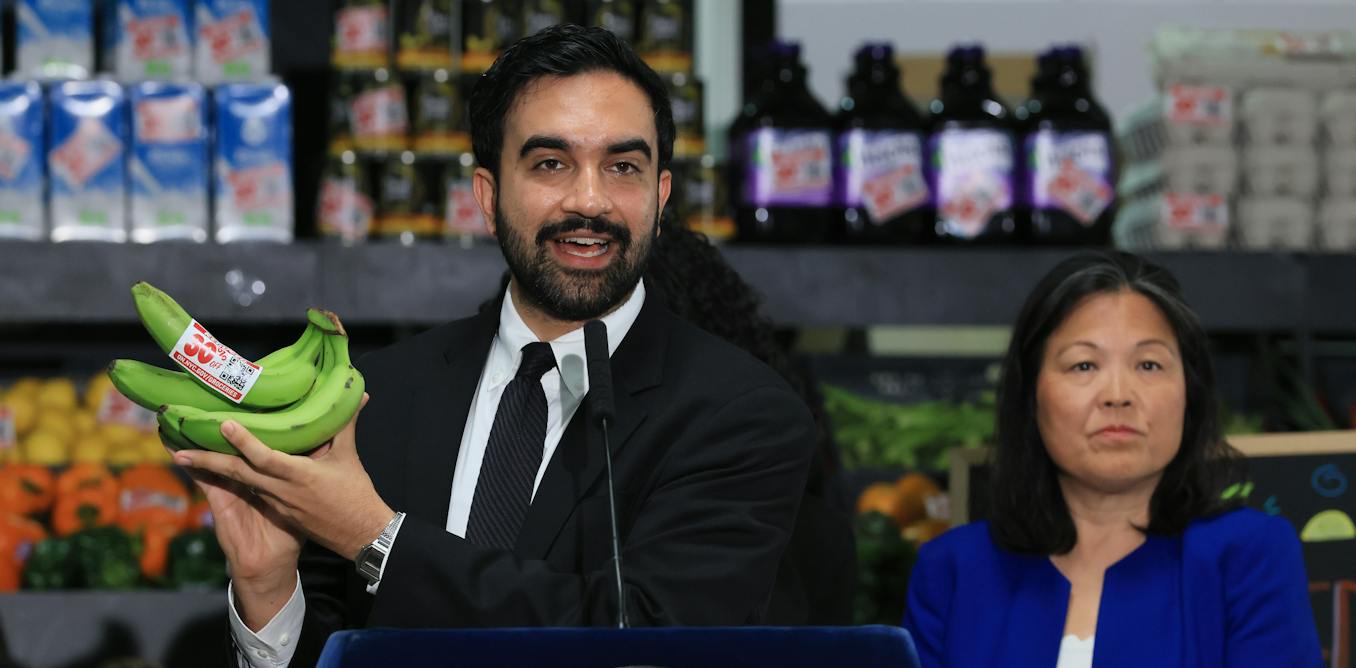
Amid escalating food costs, New York City is stepping up with a bold move: introducing city-operated grocery stores. This initiative, spearheaded by Mayor Zohran Mamdani, aims to alleviate grocery bills by providing essential food items at reduced prices. The first outlet is slated to open in the Hunts Point area of the South Bronx in 2027, followed by another in East Harlem.
While the city plans to launch just five stores across different boroughs, this effort is unlikely to significantly impact the overall grocery market in a metropolis boasting nearly 1,000 supermarkets and a population exceeding 8 million. However, these stores could provide substantial relief to local consumers by offering products at prices below the market rate.
The initiative has sparked considerable opposition from independent grocers, trade associations, and a coalition of immigrant-owned food businesses.
What drives this opposition? According to a food policy scholar, the controversy extends beyond the immediate economic impact; it challenges the norm of leaving consumer goods provisioning to the private sector. Despite this, the government has historically influenced the food economy through public policies and investments.
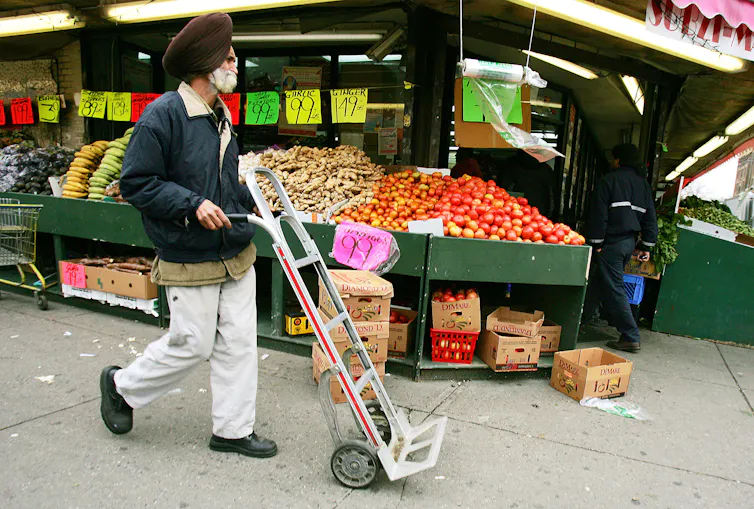
Scott Gries/Getty Images
How the Plan is Structured
The city has allocated US$70 million for these grocery stores, which will serve all residents. Managed by private operators, the stores will occupy rent-free spaces, focusing on publicly owned sites, and offer essential items at 30% below regular retail prices.
These municipal stores present a “public option,” akin to public schools and hospitals, allowing consumers to compare them against private supermarkets and setting standards for pricing and service quality. As Mayor Mamdani stated in his May announcement, the Bronx store is intended as “physical proof of our conviction that government can be a force for good.”
A New Approach to Intervention
The concept of government-supported food retail isn’t new in New York City, despite resistance from existing businesses. Historical efforts include Mayor Fiorello La Guardia’s 1934 initiative to sell discounted milk, which faced criticism from grocers for creating unfair competition. Similarly, the city’s subsidizing of a Pathmark supermarket in East Harlem in the 1990s met with protests from local merchants.
Since 2009, the Food Retail Expansion to Support Health (FRESH) program has granted tax breaks and zoning incentives to supermarket developers to increase retail space in underserved areas, though these efforts often go unnoticed by consumers.
This hidden government influence extends beyond grocery stores, affecting sectors like education and healthcare through subsidies and tax credits, a phenomenon political scientist Suzanne Mettler describes as “the submerged state.”
Making Government’s Role Visible
Municipal grocery stores differ by explicitly linking affordability to public investment and making the government’s role clear. These stores will feature distinct branding to highlight their public backing, potentially shifting perceptions of affordable food as a government-provided service.
While concerns from independent retailers about losing business are valid, history shows that new supermarkets and smaller grocers can coexist, as seen in East Harlem, where the number of small grocery stores grew alongside the introduction of new supermarkets. The city’s challenge will be to ensure these municipal stores deliver on their promise of quality service and affordability without undermining local businesses.