The U.S. government’s recent decision to invest in Intel marks a significant step in its involvement with private sector companies. This strategic move aims to bolster the domestic semiconductor industry, a sector deemed crucial for national priorities.
According to the agreement, the U.S. is injecting $8.9 billion into Intel, acquiring a 9.9% stake in the company. Intel’s announcement highlighted the government’s confidence in the chipmaker’s role in expanding the semiconductor industry within the U.S.
In addition to the hefty $8.9 billion investment, Intel has already benefited from $2.2 billion in CHIPS grants, bringing the total government investment to $11.1 billion. “Under the terms of today’s announcement, the government agrees to purchase 433.3 million primary shares of Intel common stock at a price of $20.47 per share,” Intel stated, emphasizing the advantage for American taxpayers and shareholders.
Earlier, President Donald Trump praised the agreement and his discussions with Intel CEO Lip-Bu Tan. Following these remarks, Intel’s stock experienced an increase, closing the day up nearly 6%, although it dipped slightly in after-hours trading.
“The government’s investment in Intel will be a passive ownership,” Intel clarified, assuring that the government would have no Board representation or governance rights. The government also agreed to align its votes with Intel’s Board on shareholder matters, with few exceptions.
A Struggling Tech Giant in the Political Spotlight
picture alliance/dpa/picture alliance via Getty Images
Intel has faced challenges as competitors like the Taiwan Semiconductor Manufacturing Company gain ground. The company is in the midst of a turnaround, with CEO Tan recently under political scrutiny.
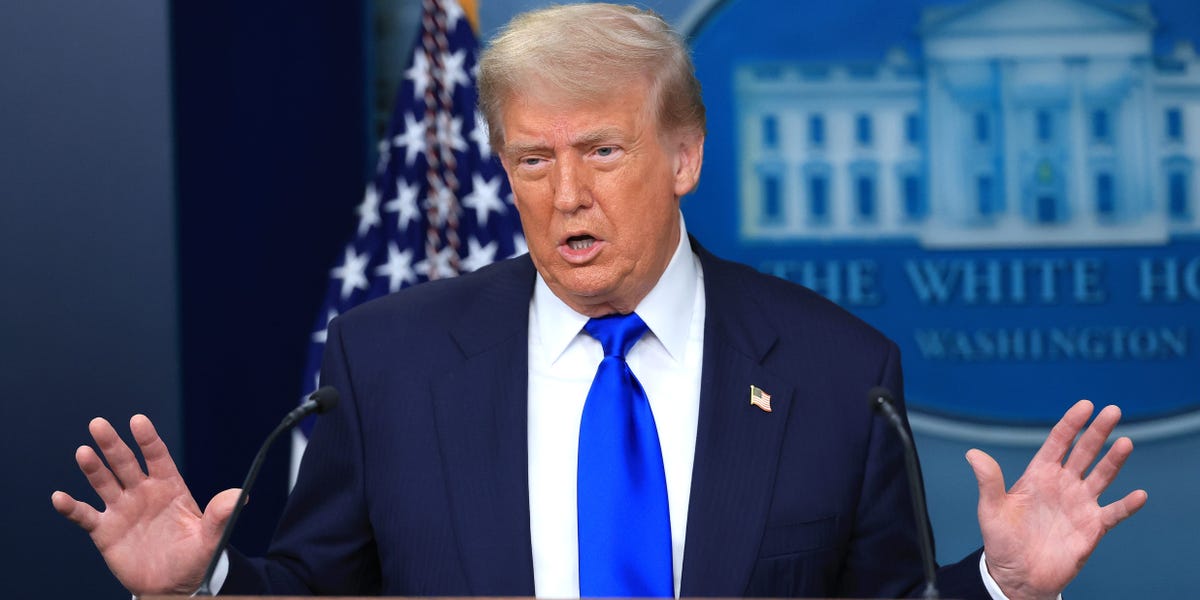
Trump met with Tan at the White House following calls for his resignation due to his investments in Chinese firms. Subsequently, Trump praised Tan’s contributions. During a White House briefing, Trump shared, “I said, you know what, I think the United States should be given 10% of Intel,” and Tan agreed to consider the proposal.
In his remarks, Trump emphasized the strategic nature of the deal, stating, “He walked in wanting to keep his job, and he wound up giving us $10 billion to the United States.” Treasury Secretary Scott Bessent assured that the government would not exert pressure on Intel due to its stake.
Despite criticizing the bipartisan CHIPS and Science Act, Trump is committed to increasing U.S. semiconductor production. His recently published AI Action Plan emphasizes the importance of a robust U.S. chip industry for job creation and technological leadership.
Given the complexities of semiconductor manufacturing, particularly for advanced chips, and the ongoing global chip shortage, the U.S. government’s stake in Intel represents a strategic move to reinforce domestic capabilities. As one of the few U.S. companies that both designs and manufactures chips, Intel is pivotal in this effort.
This investment underscores the White House’s readiness to intervene in the private sector, demonstrated by similar actions in other industries. “As the only semiconductor company that does leading-edge logic R&D and manufacturing in the U.S., Intel is deeply committed to ensuring the world’s most advanced technologies are American-made,” stated CEO Tan.