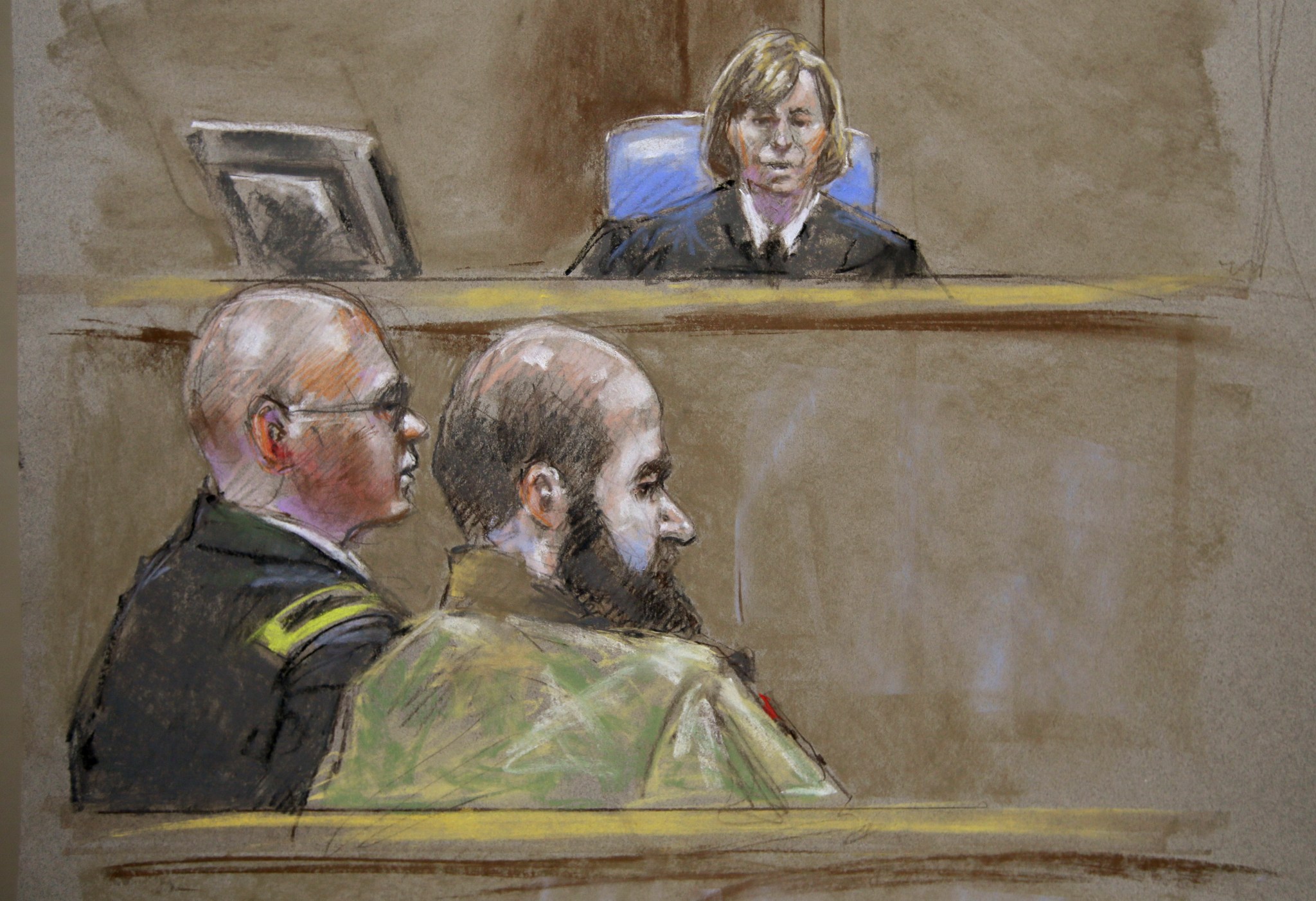
A federal judge is now weighing whether to pause the scheduled execution of Nidal Hasan — the former Army psychiatrist who killed 13 people at Fort Hood in 2009 — after Hasan’s attorneys filed an emergency legal challenge this week. The case raises significant questions about military justice, constitutional rights, and the procedures governing the first U.S. military execution in more than six decades.
Hasan, currently held at Fort Leavenworth military prison in Kansas, is sentenced to be executed by firing squad at Fort Hood — the same Texas base where he carried out the 2009 mass shooting. U.S. District Judge Anthony Mattivi scheduled a hearing on the stay request for Wednesday morning.
President Donald Trump approved the execution in October, describing Hasan as “a very bad and evil man.” Defense Secretary Pete Hegseth initially made the unprecedented announcement that he would livestream Hasan’s death, though Trump later reversed that decision following widespread public criticism.
The Legal Challenge
Lawyers from the American Civil Liberties Union of Kansas filed the motion for a stay of execution on Hasan’s behalf, though they note that Hasan intends to represent himself — as he did during his original military trial — in the habeas corpus proceedings. A habeas petition is a legal tool that allows a convicted person to challenge whether their detention or sentence is constitutional. Under U.S. law, a condemned person may pursue this type of review once they have been officially notified of both the date and method of their execution.
In his petition, Hasan argues that he was unconstitutionally denied the right to present his intended defense at trial. He had sought to argue that the killings were justified as an act of defending the Taliban in Afghanistan against U.S. military forces — a defense the judge did not permit. Hasan contends that blocking this defense violated his constitutional right to due process.
He also claims that Trump and Hegseth violated military rules when setting the execution date, including by publicly promising to broadcast his death.
The ACLU’s Capital Punishment Project deputy director, Anna Arceneaux, addressed the broader principle at stake in a statement:
“There is no question that the violence committed at Fort Hood caused unimaginable pain and loss. But the gravity of that loss does not change the government’s obligation to uphold the principles that define our justice system.”
Background on the Case
Hasan, a U.S.-born Army psychiatrist of Palestinian descent, opened fire inside a medical facility at Fort Hood in November 2009, killing 13 people and wounding dozens more before military police shot and paralyzed him from the chest down. A military court-martial jury convicted him in 2013 on 13 counts of premeditated murder.
If carried out, his execution would mark the first time the U.S. military has executed a service member since 1961 — and the first execution by firing squad since 1945. Four men currently sit on the U.S. military’s death row. Only one other besides Hasan has had an execution date formally approved by a U.S. president: Ronald Gray, whose 2008 scheduled execution was indefinitely halted by a federal judge through the same type of habeas petition Hasan is now pursuing.
That legal precedent underscores why the outcome of Wednesday’s hearing could determine not just the timing of Hasan’s execution, but whether it proceeds at all — potentially delaying it by months or even years.
A spokesperson for the Department of Defense did not respond to a request for comment at the time of publication. For ongoing coverage of this developing story, follow Army Times.