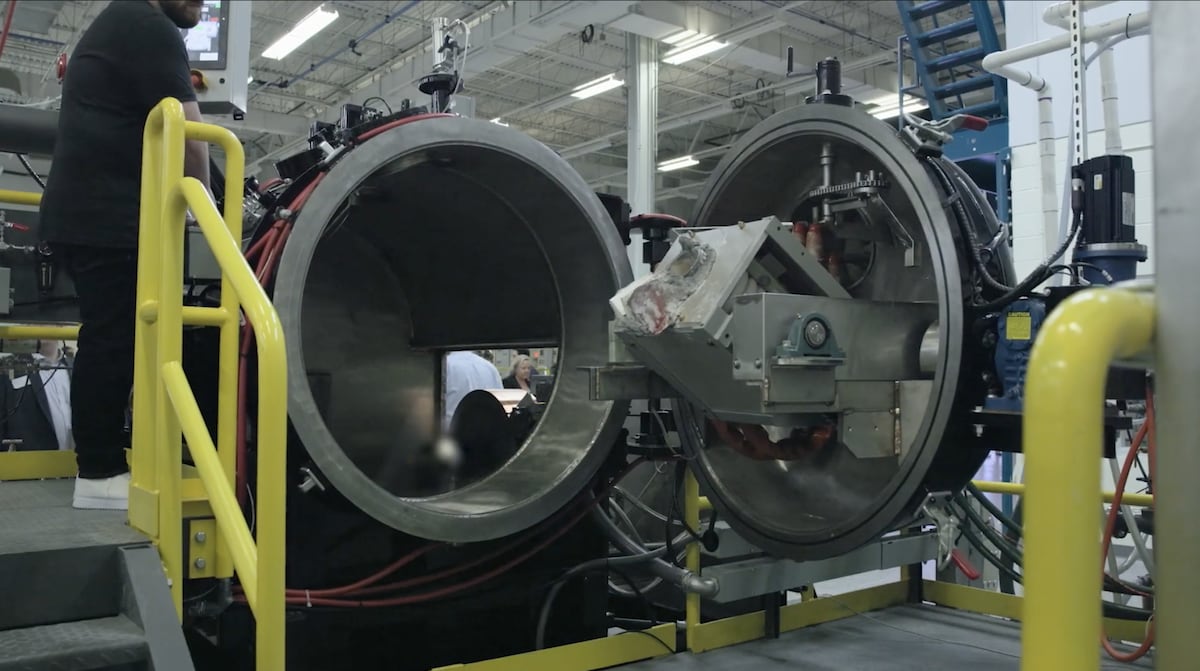
In a strategic move to bolster the U.S. defense supply chain, Vulcan Elements, a nascent company based in North Carolina, has secured significant contracts with the Department of Defense (DOD). Over the past two years, this startup has quietly amassed more than $10 million in contracts, marking a pivotal step in reducing reliance on foreign-produced rare earth magnets.
The urgency of establishing a domestic supply chain for these crucial components cannot be overstated. Rare earth magnets are integral to modern military technology, yet currently, China controls 94% of the global market, having recently halted its magnet exports.
Founded by ex-U.S. Navy officer John Maslin, Vulcan Elements has reported securing nine DOD contracts in the last eight months. The company began operations at its manufacturing facility on March 31 and aims to fulfill its initial contract obligations within 60 days, as Maslin shared with Defense News.
Vulcan Elements is supplying essential magnets for diverse applications, including ground vehicles, munitions, and satellites, either directly or in collaboration with defense contractors. These magnets, described by Maslin as the “invisible building blocks of our economy,” are vital in a range of military systems from motors to sensors.
The startup’s recent $65 million Series A funding round, led by Altimeter Capital, will propel Vulcan’s capacity to scale operations. “This Series A enables Vulcan to scale with the speed and seriousness that this moment and the nation demand,” Maslin stated in a company announcement. The funding is set to transition Vulcan’s pilot facility, currently producing 10 metric tonnes, to a commercial scale.
In the near future, Vulcan plans to increase its production capacity to several hundred tonnes annually, with ambitions to reach thousands of tonnes by the decade’s end. This expansion will significantly enhance the number and magnitude of contracts Vulcan can undertake, as detailed by Maslin.
The Pentagon’s recognition of the strategic importance of magnets, akin to semiconductors and batteries, is reflected in the fiscal 2023 National Defense Authorization Act’s directives. These include a briefing on magnet manufacturing strategies and stringent rules on the origin of magnets used in U.S. defense systems, effectively precluding Chinese sources.
Vulcan’s competitive edge lies in its complete independence from Chinese inputs, utilizing U.S. and allied resources exclusively, as verified by the Department of Energy’s Ames Laboratory. Beyond defense, the demand for rare earth magnets is surging in sectors such as AI, robotics, and electric vehicles.
While Vulcan’s current output is modest, Maslin emphasizes the intricate nature of magnet production: “It’s complex, advanced manufacturing, you’re dealing with metallography, crystal structures, powdered metals.” The company is poised to play a critical role in reshaping the global supply chain landscape.