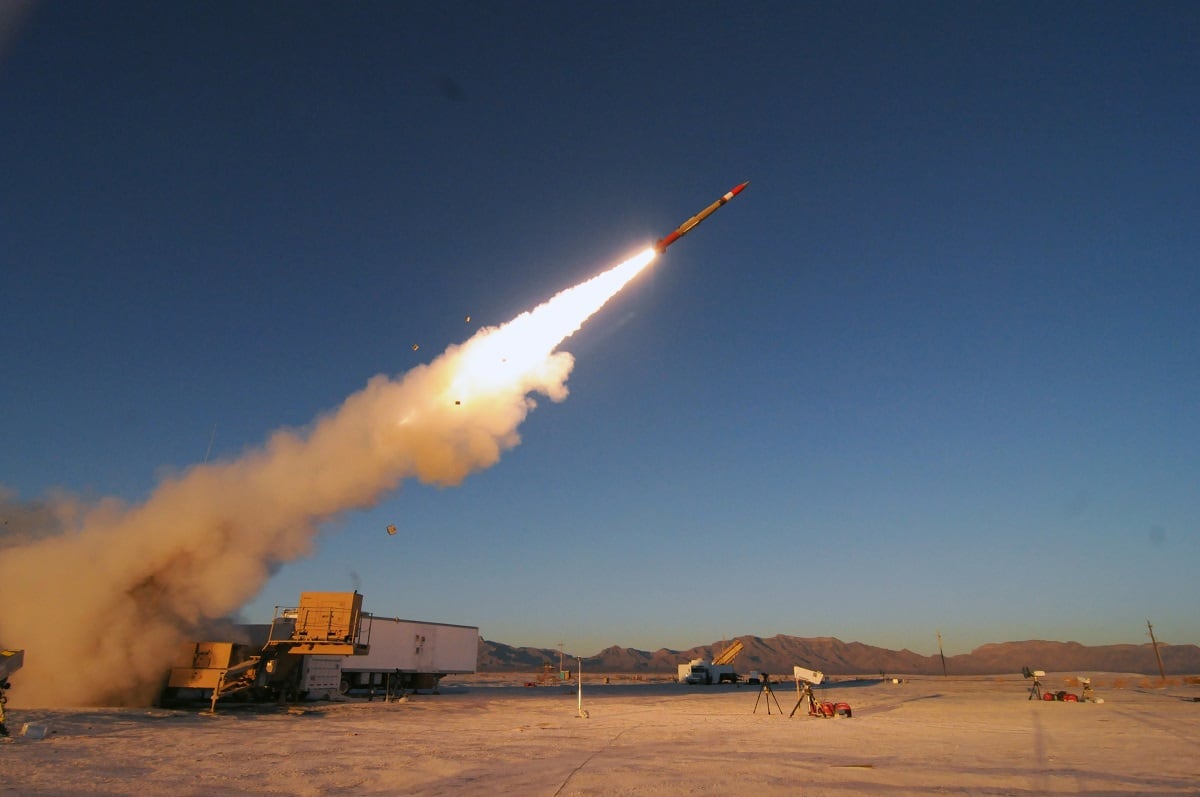
Lockheed Martin’s Missiles and Fire Control unit has secured its largest contract ever, marking a significant milestone. This agreement spans fiscal years 2024 through 2026, aiming to procure nearly 2,000 Patriot Advanced Capability-3 (PAC-3) Missile Segment Enhancement interceptors for both the U.S. and allied nations.
According to Jason Reynolds, Lockheed’s vice president for Integrated Air and Missile Defense, the PAC-3 MSE’s performance in recent combat has established it as a crucial asset. “With this contract, we’ll be delivering record numbers of PAC-3 MSE for years to come,” he stated in a company release.
The deal arrives amidst a backdrop of increased demand for missile systems due to ongoing conflicts in regions like Ukraine and the Middle East. The PAC-3 MSE, known for its hit-to-kill technology, is engineered to counter a range of threats including tactical ballistic missiles and hypersonic threats.
Maj. Gen. Frank Lozano, the Army’s Program Executive Office for Missiles and Space, emphasized the importance of this multi-year purchase. He highlighted that it allows the Army to acquire more missiles quickly, thereby replenishing inventory at a faster rate.
Lockheed aims to deliver over 600 interceptors by 2025, accelerating production timelines by nearly two years due to strategic investments. Joseph Giunta, a senior contracting official at Redstone Arsenal, noted that the contract represents careful acquisition management and efficient use of taxpayer resources.
Currently, Lockheed Martin is producing around 550 PAC-3 MSE missiles annually, with plans to increase this number to 650 per year by 2027. The company is exploring ways to achieve this goal sooner, as Reynolds mentioned at a recent conference in Germany. “What we’re endeavoring to do in partnership with the U.S. government is to pull that left as much as we can,” he said.
Reynolds added that Lockheed is also examining potential efficiencies to further increase production capacity to around 750 units annually by 2027. Although official government figures for maximum production levels have not been disclosed, projections indicate numbers well above 1,000 in future years.