Navigating Readiness Challenges: The Air Force’s Strategic Focus
NATIONAL HARBOR, Md. — As the U.S. Air Force confronts dwindling aircraft readiness, Secretary Troy Meink underscores the necessity of prioritizing resources towards aircraft capable of enduring hostile environments. Speaking at the Air & Space Forces Association’s Air Space Cyber conference, Meink pinpointed the critical state of readiness as a primary concern.
Highlighting marquee aircraft like the F-22 and F-35 fighters and the B-2 bomber, Meink remarked, “We have some of the best aircraft.” Despite this, the readiness issue “surprised me a bit,” he admitted, noting the severity of the challenge was more significant than he had anticipated.
The Air Force’s readiness has been on a downward trajectory, with a fiscal 2024 mission-capable rate at 62%. This means that nearly four out of ten aircraft were not able to perform their missions on any given day. Air Force Chief of Staff Gen. David Allvin previously highlighted these concerns at the Air Warfare Symposium, presenting data showing a decrease in aircraft availability from 73% in 1994 to 54% in 2024.
A significant factor contributing to these declining rates is the aging fleet. Over three decades, the average age of Air Force aircraft has nearly doubled from 17 years to almost 32 years, according to Allvin’s presentation.
While Meink praised the Air Force’s fleet, he cited Joint Base Langley-Eustis in Virginia as an example of challenges faced. He described the F-22 as “a phenomenal platform,” but noted issues with nonoperational aircraft due to parts shortages. “That’s a problem, right? We have to fix that,” Meink stated.
Maintenance and sustainment costs have been significant for the Air Force over the past 15 years. Meink indicated that efforts are underway from lawmakers, the administration, and Pentagon leadership to bolster the maintenance budget. Despite these efforts, Meink emphasized the need for efficiency, focusing on systems capable of surviving contested airspace.
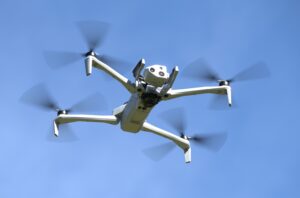
“If a system is not capable of operating in a contested environment, then we need to be second-guessing and/or thinking about how much money we’re dumping into readiness on those platforms,” he remarked. The Air Force aims to reallocate resources as older aircraft are retired, adapting to new warfare dynamics like those seen in Ukraine’s use of modified quadcopters.
Meink also stressed the importance of contractor accountability for system reliability. “When we’re getting a part that’s supposed to last 400 hours, and it lasts 100 hours, that’s unacceptable,” he said. Collaboration with the government and contractors is crucial to enhance the serviceability and reliability of weapon systems.
According to William Bailey, acting assistant Air Force secretary for acquisition, technology, and logistics, increased modularity in new aircraft designs will facilitate easier maintenance and part replacement. Additionally, the acquisition community plans to scrutinize supply chains to address “pinch points” delaying spare parts delivery.
Meink noted the Air Force’s intention to leverage advanced data analytics to gain insights into the health of its weapon systems.