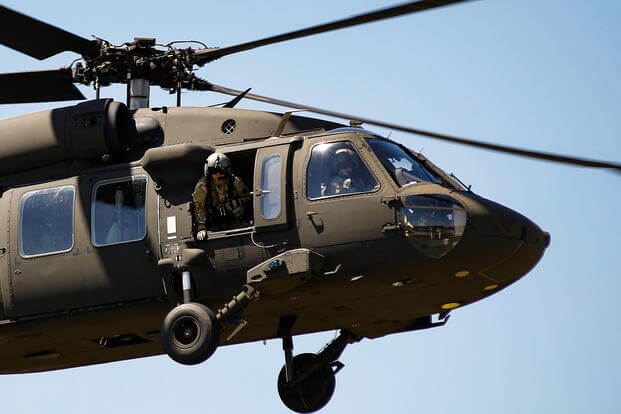
Sikorsky’s Black Hawk: Balancing Legacy with Future Innovations
The skies above Connecticut are set to keep buzzing with the sound of Black Hawk helicopters as Sikorsky nears a pivotal deal with the Department of War. Over the next four years, production of these iconic helicopters is planned to continue in Stratford and Bridgeport, ensuring job stability for over 7,000 local workers.
Meanwhile, the U.S. Army is eyeing the future with the Bell Textron MV-75, a tiltrotor aircraft described as “transformational” by military officials, which could eventually replace the Black Hawk. Yet, for now, the Black Hawk remains a critical component of the Army’s fleet, with plans to acquire nearly 100 more units to sustain a total of over 2,100 helicopters.
U.S. Sen. Richard Blumenthal, D-Connecticut, emphasized the helicopter’s enduring value, stating, “The Black Hawk is one of the all-time, star successful assets in our military arsenal. It is resilient, versatile and battle-hardened.” The aircraft’s proven record speaks to its continued demand, both domestically and internationally.
Rich Benton, Sikorsky’s president, highlighted ongoing international interest in the Black Hawk and its variants, such as the Jayhawk for the U.S. Coast Guard and the Fire Hawk for firefighting operations. “We still see significant international demand internationally for the aircraft we’re building, and we believe that will continue,” Benton remarked.
With negotiations ongoing, a significant contract was recently announced involving a $950 million deal with Brazil for a dozen Black Hawks. This underscores the helicopter’s global reach and reliability.
As Sikorsky pushes forward with Black Hawk production, the U.S. Army is also investing in next-generation technology through the Army Transformation Initiative. Central to this is the MV-75, with production preparations underway at a new Texas facility, aiming for a fleet of about 1,000 units.
The backdrop of this evolution in military aviation is an arms race influenced by advances in drone technology and defense systems. “There’s no question there’s an arms race,” Blumenthal noted, emphasizing the need for technological advancements in stealth and electronic warfare.
In response to these developments, Sikorsky is exploring the integration of drones with the Black Hawk, enhancing its capabilities for attack and surveillance. Benton sees drones as complementary, stating, “Our aircraft can be the node on the network providing that capability and integrating information.”
As the defense landscape shifts, Sikorsky remains committed to adapting its iconic Black Hawk to meet new challenges and opportunities.
© 2025 Journal Inquirer, Manchester, Conn.
Visit www.journalinquirer.com.
Distributed by Tribune Content Agency, LLC.