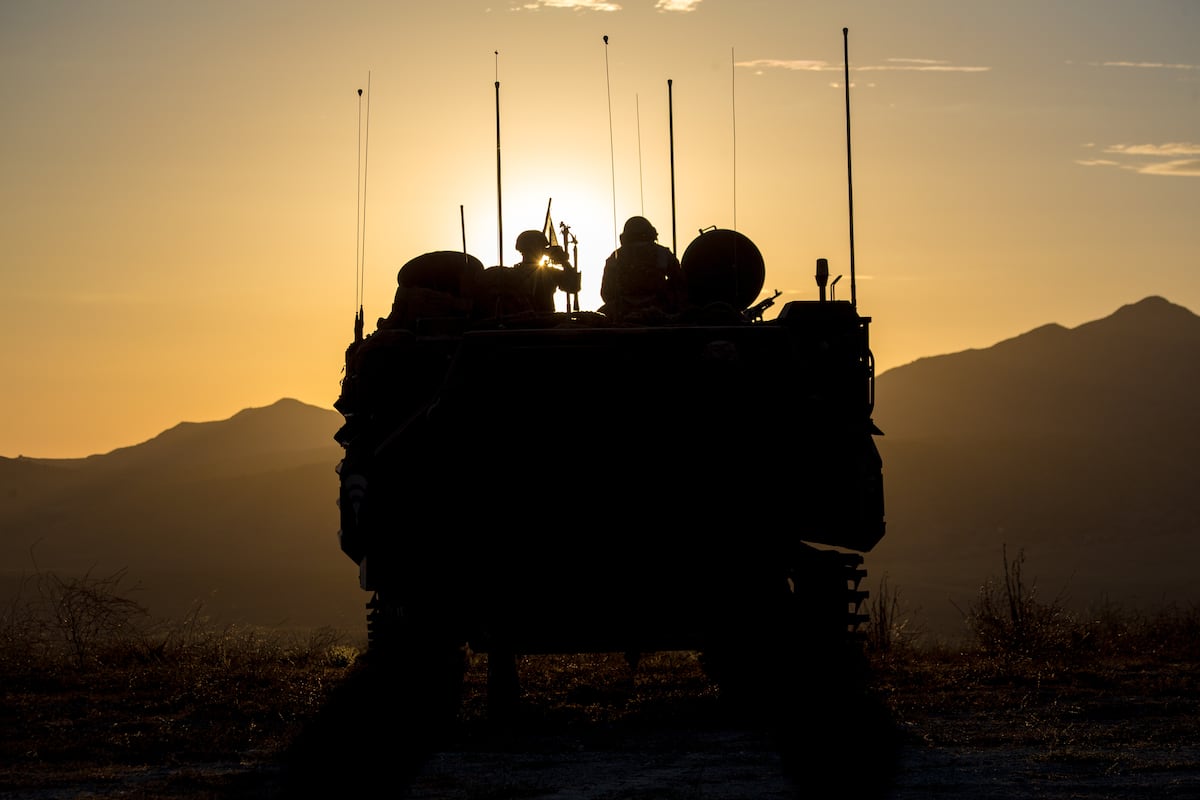
For more than five decades, the Assault Amphibious Vehicle (AAV) has been an integral part of the U.S. Marine Corps’ operations, transporting Marines from sea to shore in various global conflicts, from Grenada to Iraq. However, on September 26, this iconic vehicle was officially retired in a decommissioning ceremony.
Col. Lynn Berendsen, who commands the Assault Amphibian School at Camp Pendleton, California, highlighted the vehicle’s historical significance during the ceremony, stating, “The AAV gave Marines both mobility and armored protection, allowed them to close with the enemy and seize objectives at speed.” He emphasized its dual role as both a connector and a critical combat vehicle within the Marine Air Ground Task Force.
The AAV is set to be replaced by the more advanced Amphibious Combat Vehicle (ACV), an eight-wheeled model that has already been operational for several years. The formal ceremony marked the end of an era for the AAV, a vehicle that has served various functions from troop transport to logistics support.
Introduced into the Marine Corps in 1972 under a $78.5 million contract with United Defense, the AAV succeeded the Landing Vehicle, Tracked (LVT), which had been in service since World War II. Over its service life, the AAV underwent numerous updates to enhance its performance in modern combat scenarios. However, by 2018, military officials deemed it necessary to transition to a vehicle more suited to contemporary warfare requirements.
In 2020, the AAV faced heightened scrutiny following a tragic incident where eight marines and a sailor perished after their vehicle sank off California’s coast. Investigations attributed the accident to inadequate training, poor vehicle condition, and safety protocol breaches.
Further investigations led to the dismissal of Maj. Gen. Robert Castellvi from his role as Inspector General of the Marine Corps due to failures in ensuring proper training for the units involved.
The ACV, although encountering initial setbacks such as a tow rope issue and vehicle rollovers, has gradually been phased in. The Marine Corps temporarily halted its waterborne operations between September 2021 and January 2022 due to these issues. Operations resumed in late 2022, and by May 2024, the ACV was tested in a live-fire exercise in the Philippines.
Reflecting on the AAV’s service, Berendsen stated, “Its legacy is not only in its capabilities but also in the countless Marines who operated it and relied on it to accomplish their missions.”