In a bold move to modernize military operations, the U.S. Army is heavily investing in artificial intelligence and data capabilities. The objective is to enhance decision-making speed and intelligence in a world where battles are increasingly fought with information alongside traditional weapons.
The integration of AI across all Army operations marks a significant shift from previous modernization efforts. This change affects not just planning at headquarters but also decision-making on the frontlines, particularly for those in intelligence roles who must adapt to rapid changes.
Data Overload Meets AI Solutions
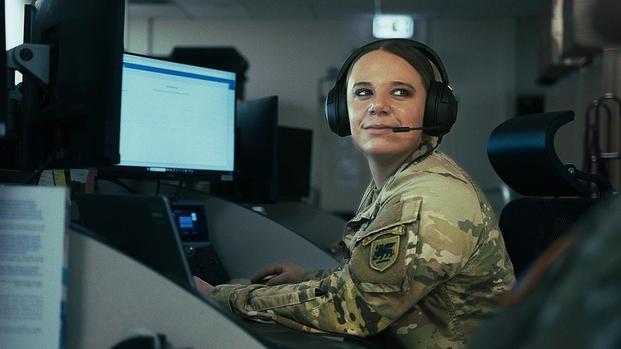
Army intelligence analysts face the daunting task of processing vast amounts of data from satellites, drones, and cyber feeds. Lt. Gen. Karl Gingrich, Army’s deputy chief of staff for programs (G-8), highlighted this challenge, stating, “Soldiers will use AI in the Army Intelligence Data Platform … AI will help Army intel analysts leverage the amount of data they consume from all sources … Once the soldiers have all of their data in the right place…” (ExecutiveGov).
AI technology automates the laborious task of organizing and analyzing information, enabling analysts to identify patterns, anticipate enemy actions, and deliver actionable insights swiftly. The Army Intelligence Data Platform (AIDP), a cloud-based system, is already being tested to consolidate data streams, transforming operations at Fort Huachuca, Arizona, where AI tools expedite the analysis of drone footage.
The Artificial Intelligence Integration Center (AI2C) in Pittsburgh is pioneering models that convert raw data into real-time intelligence, contributing to larger initiatives like the Global Information Dominance Experiments (GIDE). These efforts aim to create a unified digital perspective for joint command operations, aligning with the Pentagon’s Joint All-Domain Command and Control (JADC2) vision.
Beyond Intel: AI Across the Army
AI’s role in the Army extends beyond intelligence, permeating every mission aspect. Bill Hepworth, former program executive officer at Program Executive Office Enterprise Information Systems, remarked, “Eventually, [AI] will get to every layer of the onion from our back-office tools and applications to the capabilities and software we build for our Soldiers” (Army.mil).
AI-driven platforms are poised to revolutionize logistics, acquisitions, and training. The Program Executive Office for Command, Control and Communications-Tactical (PEO C3T) is deploying AI-assisted mission software to enhance battlefield visualization. Meanwhile, Army Futures Command is spearheading numerous pilot projects, focusing on AI-enabled technologies through its xTech Program.
Keeping Soldiers Safer With Smarter Machines
AI integration is not just about operational efficiency but also about enhancing safety. Gen. James Rainey, commander of Army Futures Command, emphasized the strategic integration of robotics and AI systems, stating, “The real art of the deal is going to be: how do you figure out how to integrate them [robots / AI systems] into formations in a way that optimizes the advantages? … I’m talking about no blood through first contact” (Defense One).
By deploying machines in high-risk scenarios, the Army aims to minimize soldier exposure to danger. Testing with Project Origin and Robotic Combat Vehicles (RCVs) demonstrates AI’s potential to navigate and identify threats autonomously, supporting a future where human and AI forces collaborate seamlessly.
The Risks: Bias, Overreliance, and Adversary Moves
While promising, AI adoption must address concerns like algorithmic bias and overdependence on machines. The U.S. faces competition from countries like China and Russia, who are also advancing military AI capabilities, underscoring the importance of maintaining a strategic edge.
To ensure AI systems meet ethical standards, the Department of Defense Chief Digital and AI Office (CDAO) collaborates with Army Futures Command, adhering to the Pentagon’s Responsible AI guidelines to uphold transparency and reliability.
What It Means for Soldiers and Families
This technological evolution requires soldiers to develop new proficiencies in coding and data science. For families, it could mean changes in deployment dynamics, with some intelligence roles becoming more home-based, while others expand their scope overseas.
As the Army integrates AI and data into its framework, the focus remains on improving readiness and modernizing warfare strategies, potentially shifting the balance of future conflicts from traditional ammunition to advanced algorithms.