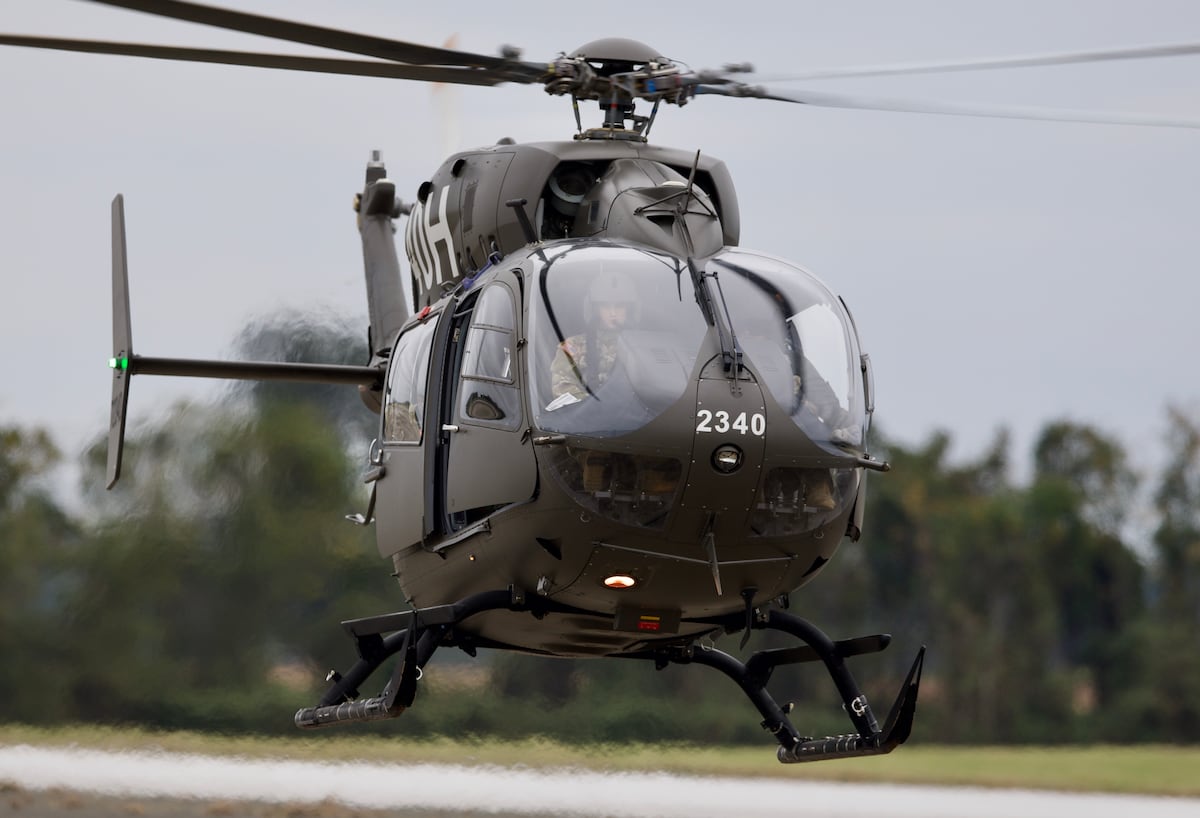
New Partnership Aims to Reshape U.S. Army Flight Training
In a strategic move to enhance pilot training, Boeing, a major player in the U.S. aerospace industry, has teamed up with Italian firm Leonardo. Their joint effort focuses on providing a contractor-owned, contractor-operated model for the U.S. Army’s flight training program. This initiative was revealed at the Association of the U.S. Army’s annual conference in Washington.
At the core of this collaboration is the Army’s Flight School Next program, which seeks to revamp rotary-wing training. The new approach emphasizes the use of a single-engine helicopter to create a more adaptable and scalable training environment. This shift comes in response to ongoing challenges the Army faces with aviation accidents that have marked the need for a comprehensive overhaul of pilot training methods.
Insights from a 2020 study by Boston Consulting Group suggest significant cost savings—estimated in the hundreds of millions—by transitioning to a single-engine training system. Additional research, conducted with the College of William & Mary’s MBA fellowship program, indicated that a contractor-owned, contractor-operated model could outperform the existing government-operated system.
With a sense of urgency, the Army is advancing its plans by issuing a draft request for proposals, aiming to finalize this by 2026. According to Maj. Gen. Clair Gill, the transition to a new training solution is projected to begin in early fiscal 2027.
Boeing brings a wealth of experience to the table, being a longtime supplier of aircraft like the AH-64 Apache and CH-47 Chinook to the Army. This expertise, combined with Leonardo’s AW119T training helicopter, offers a promising solution for the Army’s training needs.
“We are bringing together two industry leaders to offer the Army a turnkey, innovative approach to rotary-wing training with an integrated, long-term training solution that increases aviator proficiency, operational and sustainment efficiencies and will deliver measurable value throughout the life of the program,” stated John Chicoli, senior director at Boeing Global Services.
Boeing’s current global training solutions for the AH-64 Apache include various simulation technologies and instructor development, indicating a strong capability for managing complex training programs. Leonardo complements this with its proven single-engine trainer, which has accumulated over 100,000 flight hours and includes significant experience in instrument flight and autorotations.
The Boeing-Leonardo proposal extends beyond just delivering aircraft—it aims to enhance flight hours, skill proficiency, and provide a flexible training model that can adapt over time. This comprehensive service approach seeks to meet the Army’s evolving training demands throughout the contract’s duration.