The Legacy of the 761st Tank Battalion: A Story of Courage and Recognition
In a powerful speech delivered in October 1944, General George Patton addressed the U.S. Army’s first Black tankers, the 761st Tank Battalion, with words of expectation and motivation. “I would never have asked for you if you weren’t good,” Patton proclaimed, emphasizing his demand for excellence regardless of race.
The 761st, known as the “Black Panthers,” were introduced to Patton’s Third Army during World War II. Despite Patton’s own prejudices, stemming in part from his Confederate heritage, he eventually deployed this segregated unit into combat. The battalion soon proved their valor on the battlefield, particularly through the actions of one of its members, Ruben Rivers.
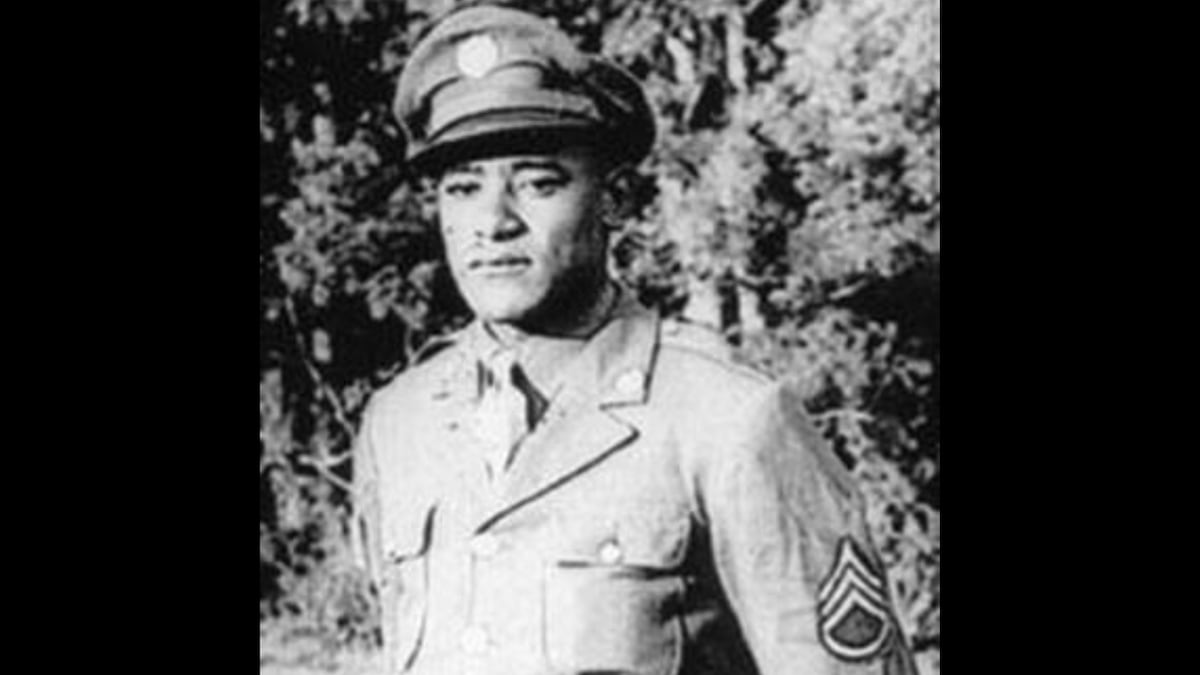
Ruben Rivers, an Oklahoma native, was among the first from the 761st to distinguish himself in battle and also one of the first to fall. Before the war, Rivers worked on a railroad but eventually enlisted along with two of his brothers. He was assigned to Company A of the 761st Tank Battalion after training at Camp Hood, Texas.
The battalion’s first combat opportunity came on November 8, 1944, targeting the Saar Valley at the Siegfried Line. During an attack on the French town of Vic-sur-Seille, Rivers demonstrated extraordinary bravery by removing a roadblock under intense enemy fire, allowing American forces to advance and eventually secure the town. His heroics earned him the Silver Star, making him the first member of the 761st to receive the honor.
Just over a week later, the battalion engaged in fierce fighting in Guébling. Despite sustaining a severe leg injury, Rivers refused pain relief and continued commanding his tank, directing fire at enemy positions. His courage was once again evident when Company A faced heavy resistance near Bourgaltoff on November 19. Though ordered to retreat, Rivers declared over the radio, “I see ‘em. We’ll fight ‘em,” and continued to engage the enemy until he was killed by a German shell.
Captain David A. Williams, Rivers’ commanding officer, recognized his extraordinary leadership and spirit, recommending him for the Medal of Honor. Although not recognized in his time, Rivers posthumously received the Medal of Honor on January 13, 1997, thanks to efforts that preserved his legacy. His sister, Grace Woodfolk, accepted the award from President Bill Clinton.
Rivers’ story is emblematic of the 761st Tank Battalion’s legacy, a unit that embodied determination and heroism despite the challenges of racial segregation. Their story, and Rivers’ ultimate sacrifice, remain a significant part of military history, a testament to the bravery that transcended the prejudices of their era.
Rivers is interred at the Lorraine Cemetery, a resting place among fellow soldiers who lived up to the expectations set by Patton, leaving an indelible mark on history.