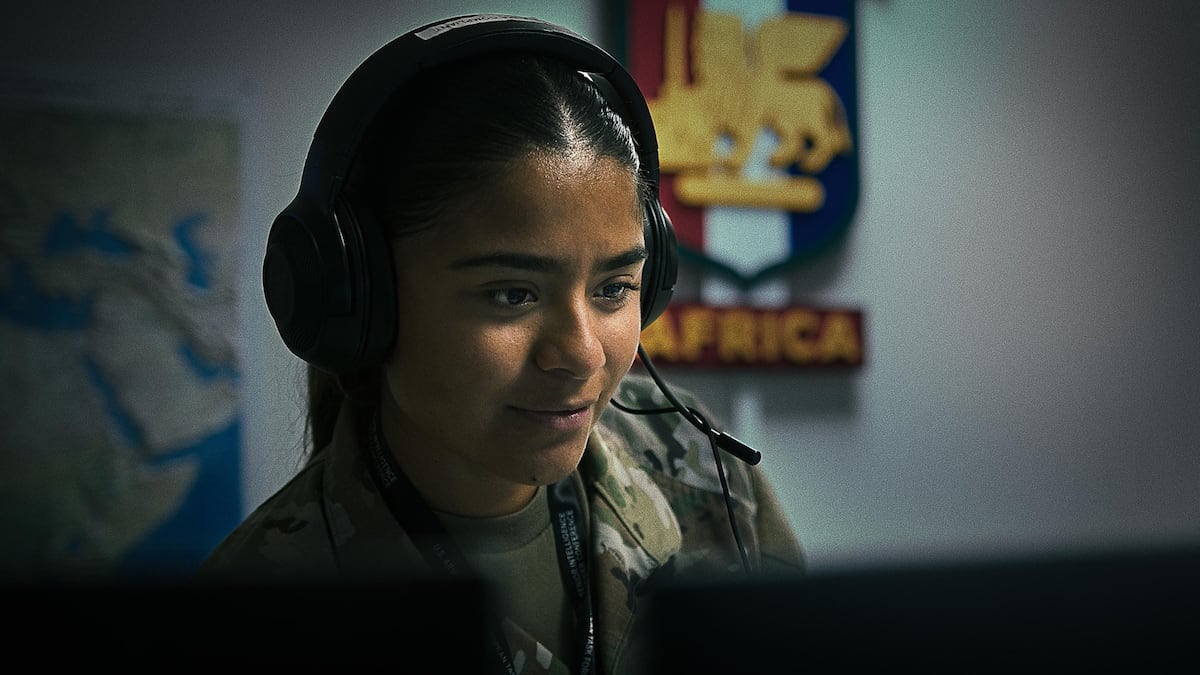
As militaries around the world increasingly integrate technology into their operations, the U.S. Army’s Southern European Task Force, Africa (SETAF-AF) is at the forefront of leveraging artificial intelligence to enhance strategic planning and crisis management. A recent wargame in Vicenza, Italy, showcased how AI is reshaping traditional military exercises.
“AI helps planners search curated data, answer doctrinal questions and prototype simulations,” stated Robin Kuo, a strategist and planner with SETAF-AF, in a release by the Army. This was evident during the wargame, which formed part of a deployment readiness exercise and utilized Maven, the Pentagon’s prominent AI initiative launched in 2017.
The Army, while keeping specific details of the exercise under wraps, highlighted the wargame’s goal to “stress-test the command’s response to real-world crises.” According to the Army, “This exercise demonstrated how SETAF-AF remains a force multiplier for U.S. Army Europe and Africa and U.S. Africa Command (AFRICOM), ready to rapidly respond as a joint task force when needed.” The exercise involved planners gathering at SETAF-AF headquarters to explore various crisis response scenarios.
In the wargame, traditional methods intersected with modern technology. Participants engaged with physical maps and role-played as friendly and adversarial forces. AI played a pivotal role, with Kuo noting that Maven facilitated better data management and improved decision-making support, allowing for “faster, more informed decisions.”
Another critical aspect of the exercise was preparing for scenarios where AI might become unavailable, such as when communication links are disrupted. Kuo emphasized the importance of focusing on “creating decision-driven data, not data-driven decisions,” to maintain operational effectiveness even without AI support.
Kuo, who brings experience from the commercial sector in interactive art and user interface design, played a significant role in enhancing Maven’s usability for the participants. “I have an understanding of how an audience interacts with interfaces so I can build things in Maven that are more user-friendly,” he mentioned in the Army release.
AI’s potential in military wargaming is considerable. Historically, developing computer simulations has been costly, while traditional games are labor-intensive with limited data capacity. AI, however, can handle vast data sets to generate scenarios or evaluate outcomes. Large language models like ChatGPT offer user-friendly interfaces for players to access information swiftly.
The Air Force’s recent Request for Information in August exemplifies this shift. The document seeks AI-driven wargames capable of simulating high-intensity conflict conditions, testing training pipelines, and exploring sustainment under high attrition, with AI facilitating scenario generation, event injection, decision adjudication, and post-game analysis.
However, some experts caution against over-reliance on AI. Two RAND Corp. researchers warned that while AI can broaden the scope of wargaming, there is a risk if AI replaces human judgment. “If, however, AI is used to replace human judgement — for example, to ‘impersonate’ an adversary decision-maker or to replace human interaction — we risk a dangerous mirage of knowledge, and there be dragons,” they stated in a recent warning.