In an era where digital warfare demands cutting-edge technology, a key player in satellite communications has secured a notable contract with the U.S. Army. This deal underscores the growing role of satellite technology in modern military operations, reflecting a shift from traditional tactics to advanced, tech-driven strategies.
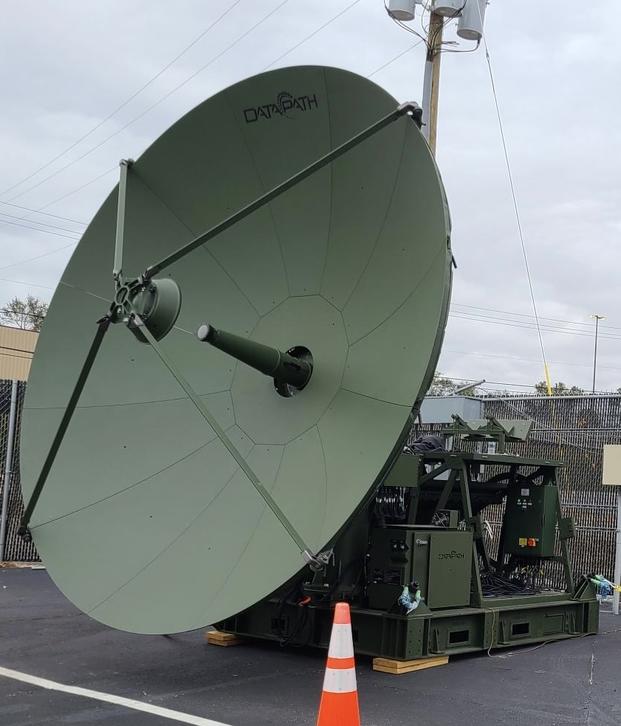
Gilat DataPath, a subsidiary of Gilat Satellite Networks Ltd., has been awarded a contract exceeding $7 million to supply transportable SATCOM (satellite communication) terminals to the U.S. Army. These terminals, known as DKET (Deployable Kit Earth Terminal) 3421, will be delivered through a prime contractor by the end of 2025.
According to Military.com, which reached out to the U.S. Army for comment, these SATCOM terminals are pivotal in providing high-speed voice, data, and video communications in remote areas. Nicole Robinson, president of Gilat DataPath, emphasized the company’s commitment to supporting both U.S. and allied military forces, stating, “We’ve got a number of different direct and indirect vehicles, direct meaning direct contracts with our U.S. government customers as well as our allied customers.”
Robinson explained that about 75% of the company’s contracts are U.S.-based, involving various military branches and federal civilian sectors, while the remaining 25% involves international allies, particularly in Europe and the Asia Pacific region.
Advanced Satellite Communication Capabilities
The DKET 3421 terminal is designed to withstand rigorous combat conditions and is equipped with a scalable modem architecture supporting up to 32 modems. This technology ensures reliable connectivity for deployed forces, particularly in areas lacking traditional communication infrastructure.
The system utilizes the Ku band frequency via geostationary satellites, located approximately 33,000 miles above the earth. Additionally, it supports tri-band operation, including Ku/Ka/X-band frequencies, which are used by both commercial and military satellite constellations.
Robinson highlighted the terminal’s capability to provide connectivity for brigade-sized units in areas without fiber or cellular networks. “These systems are typically designed for a larger size unit of soldiers, so a brigade size,” Robinson explained.
Impact of Recent Conflicts
With nearly three decades in the business, Gilat DataPath has witnessed significant changes in the SATCOM landscape, particularly in light of recent conflicts. The ongoing war in Eastern Europe has heightened the demand for satellite intelligence and imagery, with a focus on the proliferation of drones and their role in modern warfare.
Robinson noted that the integration of satellite communications and geospatial intelligence is crucial for situational awareness and strategic military operations. “Having transportable terminals that are capable of receipt of both satellite communications downlink and geospatial intelligence, that cracks the code,” Robinson remarked.