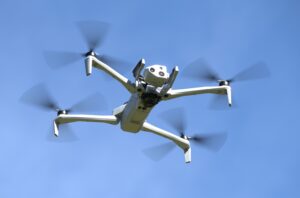
The ongoing conflict between Russia and Ukraine has reshaped the battlefield dynamics, especially in terms of logistics and supply chain operations. Drone technology, once a novelty, has now become a decisive factor in warfare, creating significant challenges for logistics operations.
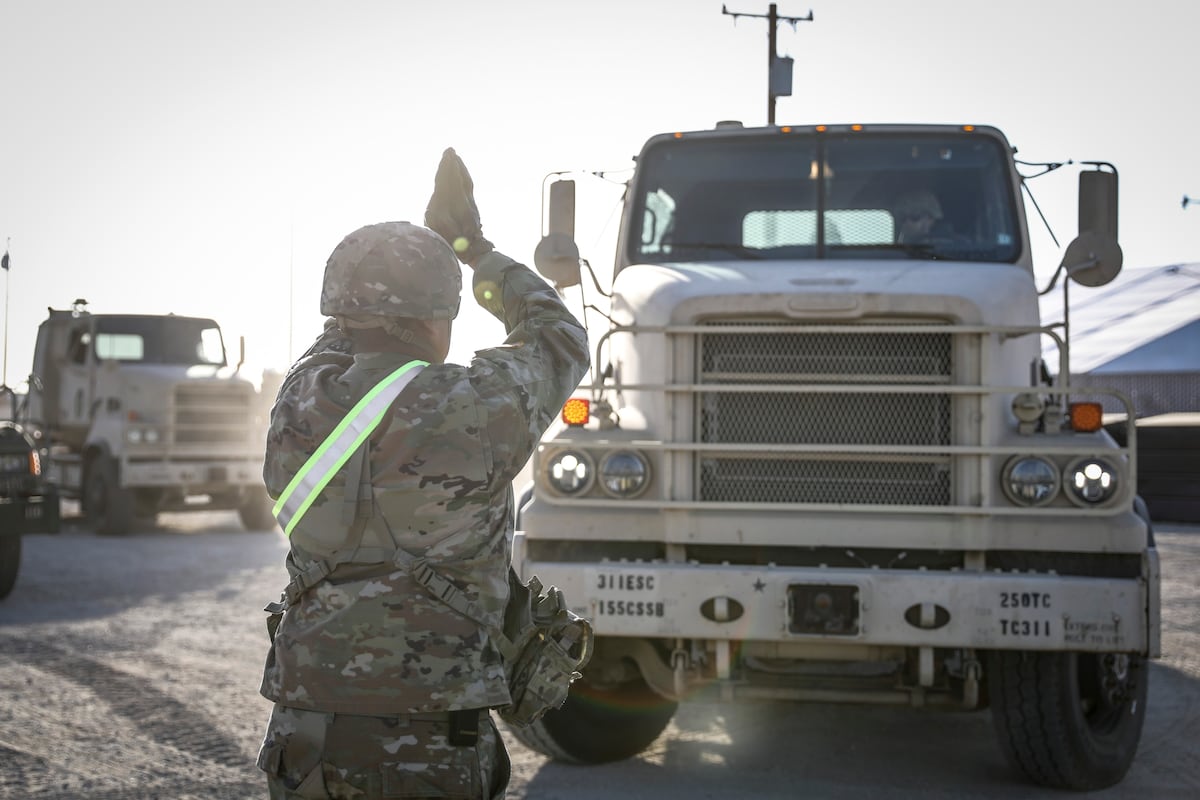
For the first time since World War II, U.S. Army logistics must adapt to a new reality where the safety of supply units from aerial threats is no longer guaranteed. The traditional belief that rear areas are safe from enemy attacks has been shattered.
“The assumption that logistics operates in the safety of a rear area is no longer valid,” Capt. Stephanie Torres stated in an interview with Defense News. “Sustainment formations are targeted with the same precision and lethality as maneuver units.”
Supply units are now required to adopt strategies akin to combat units, focusing on survivability and mobility while planning for deception and concealment. Torres, a seasoned logistics officer, emphasized this in her essay for Army Sustainment magazine. She highlighted the persistent threat posed by drone swarms, which have transformed Ukraine’s battlefields into a vast kill zone extending far beyond the front lines.
“Russian forces have repeatedly ambushed Ukrainian supply columns with coordinated drone surveillance,” Torres noted. The Russian tactic involves waiting in concealed positions to strike logistics convoys before they reach the front, exemplifying the deadly efficacy of modern warfare.
To mitigate these threats, U.S. Army supply units must prepare for constant drone presence and minimize radio communications to avoid missile targeting. “Sustainment nodes must reduce their electromagnetic and physical signatures to survive,” Torres advised, which involves using camouflage, decoys, and low-signature platforms.
Training for logistics personnel must also evolve. Combat training centers should simulate contested environments with drone surveillance and precision fires. “Combat training centers must expose sustainers to contested logistics environments,” Torres highlighted.
For sustainment troops to be as defensively capable as maneuver units, they need similar equipment, including counter-unmanned aerial systems. However, these resources are limited and often prioritized for combat units.
“Counter-UAS systems and mobile protection platforms are limited and typically prioritized for maneuver units,” Torres explained. She stressed the importance of survivability for sustainers, noting that logistics failures can jeopardize operations.
The Army logistics framework needs to transition from fixed hubs to dispersed, autonomous nodes. These nodes should dispatch mobile sustainment teams that are adaptable and aligned with maneuver formations. Such flexibility allows supply convoys to be responsive and less detectable by enemy intelligence.
Logistics units can further enhance protection by streamlining operations, reducing excess inventory near the front, and employing commercial best practices like just-in-time logistics. Torres, leveraging her MBA background, advocates for the use of artificial intelligence and predictive analytics to optimize logistics efficiency.
“Leaner footprints in contested environments promote agility,” Torres stated. “Agility produces higher chances of survival.” Commanders, she suggested, must critically evaluate their readiness and adaptability under threat, ensuring that logistics sustainment is robust under fire.