As military technology rapidly evolves, strategies from the past are being revisited to address modern warfare challenges. The emergence of drones in conflicts, such as the ongoing war in Ukraine, has sparked discussions about adopting outdated military structures to combat new threats.
A Blast from the Past
Back in the late 1950s, the U.S. Army developed the Pentomic Division concept in response to the potential use of nuclear weapons in warfare. This strategy involved creating self-contained battalions that could quickly assemble and disperse on the battlefield, minimizing the risk from atomic attacks.
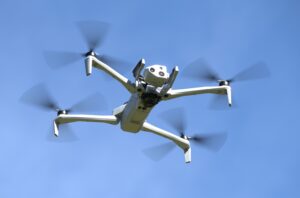
Fast forward 70 years, and the Army faces a different kind of threat. Drones have become a significant concern, forcing military forces to operate in smaller, dispersed units to avoid detection and attack. This approach, however, reduces the ability to execute decisive maneuvers, leading to prolonged conflicts marked by attrition.
Reviving the Pentomic Concept
John Moore, a former British Ministry of Defense official, suggests reintroducing a modified version of the Pentomic concept to address these modern challenges. In an essay for the U.S. Army’s Armor Magazine, he writes, “Something similar to the Pentomic structure may have something to teach in terms an answering the battlefield problems of today.”
The original Pentomic divisions were designed to counter the “quantitative leap in firepower” brought about by nuclear weapons. Moore sees parallels with today’s threat landscape, where precision and long-range attacks by drones and missiles are prevalent.
Structure and Challenges
The historical Pentomic structure, used from 1957 to 1963, replaced the traditional triangular division with five battlegroups, each equipped with rifle companies, support units, and artillery. Despite its innovative approach, the concept was eventually abandoned due to overwhelming command and logistics challenges.
The late U.S. Army Col. David Hackworth noted in his memoir “About Face” that commanders often struggled with managing the numerous maneuver elements on the Pentomic battlefield.
A Modern Adaptation
Moore proposes a “New Pentomic” or “Pentomic v5” at the company level. This formation would allow for local successes while maintaining enough resilience to endure combat. The flexibility and dispersion of these units could make them less vulnerable to drone attacks.
On defense, Moore envisions these structures using natural and urban concealment to protect against enemy attacks, leveraging precision fire to maintain gaps and improve survivability.
Technological Advances
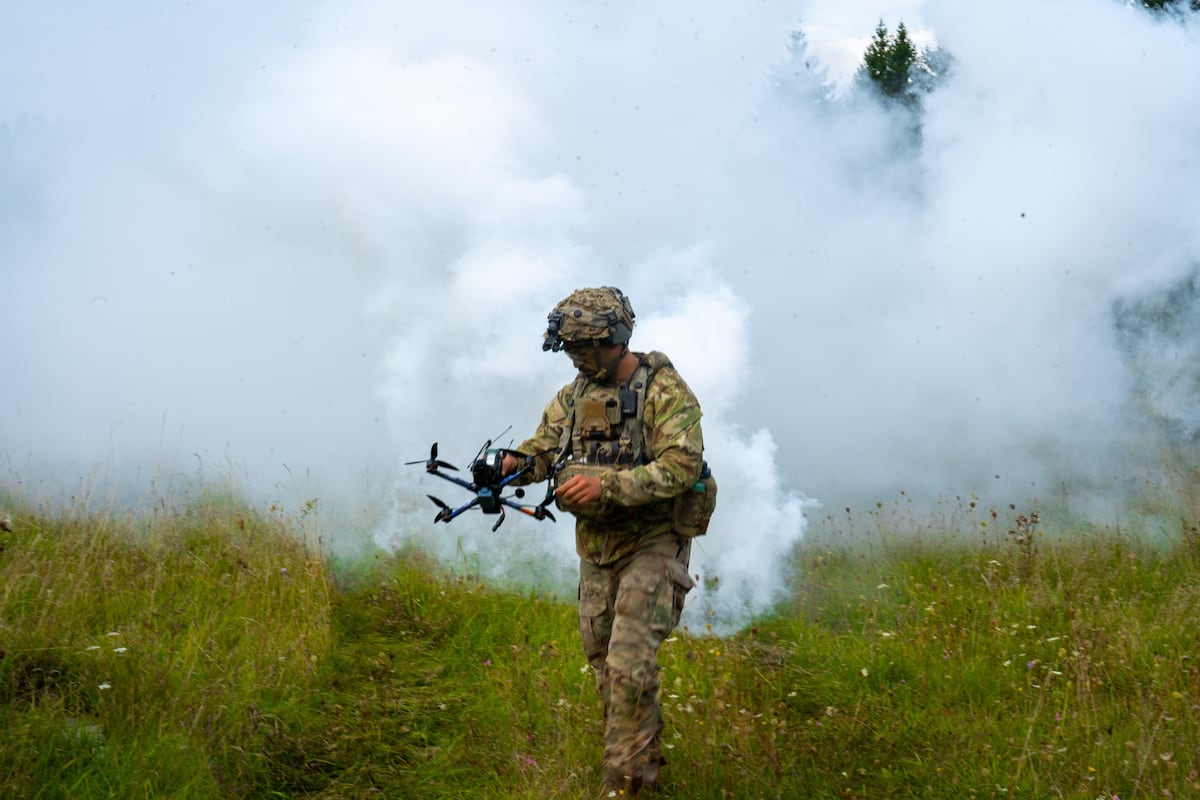
Today’s technology offers solutions that were not available in the 1950s. Moore points out that first-person-view (FPV) drone technology provides even the smallest unit with reconnaissance and precision strike capabilities. He emphasizes that distributed command systems are more resilient and adaptable, allowing for quicker targeting.
Cost-Effective Adaptation
Moore argues that the New Pentomic approach could be an affordable adaptation for the U.S. and NATO. “It can be done cheaply as it is about structure, training and an attitude of mind,” he told Defense News.
History, however, suggests potential challenges. As seen in World War II and the early stages of the 2022 Russian invasion of Ukraine, initial successes with flexible tactics can be undermined by heavy casualties, leading to a reliance on more rigid strategies.
Ultimately, Moore believes that the success of this strategy will rely on initiative and a willingness to take risks, which will have significant implications for training and leadership across all military levels.