In the serene and hallowed grounds of Arlington National Cemetery, among the many stories of valor and sacrifice, lies an unusual tale. Beneath a white granite headstone marked Larry Allan Thorne rests a man whose journey traversed three nations and decades of warfare, beginning as Lauri Allan Törni in Finland.
Early Military Exploits in Finland
Born on May 28, 1919, in Viipuri, Finland, Törni’s military career began in 1938 with his enlistment in the Finnish Army. As the Soviet Union invaded Finland in November 1939, Törni’s 4th Independent Jaeger Infantry Battalion was deployed in the Winter War, notably at Rautu and Lake Ladoga.
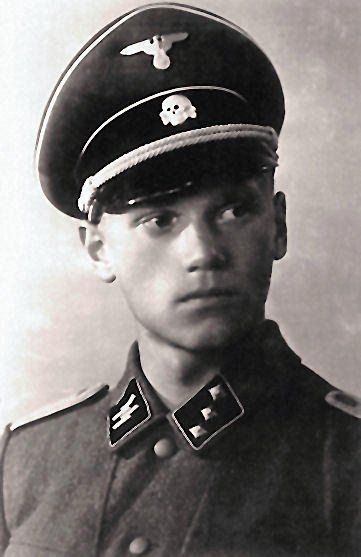
His leadership and skill during these battles earned him recognition and a promotion to second lieutenant by March 1940. Törni further honed his military prowess with the Waffen-SS in Vienna in 1941, focusing on mountaineering and cold-weather tactics as Operation Barbarossa unfolded.
The Continuation War and Recognition
With Finland allying with Germany to reclaim lost territories, Törni’s role in the Continuation War became prominent. Leading Detachment Törni, he conducted daring raids behind Soviet lines, earning a fearsome reputation.
Future Finnish President Mauno Koivisto, who served under Törni, highlighted his egalitarian leadership style: “He did not ask anyone to do something he did not do himself.” In 1944, Törni received Finland’s highest military honor, the Mannerheim Cross, with a bounty placed on his head by the Soviets.
Waffen-SS Involvement and Legal Struggles
Following the Moscow Armistice in 1944, Finland’s alliance with Germany dissolved, leading Törni to join a pro-German resistance against Soviet occupation. He trained with the Waffen-SS, but as Germany fell, he surrendered to British forces and returned to Finland in 1945.
Arrested and convicted of treason in 1946, Törni’s six-year sentence was cut short by a presidential pardon in 1948. His case remains controversial, with debates over whether his actions were treasonous or patriotic.
Transformation to U.S. Military Hero
Seeking new beginnings, Törni arrived in the United States in 1950, securing residency with help from OSS chief William Donovan. Under the Lodge-Philbin Act, he joined the U.S. Army in 1954 as Larry Thorne, quickly ascending to Special Forces.
Thorne’s expertise in guerrilla warfare and survival tactics made him a valuable instructor and operative, earning him U.S. citizenship and a captain’s commission by 1960. His notable missions included a recovery operation in Iran, showcasing his leadership and tactical acumen.
Vietnam War and Final Missions
Thorne’s deployment to Vietnam in 1963 with Special Forces Detachment A-734 involved high-risk operations, earning him multiple commendations. His second tour with MACV-SOG further highlighted his strategic contributions.
Tragically, Thorne’s life ended in 1965 during a covert mission in Laos. His remains, discovered in 1999 and identified in 2003, were interred at Arlington with full military honors.
Legacy and Honors
Thorne’s legacy is enshrined in both U.S. and Finnish military history. The 10th Special Forces Group headquarters and the annual Larry Thorne Award bear his name, honoring his indomitable spirit. In Finland, exhibits and accolades commemorate his courage, with the U.S. Special Forces recognizing him as a symbol of valor and resilience.