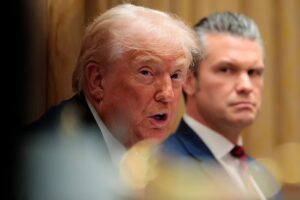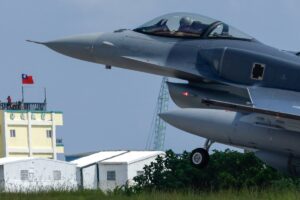
On September 2, 2025, President Trump announced that the U.S. military had attacked a Venezuelan vessel suspected of carrying drugs, killing 11 people. The administration defended the strike as an act of “self-defense” against a “narcoterrorist” group called Tren de Aragua (TdA). However, many experts quickly criticized the attack, arguing it violated both U.S. and international law. For instance, Georgetown Law Professor Marty Lederman called it an “indefensible breach of the fundamental norm against targeting civilians.”
This attack raises an urgent question: Were the military’s lawyers—the Judge Advocates General (JAGs)—consulted, or were they ignored?
This new concern builds on an old one. Retired Lieutenant Colonel Army JAG Dan Maurer noted that: “[N]o military lawyers outside the Pentagon… can serve as adequate bulwarks against the rapid erosion of the Defense Department’s commitment to the rule of law.” When military lawyers are pushed aside, it risks having force used in ways that are criminal and that harm the legitimacy of the armed forces.
The Venezuela Ship Attack and Its Legal Justification
The Trump administration framed the attack as if it were a legal strike on a foreign terrorist group in a time of war. The president claimed the TdA gang’s drug trafficking posed a “significant threat” to the United States, suggesting the U.S. was justified in using military force for self-defense.
However, many legal experts strongly disagree that this argument applies here. International law generally does not consider illegal drug trafficking to be the same thing as an “armed attack” that would allow a nation to use military force in response. The strike also went further than previous controversial actions, such as the 2020 killing of Iranian General Qassem Soleimani. In the TdA case, the U.S. was striking what appeared to be civilian criminals in international waters, based on the distant risk of drug use in the U.S., not an imminent attack on U.S. personnel. Secretary of State Marco Rubio, in defending the action, characterized the strike as “sending a message to the nation’s enemies.”
The attack’s core legal problem is that it bypassed the Law of Armed Conflict (LOAC) entirely because the U.S. is not formally in an armed conflict with the Tren de Aragua gang. Therefore, the military could not simply justify the strike by saying the mechanics of the attack followed the rules of war.
Where Was the Legal Review?
Under normal conditions, even a high-profile strike approved by the president would go through some sort of legal review process. Military doctrine requires that legal advisers be available to commanders “to advise military commanders at the appropriate level on the application of international humanitarian law.” This ensures that U.S. operations comply with international and domestic laws.
Lawyers specializing in this area, known as “operational law,” are found in large numbers across the government, including the National Security Council, the State Department, and at all levels of the Defense Department. These JAGs and civilian attorneys have historically been a crucial safeguard. For example, in 2006, senior military and civilian lawyers successfully pushed back against the Bush administration’s use of torture (referred to as “enhanced interrogation techniques”), demonstrating their vital, independent role.
If the military followed its own rules, the strike plan would have been reviewed by a long list of legal experts, from the lawyers advising the Secretary of Defense down to the senior legal adviser for the U.S. Southern Command (SOUTHCOM). The question remains: “What happened to what is supposed to be ‘principled counsel’ at every level of command?”
The Threat to Independent Counsel
The fact that the TdA attack occurred at all is highly concerning, especially given the context of the recent firing of top military lawyers and the administration’s stated goals. When top lawyers are removed or sidelined, it suggests that the legal advice they would have offered—which likely would have argued against the attack—was either ignored or never requested.
Furthermore, a specific executive order makes this problem worse. This order dictates that the president’s (or the Attorney General’s) interpretation of any law is final for all employees in the executive branch. This means if the president simply declares an action lawful, a military lawyer has no legal standing to argue otherwise, even based on their professional duty to the Constitution. Maurer argues that this is “a blatant embrace of autocracy and dismissal of the rule of law.”
If this theory is accepted, there is almost no check on military power. Geoffrey Corn, a former JAG, summarized the danger: “If ‘principled counsel’ is steamrolled in this new Department of War, what will constrain the future abuse of military power?”
Read the original article here.