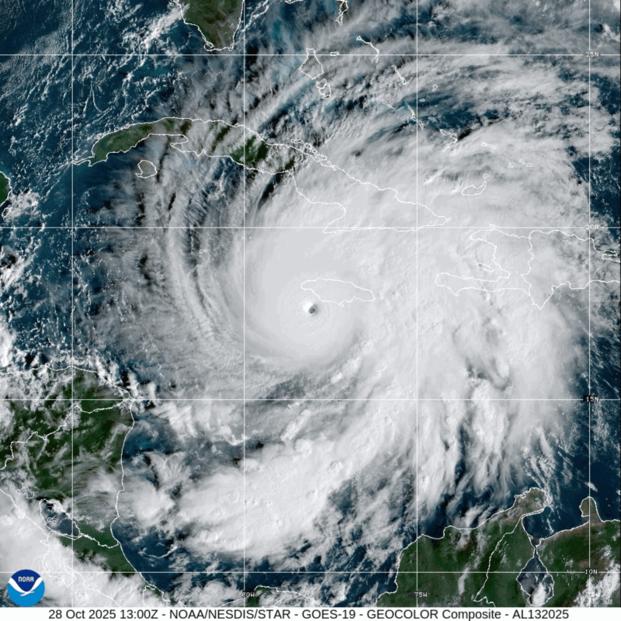
As Hurricane Melissa, a formidable Category 5 storm, barrels toward Jamaica and the Caribbean, the U.S. Navy has taken proactive measures to safeguard families from Naval Station Guantánamo Bay. The Navy’s evacuation efforts underscore the severity of the storm, which poses significant threats to the region.
The National Hurricane Center, operating under the National Oceanic and Atmospheric Administration, has issued a stark warning regarding Melissa’s potential impact on Jamaica. The hurricane is described as “extremely dangerous and life-threatening,” with expectations of catastrophic winds leading to flooding, landslides, and widespread damage, including power outages and human displacement.
A total of 864 non-mission essential personnel were evacuated by the Navy as Melissa intensified. These individuals were transported from Guantánamo Bay to Naval Air Station Pensacola on five separate flights, arriving on October 25 and 26.
The evacuees included families of service members, civilian employees, contractors, and even pets. Guantánamo Bay, located on Cuba’s western edge, lies perilously close to Melissa’s expected path.
Brad Martin, a retired Navy captain and senior policy researcher at the RAND Corporation, noted that Melissa’s impact would likely challenge logistics more than combat readiness. Disruptions in resupply efforts could occur if ports close or sea routes become hazardous.
According to Martin, Navy Amphibious Ready Groups and Marine Expeditionary Units can rapidly transition from patrol to rescue operations, employing helicopters to transport survivors and delivering essential supplies like food, water, and medical aid. However, larger relief efforts would require supplies from the mainland.
Capt. Chandra Newman, Commanding Officer at NAS Pensacola, emphasized the swift response once the threat was identified, stating, “The safety and well-being of our Navy family is always a primary concern. Right now that means taking care of our Navy family from Guantánamo Bay.”

Pensacola rapidly established an emergency family assistance center, offering food, lodging, and transportation. Navy Lodge and Navy Inn accommodations were filled, and American Red Cross volunteers assisted families in settling.
The strategic location of NAS Pensacola, with its runway and deep-water port, provides the Navy with flexibility during hurricane season. The base has previously served as a refuge for evacuees and ships during major storms.
Navy Eyes the Track
The Navy is closely monitoring Hurricane Melissa’s trajectory and will continue to adjust strategies based on the latest forecasts and storm models. A Navy official confirmed that commands are observing Melissa’s movements in real-time to adapt operations as conditions evolve.

Currently, Melissa remains a potent Category 5 hurricane with sustained winds of 175 MPH. The storm’s intensity is fueled by warm waters, low wind shear, and a well-structured core, with rapid fluctuations in strength possible as it progresses westward.
Forces Can Pivot Fast
The American Red Cross, which typically does not ship blood products to Jamaica or nearby islands, is prepared to do so in emergencies. These shipments are coordinated through the State Department, the United Nations, or local Red Cross agencies. While no request has yet been made, inventories remain strong, and teams are ready.
The State Department has not provided information on potential U.S. humanitarian aid to Jamaica or Cuba should the storm make landfall. There is also no comment on preparations by U.S. embassies in the region to safeguard Americans or relocate personnel.
U.S. Northern Command has not disclosed any details about airlift or disaster-relief readiness, and the Coast Guard has not specified any changes to patrol routes. FEMA has not confirmed whether disaster response teams or supplies are being staged in the southeastern United States in anticipation of the storm’s potential northward turn post-landfall.
Families relocated from Guantánamo Bay are now secure in Pensacola. Navy officials have assured that they are equipped to move additional personnel, aircraft, or ships as needed, depending on Melissa’s path.