The genesis of the U.S. Army Rangers during World War II marked a pivotal moment in military history. Formed in the summer of 1942, these elite units were inspired by the success of British Commandos in executing rapid and strategic strikes against enemy positions. Under the leadership of Maj. William O. Darby, the Rangers were trained in Scotland, focusing on skills such as demolitions, amphibious assaults, and cliff scaling. This rigorous preparation set the stage for their involvement in a critical Allied operation.
Rangers’ Baptism by Fire: Operation Jubilee
In August 1942, the newly formed Rangers faced their first combat test during Operation Jubilee, an Allied raid on Dieppe, France. The operation aimed to probe German defenses and gather intelligence while testing the feasibility of future invasions. Fifty Rangers were integrated into the assault forces, primarily as observers but also as combat participants alongside the Canadian 2nd Infantry Division and British Commando units.
The raid commenced on August 19, 1942, but soon encountered severe challenges. A flotilla carrying 40 Rangers clashed with a German naval convoy, leading to significant losses and an aborted mission. However, seven boats, unaware of the cancellation, continued toward the target under heavy fire. Among these was 2nd Lt. Edward V. Loustalot, who took command after the British captain was killed. He led his men up the cliffs at Berneval, enduring mortar and machine-gun fire until he fell in battle, becoming the first American soldier to die in ground combat in the European theater. Two other Rangers, 2nd Lt. Joseph H. Randall and Technician 4th Grade Howard M. Henry, also perished in the raid.
Elsewhere, four Rangers supported a successful assault on the Hess Battery at Varengeville, neutralizing a German artillery position. By the end of the operation, three Rangers were dead, three captured, and five wounded. Of the 50 who participated, only about 15 reached the beach.
Learning from Dieppe’s Lessons
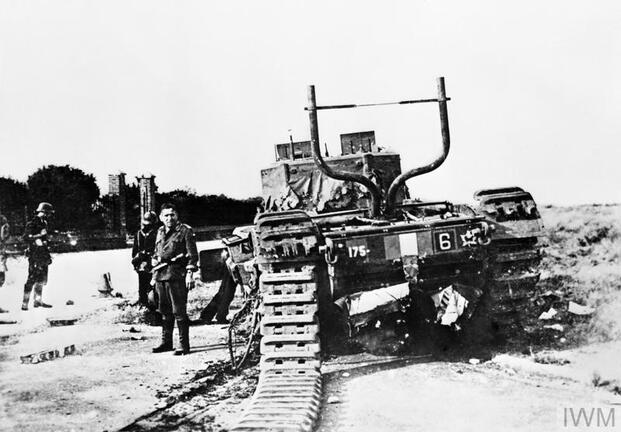
The Dieppe raid was a sobering defeat for the Allies, with over 3,000 casualties, primarily among Canadian forces. The Rangers observed firsthand the pitfalls of inadequate coordination between naval, air, and ground forces. The operation underscored the need for precise objectives, rehearsed cliff assaults, and seamless integration of demolitions and portable firepower.
Despite the losses, the Rangers emerged with valuable combat experience and credibility. They had engaged the enemy, suffered casualties, and gained insights that would inform future missions.
Rangers in the Mediterranean Campaigns
Armed with the lessons from Dieppe, the Rangers played a crucial role in the Mediterranean. In July 1943, they spearheaded the invasion of Sicily, capturing the port of Gela and holding it against Italian tank counterattacks. Their actions exemplified the effective coordination that was lacking at Dieppe.
At Salerno, Rangers executed night landings and secured high ground, preventing German forces from overwhelming the beachhead. However, at Anzio in January 1944, the Rangers faced a dire situation when they were surrounded and suffered heavy losses due to poor coordination and isolation.
Returning to France on D-Day
On D-Day, June 6, 1944, the Rangers were at the forefront of the invasion of Normandy. At Omaha Beach, they faced intense resistance but managed to breach enemy defenses, aided by Brig. Gen. Norman Cota’s rallying cry: “Rangers, lead the way!” Meanwhile, at Pointe du Hoc, Lt. Col. James Rudder’s battalion scaled cliffs using techniques refined from Dieppe, successfully neutralizing German artillery threatening the beaches.
By war’s end, the Rangers had solidified their reputation as a formidable force, applying the hard-earned lessons from Dieppe and subsequent operations to achieve key victories. The legacy of their early sacrifices and successes continues to shape the U.S. Army Rangers today.