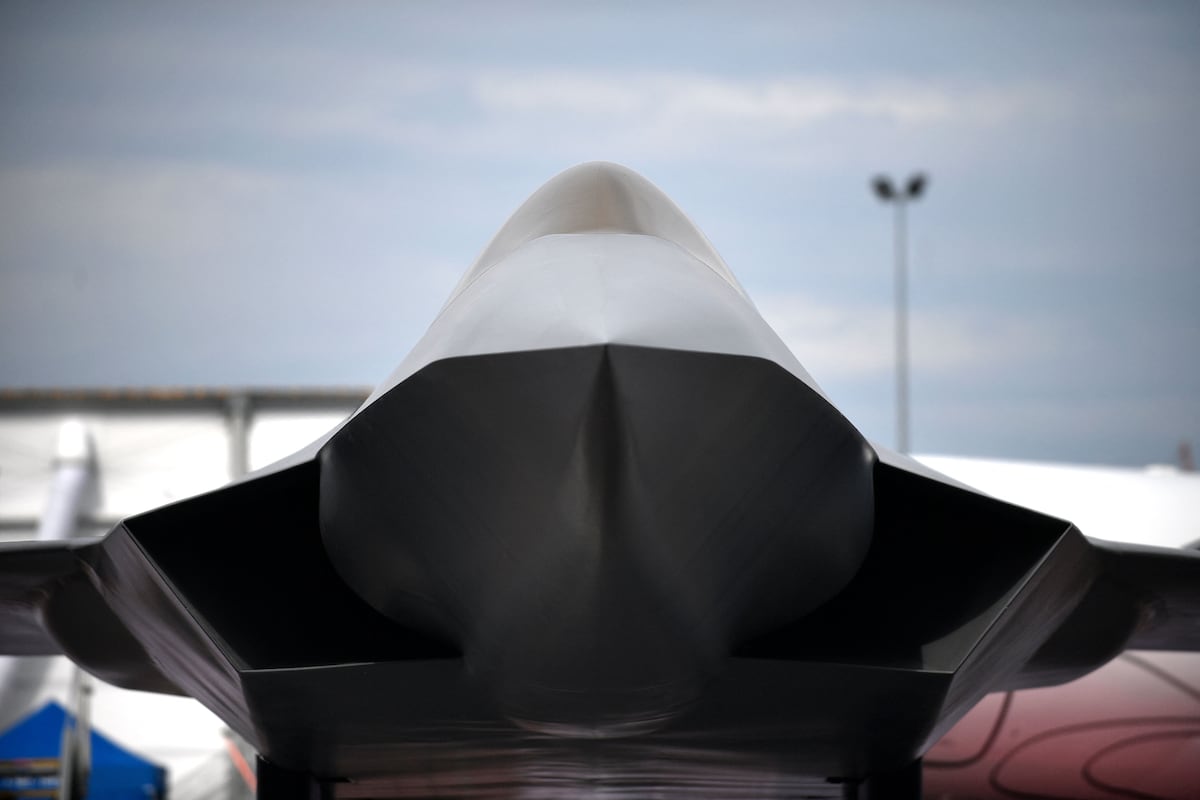
Amidst the swirling rumors of discord among the French, German, and Spanish partners in the Future Combat Air System (FCAS) fighter jet project, a high-ranking French air force official has dismissed such claims as overstated. The FCAS platform, intended to replace the Rafale and Eurofighter jets by 2040, is reportedly on track with all parties still on board.
Brig. Gen. Phillipe Suhr, the French Air Force’s coordinator for the FCAS program, addressed these speculations, stating, “There are differences but don’t believe all you are reading.” He assured that despite the challenges, the commitment to the program remains strong, with efforts underway to resolve any disagreements. “It is important to deliver in the 2040s,” Suhr commented during the International Fighter conference in Rome.
Initiated in 2017 by France and Germany, and later joined by Spain, the FCAS endeavor has faced internal disputes concerning project control. French contractor Dassault has sought a more significant role, which has led to tensions with German partner Airbus. Airbus CEO Guillaume Faury recently suggested that Dassault could withdraw if dissatisfied with the current arrangements, saying, “So if they’re not happy with what was decided and they don’t agree to continue in this setup, they are free to decide to move out of FCAS.” However, Suhr has downplayed these tensions, clarifying that Dassault’s demands have been mischaracterized.
While FCAS faces hurdles, the Global Combat Air Program (GCAP), a collaborative project between Italy, the UK, and Japan, is reportedly advancing smoothly. This progress follows the formation of three industrial consortia this autumn to manage various components of the project. Leading Italian contractor Leonardo expects to secure over €1 billion in national contracts for GCAP by December. CEO Roberto Cingolani noted, “Our competitors are slowing down.”
At the Rome conference, Italian defense ministry representative Col. Antonio Vivolo highlighted the importance of technological independence within the GCAP framework. He explained that maintaining a degree of national autonomy is crucial for adapting to evolving technologies and geopolitical situations, stating, “The goal is not only to obtain a new fighter, the goal is to obtain and keep technological and industrial sovereignty.” This approach ensures that Italy and its partners can reconfigure capabilities without external restrictions.
Vivolo further emphasized the value of arriving at international collaborations with clear, capability-based requirements, which strengthens the reliability and usefulness of partnerships. “Without this depth of sovereignty, sixth-generation would remain a beautiful concept governed by someone else, and this was not an option,” he remarked.