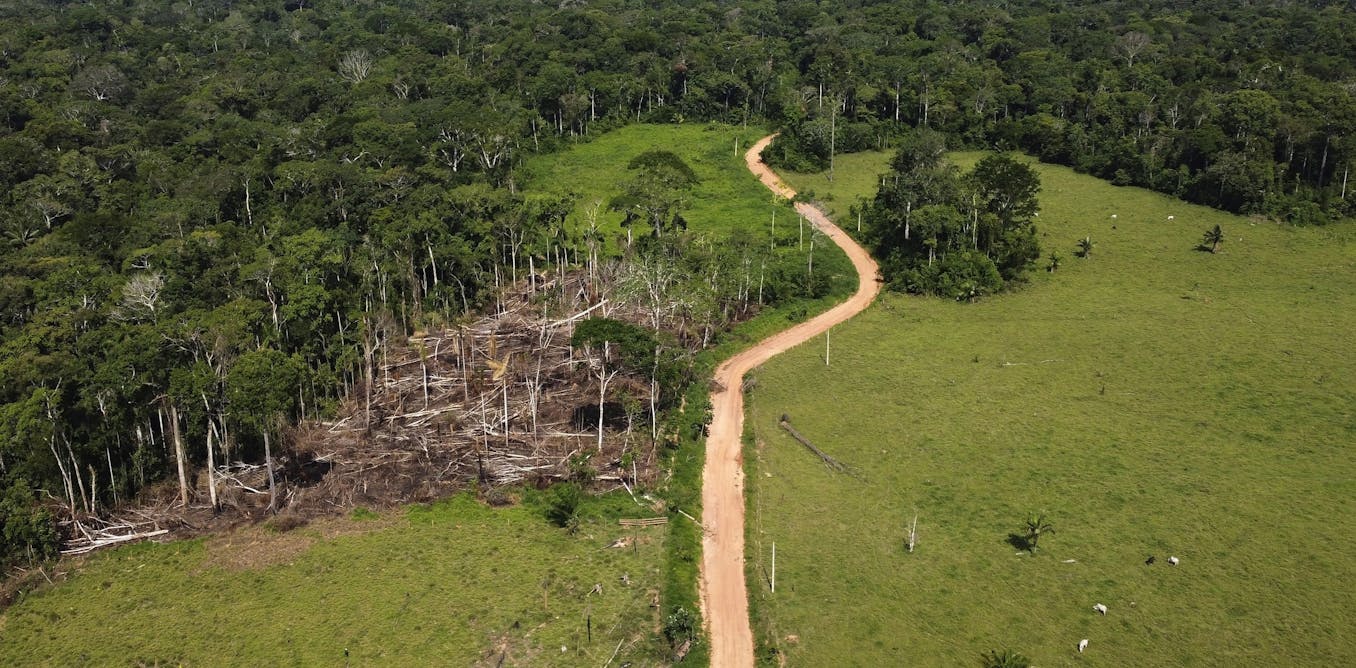
Every year, the planet loses significant areas of forest due to agricultural expansion, logging, mining, and fires, with 2024 witnessing the disappearance of more than 20 million acres, an area comparable to the size of South Carolina. Such losses highlight the critical role tropical forests play in global ecological stability and climate regulation.
Tropical forests are essential as they are instrumental in regulating rainfall, providing habitats for diverse plant and animal species, and acting as crucial carbon sinks. The United Nations reports that deforestation and forest degradation account for approximately 11% of worldwide greenhouse gas emissions.
Global initiatives have been underway to counteract forest loss, with various countries and organizations, alongside Indigenous and local communities, striving to achieve these objectives. Brazil, for instance, attributes a 31% reduction in Amazon deforestation from 2023 to 2024 to enhanced law enforcement and improved monitoring at both state and national levels.
AP Photo/Dita Alangkara
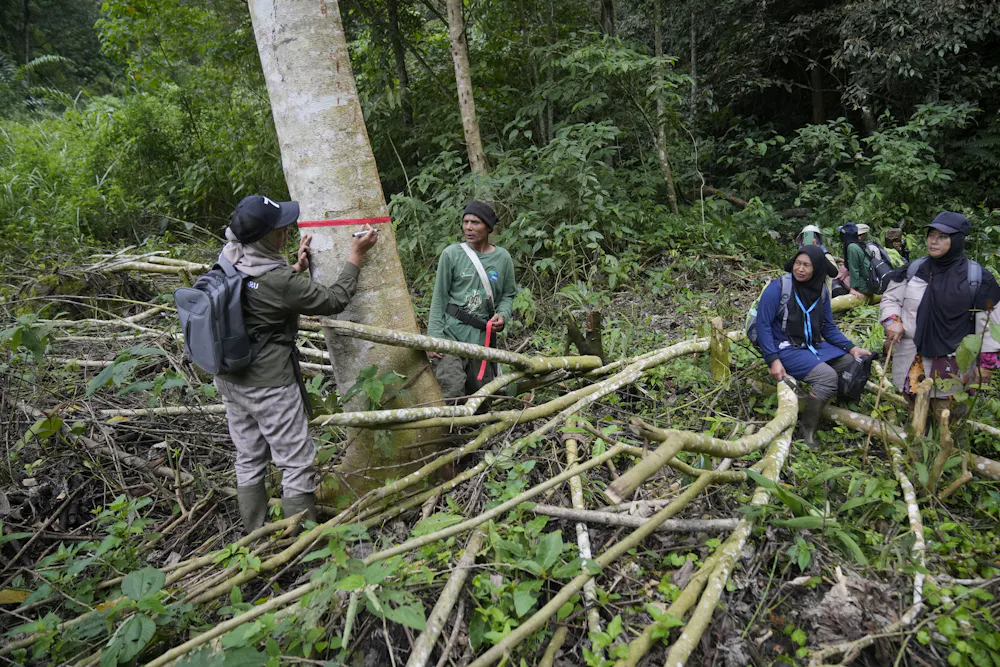
Financial backing from governmental and private sectors is aiding communities in restoring deforested lands, often through planting native trees that offer economic benefits such as fruits and nuts. Additionally, programs that pay for ecosystem services incentivize landowners to maintain forested areas, rewarding them for verified conservation efforts.
However, the global march toward deforestation persists, with 6.7 million hectares of tropical forest lost in 2024 alone. Enforcement alone is insufficient, as seen when Brazil’s reduced enforcement from 2019 to 2023 led to increased illegal clearing. Payment programs also face limitations, often proving only temporarily effective without sustained financial support.
The deforestation challenge is largely driven by economic incentives linked to global demand for crops, livestock, and minerals like gold and copper, providing strong motivations for continued forest clearing. Currently, the financial resources allocated for forest protection, approximately $5.7 billion annually, are dwarfed by the tens of billions invested in companies contributing to deforestation.
Addressing these economic drivers is crucial, prompting new strategies like the Tropical Forest Forever Facility (TFFF), introduced by Brazil on November 6, 2025. This innovative program, launched ahead of the U.N. climate conference, aims to combine public and private funds to compensate countries for preserving tropical forests.
What makes the Tropical Forest Forever Facility different?
The Tropical Forest Forever Facility is designed to address deforestation on a larger scale, both geographically and economically. Instead of focusing on individual landowners, it measures entire countries’ results, potentially influencing national policies to reduce deforestation broadly.
The Facility seeks to mobilize billions of dollars to counteract economic pressures to clear forests for agriculture and industry. Brazil plans to gather $25 billion from governments and foundations, with an additional $100 billion from investors. These funds will be invested in financial markets, with returns used to reward countries for successful forest conservation.
Participating countries are expected to reinvest their payments into conservation initiatives, supporting local communities and Indigenous peoples, who often have the lowest deforestation rates due to their sustainable practices.

Project Drawdown, data from Curtis et al., 2018, CC BY-ND
The Facility complements existing initiatives, including carbon market strategies that generate funding for forest preservation by selling carbon credits. It is designed to work alongside these programs to enhance their effectiveness.
What has been the reaction so far?
The Tropical Forest Forever Facility has garnered attention for its ambition and scale. Brazil and Indonesia each pledged $1 billion, while Norway announced a $3 billion contribution, with other nations also committing support. Although the Facility’s goal is to raise $125 billion, additional commitments are anticipated during the U.N. climate conference, COP30, hosted in the Amazon.

Guillermo Legaria/AFP via Getty Images
How can the Tropical Forest Forever Facility be improved?
Despite its potential, the Facility has faced criticism regarding its funding mechanisms and the routing of funds through national governments. Concerns include potential financial shortfalls if investment returns are insufficient in a given year, impacting forest protection programs.
Many international funding models direct resources solely to national governments, yet much of the practical work against deforestation occurs at state and provincial levels. Enhancing the Facility’s effectiveness could involve integrating these regional governments into decision-making processes to ensure funds reach active conservation efforts on the ground.
The Governors’ Climate and Forests Task Force has been providing input on how to involve state and provincial authorities. Their Blueprint for a New Forest Economy outlines ways to connect initiatives like the Tropical Forest Forever Facility to local conservation efforts, maximizing the impact of funds.
As a pioneering solution, the Tropical Forest Forever Facility represents a critical step forward. Its success will depend on collaboration with regional governments and communities actively engaged in forest protection, ensuring the preservation of vital ecosystems and resources.