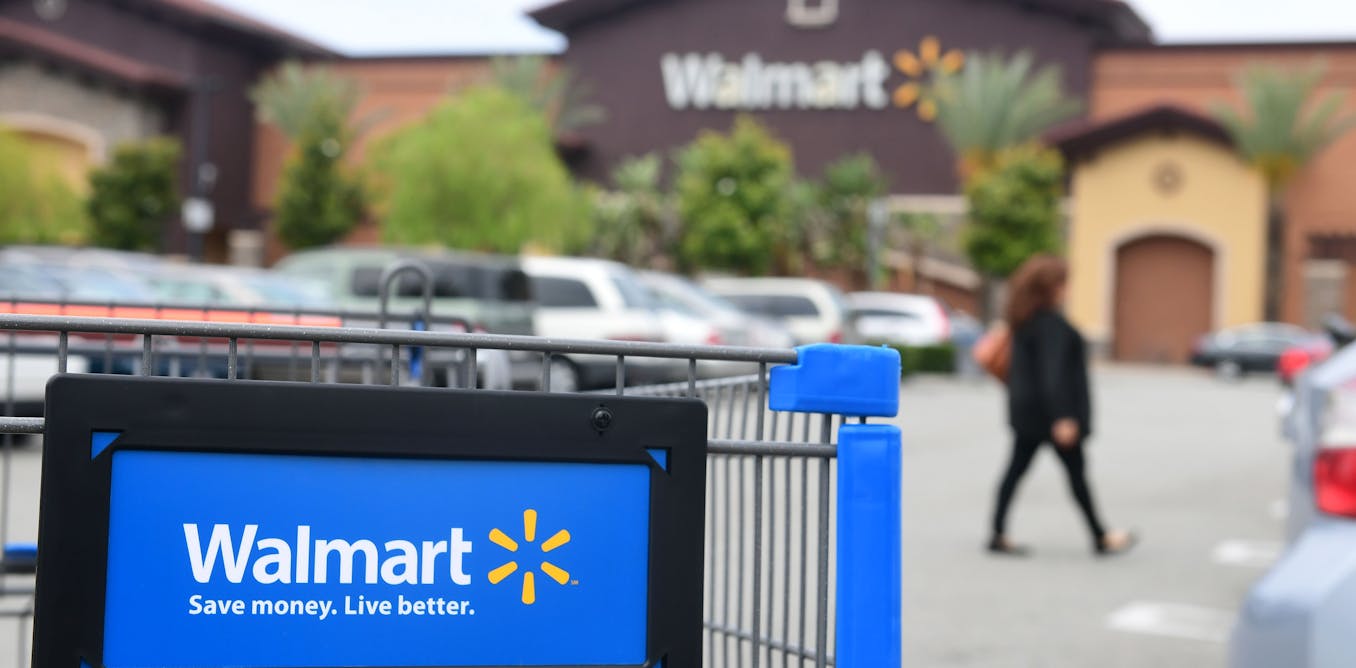
As shoppers exit the sprawling aisles of supercenters like Walmart, Target, or Costco, a common question arises: Did all those purchases truly serve a need?
Research suggests that the answer is often no.
A study conducted by Lina Wang, Sungho Park, and their colleague reveals that the emergence of supercenters, which combine grocery and general merchandise, leads to a marked increase in consumer waste due to overbuying.
Supercenters typically occupy over 150,000 square feet, a vast space that complicates understanding their impact on shopping behavior, given the myriad factors influencing purchase volumes during shopping trips.
To explore this phenomenon, the study analyzed the proliferation of Walmart supercenters across the U.S. over ten years, employing a method called difference-in-differences. This technique compared waste trends in counties with new supercenters against matched counties without them, ensuring comparability in socioeconomic factors like income, housing, and education.
The findings indicated a rise in consumer waste by up to 7% following a supercenter’s opening. Notably, this increase was more pronounced with new supercenters than with expansions of existing stores into larger formats.
Why it matters
For years, large-format retailers like department stores, supercenters, and malls have displaced smaller neighborhood shops across the U.S. Although some big retailers are exploring smaller store formats, supercenters remain a dominant feature of the retail landscape.
These vast stores drive mass consumption through subtle shifts in consumer behavior. To boost sales, large retailers often offer lower prices than smaller stores. For instance, Walmart’s “everyday low price” approach ensures consistently low prices year-round, avoiding reliance on periodic sales.
Additionally, supercenters are typically situated away from residential areas, prompting consumers to maximize each visit by purchasing more, thus avoiding frequent trips.
This tendency to overbuy leads to increased waste, as many goods expire or remain unused. While this strategy may be profitable for retailers, it poses significant environmental and societal challenges, contributing to billions of dollars in waste. The U.S. produces nearly 300 million tons of consumer waste annually, with billions spent on waste management.
What still isn’t known
With the “supercenter effect” quantified, attention turns to potential solutions. Some focus on policy changes to shift consumer behavior, such as the pay-as-you-throw policy, which charges based on waste volume.
Other solutions are structural, such as reviving neighborhood convenience stores and enhancing circular economy channels. These stores could mitigate the supercenter effect by enabling smaller, more frequent shopping trips, thereby reducing waste.
In many urban areas, initiatives supporting local vendors and stores are gaining traction. These efforts not only promote sustainable consumption but also bolster local economies by supporting small businesses, which have historically contributed to 62% of net new job creation.
Another approach involves the “reuse economy,” offering channels for surplus and used goods to circulate. Despite existing offline and online platforms, such as thrift stores, food banks, and Facebook Marketplace, these options are underutilized.
Identifying and effectively implementing these solutions could yield economic and environmental benefits. However, further research is needed to determine the most effective strategies and their underlying reasons.
The Research Brief provides a concise overview of intriguing academic studies.