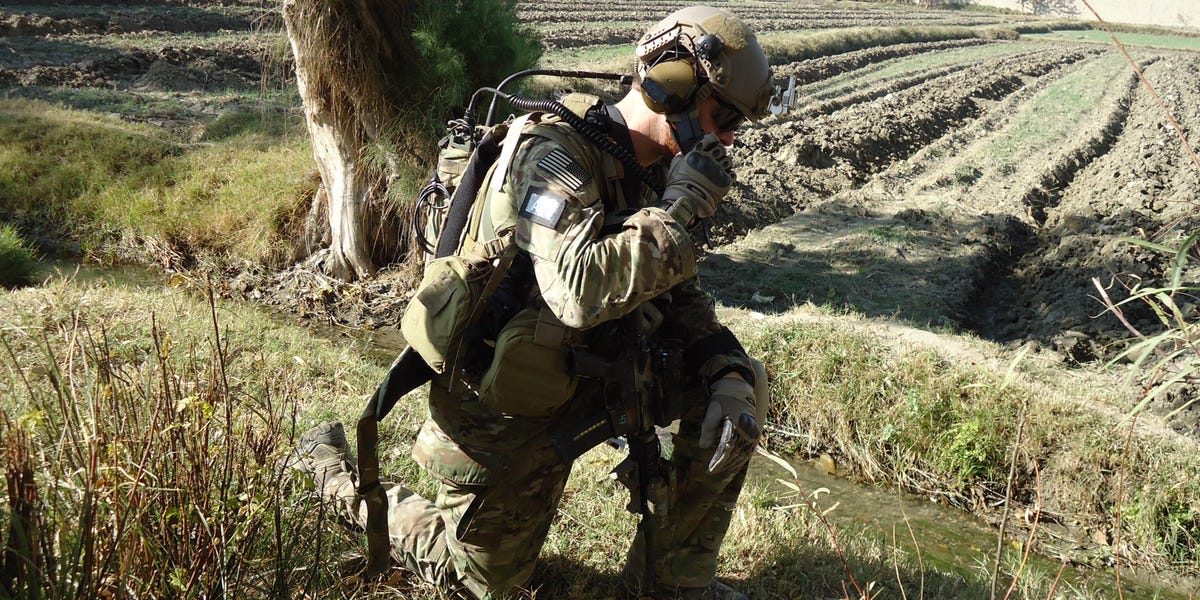
The rapid pace of technological change often leaves traditional military processes lagging. In response, the US Army is accelerating its development strategies to bridge this gap, ensuring they remain prepared for future conflicts.
Central to this effort is the Next Generation Command and Control (NGC2) system, which is being developed through an innovative approach that involves real-time problem-solving between soldiers and developers. This method deviates from the Army’s usual slow-paced upgrades and is crucial in adapting to high-intensity warfare.
NGC2 is part of the Army’s broader modernization initiative, with a focus on new technologies, including unmanned systems and artificial intelligence. Feedback from soldiers plays a vital role in the rapid progression of this system.
Maj. Gen. Patrick Ellis, the commanding general of the Army’s 4th Infantry Division, highlighted the benefits of this collaboration during a recent media session: “What soldiers are really enjoying is having the ability to talk to the developers,” he stated, emphasizing the immediate implementation of soldier feedback.
US Army photo by Pvt. Jacob Cruz
Ellis described the continuous dialogue between soldiers and developers during the Army’s Ivy Sting exercises at Fort Carson, Colorado. These exercises have undergone two testing phases, with a third scheduled, and a larger event planned to test NGC2’s resilience against cyber and electronic warfare threats.
The NGC2 system represents a significant evolution from the Army’s traditional command and control technologies, featuring a centralized system with open architecture and adaptable software. The development team, including Anduril and Palantir, collaborates closely with the Army for tailored capabilities.
Ellis noted that the Army is committed to an end-to-end involvement in the project, contrasting past practices where contractors completed their work and departed. This shift towards a collaborative and agile approach mirrors the Silicon Valley model, with the Army emphasizing faster, more adaptive development processes.
US Army photo by Pvt. Jacob Cruz
Joe Welch, the Army executive overseeing NGC2, highlighted the new relationship with industry partners, aiming to avoid past acquisition challenges and ensure technology can be swiftly updated. The iterative design approach, which was notably successful in developing the Army’s Mid-Range Capability, or Typhon, is being applied to NGC2.
During a Philippine exercise, direct input from soldiers led to modifications that reduced the Typhon missile system’s reload time and stress on components. The Government Accountability Office recognized this feedback-driven development as an effective strategy, emphasizing a “minimum viable product” that evolves based on user interaction.
This approach is reshaping the Army’s operational dynamics, with Welch stating, “It’s showing we can move not just in acquisition more quickly, but in all the aspects of what we do.” The ongoing transformation through NGC2 and other initiatives signifies a paradigm shift in how the Army adapts to modern warfare.