Massive Defense Funding Advances Key Military Programs
Recent legislative measures have injected significant funding into pivotal U.S. Air Force and Navy programs. The passage of these bills, part of the agreement that concluded the United States’ longest government shutdown, paves the way for expansive military advancements.
The Continuing Appropriations Act of 2026 allocates nearly $200 million for the Air Force’s E-7 Wedgetail program, ensuring its development and alignment with production schedules. This is complemented by an additional $200 million shifted from other Air Force aircraft procurement funds, totaling approximately $400 million for the program.
This financial boost aims to sustain the E-7, an aircraft that has faced potential termination due to the Pentagon’s 2026 funding proposals. The Air Force had planned to acquire up to 26 E-7s to replace the aging E-3 Sentry fleet, with a $1.2 billion contract awarded to Boeing in 2024. Despite the E-7’s usage in countries like Australia, Turkey, and South Korea, the U.S. Air Force sought enhancements like advanced communication capabilities.
However, skepticism about the E-7’s viability persists. Defense Secretary Pete Hegseth raised concerns about its survivability and advocated for space-based reconnaissance alternatives. The Pentagon’s budget proposal also cited delays and cost issues as reasons for its potential cancellation, prompting objections from lawmakers and retired Air Force generals who emphasized the Wedgetail’s necessity.
In tandem with the Air Force’s funding, the Navy’s shipbuilding budget will see an increase exceeding $1 billion, with specific allocations for the Virginia-class submarine program and the Ford-class aircraft carriers.
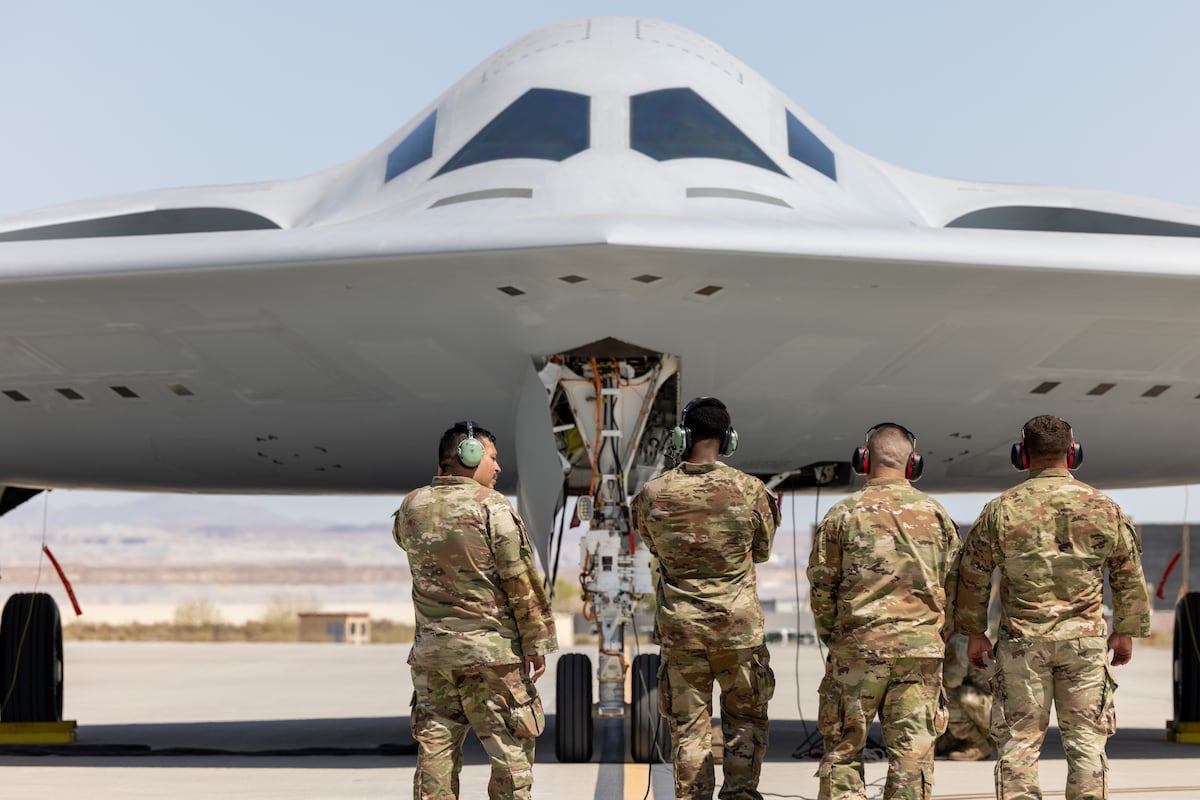
Another significant measure, the Military Construction, Veterans Affairs, and Related Agencies Appropriations Act, designates nearly $600 million for projects related to the B-21 Raider stealth bomber. This includes substantial investments in facilities at Ellsworth, Whiteman, and Dyess Air Force Bases, crucial for the arrival and operational readiness of the B-21s.
Rep. Jodey Arrington, R-Texas, highlighted this as the largest investment in Dyess Air Force Base’s history, reinforcing its strategic importance. “These funds will directly support the B-21’s arrival and ensure Dyess remains the tip of the spear for America’s air arsenal,” Arrington stated.
Ellsworth is set to be the first base to accommodate operational B-21s, with Whiteman and Dyess following suit. The Air Force plans extensive construction at these bases in fiscal 2026, following successful test flights of the B-21.
Additionally, $130 million is earmarked for a utility corridor at F.E. Warren Air Force Base, facilitating the LGM-35A Sentinel program. This initiative is part of a broader effort to replace the Minuteman III missiles with advanced fiber optic infrastructure.
Eglin Air Force Base in Florida is also slated to receive $125 million for F-35A facilities, encompassing new hangars and operational centers. Overall, Air Force construction spending will reach an estimated $4 billion, marking a significant investment in military infrastructure and capabilities.